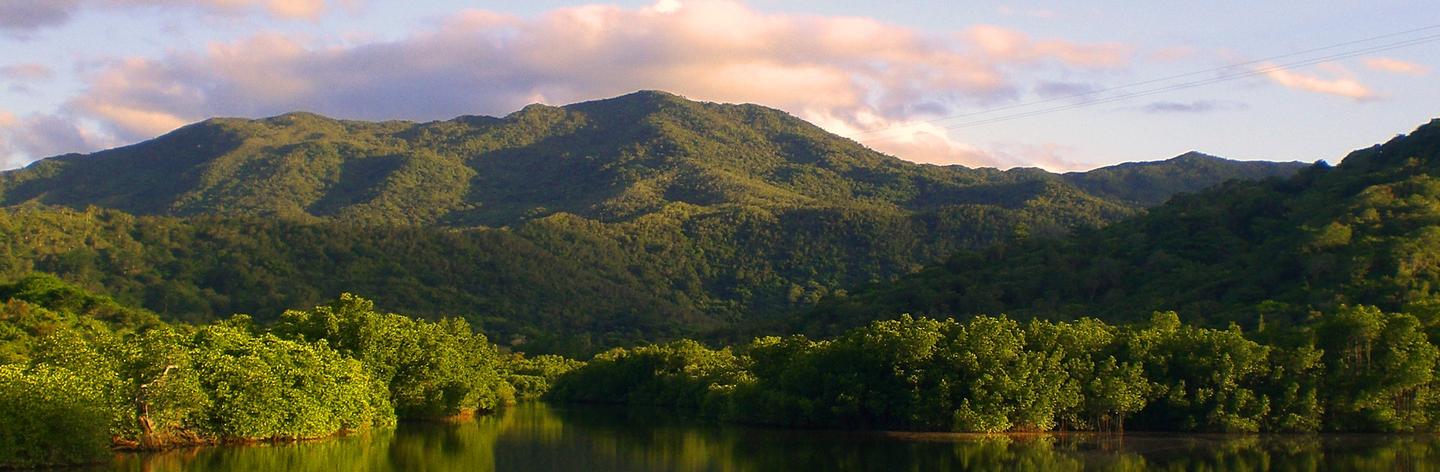
The Andes. The Caribbean. The Pacific Ocean. The Amazon. Those landscapes evoke images of dizzying mountain peaks, pristine coasts, deep waters and tropical forests – some of the most inspiring habitats on earth. But these places are not only visually stunning. They are also among the most biologically diverse on earth.
And Colombia, which is one of the 10 most biologically rich countries on the planet, includes representatives of them all.
Land Of Contrasts
Colombia shares South America’s only terrestrial border with narrow Panama and the majority of the American landmass. It has long held a trove of plants and animals that live exclusively in the country, and many more whose range is limited by geographic features like the Andes.
NEW SPECIES: A Wealth of Amphibians in Colombia.
Conservation International (CI) in Colombia works to protect the country’s most valuable, threatened, and productive places, all with an eye toward protecting threatened species while ensuring human communities continue to thrive both in remote landscapes and in cities like Bogotá, Medellin or Cartagena. Because much of Colombia remains densely forested, many of CI’s conservation efforts also represent a great opportunity to keep climate-changing carbon from entering our atmosphere.
The Andes
In the Andes, CI-Colombia works closely with the government to establish new protected areas and strengthen protection of existing areas. Many Andes projects are related to water quality – in particular, significant effort is focused on restoring the Juan Amarillo, Conejera and Capellanía wetlands. These high altitude ecosystems are the main habitat for numerous species of native and migratory birds.
The Andes also host the páramo – high-mountain neotropical ecosystems that hold plant communities that trap water and fog. Those mountain ecosystems, which are increasingly showing signs of impact from climate change, are the main source of drinking water for the more than seven million people who live in and around Bogotá.
LEARN MORE: Working with local peoples and communities is a cornerstone of CI's work. Find out more about these unique partnerships.
The Caribbean
Climate change is affecting Colombia, and many of the country’s Caribbean ecosystems are prime examples. Coastal wetlands and deltas face shifting water tables and salt water/fresh water concentrations, tropical rainforests are forced to adjust to more regular drought conditions and savannahs are threatened by flooding.
Working with local partners who know each landscape well, CI works to protect newly threatened species, restore degraded ecosystems and create educational opportunities that engage local communities in protecting the land on which they depend. CI-Colombia is also working actively to create a large-scale conservation corridor for the jaguar (Panthera onca).
The Pacific
CI-Colombia coordinates closely with numerous partners to conserve both coastal resources and the vast areas of the Pacific that ring South America’s western coast.
CI is a leader of the Eastern Tropical Pacific Seascape initiative – a joint effort designed to improve protect the national waters of Colombia, Costa Rica, Panama and Ecuador. All four countries have agreed to seek international expertise and support to improve stewardship of their shared marine life and environment. In Colombia, CI focuses efforts around the Malpelo Fauna and Flora Sanctuary, a UNESCO World Heritage site for which CI has helped establish a financial operating trust, and Gorgona National Park.
IN PHOTOS: The Birds of the New Colombia AZE Trust.
The Amazon
And in the world-famous Amazon, CI-Colombia works with partners including indigenous and settler communities, La Pedrera Environmental Center and the Mosiro Itajura Research Station to conserve vast tracts of tropical forest in the lower Caquetá and Apaporis river watersheds. This combination of research, education and investment in local scientific and management resources consolidates local conservation efforts and strengthens the entire region.
Cultural Values and Species Protection
In fact, it was a close relationship with the people’s beliefs that led to one of CI-Colombia’s great victories. In 1999, CI realized that the Catholic “Palm Sunday” tradition was slowly destroying both Quindío wax palms (Ceroxlyon quindiuense) and the yellow-eared parrots (Ognorhynchus icterotis) that nest in them. In partnership with the Bishops’ Conference of Colombia and ProAves, CI launched a massive education campaign – including a festival celebrating the palms and parrots in their prime habitats – that led to significant cultural shift. Between 2002 and 2006 the parrot population rebounded significantly, and CI and the Catholic Church of Colombia continue to expand their conservation partnership.
Every activity undertaken by CI is designed to enhanced local engagement in protecting the national heritage and human benefits Colombia’s nature provides.
READ MORE: Reconcile with Nature: A Partnership of Science, Faith, and Media.