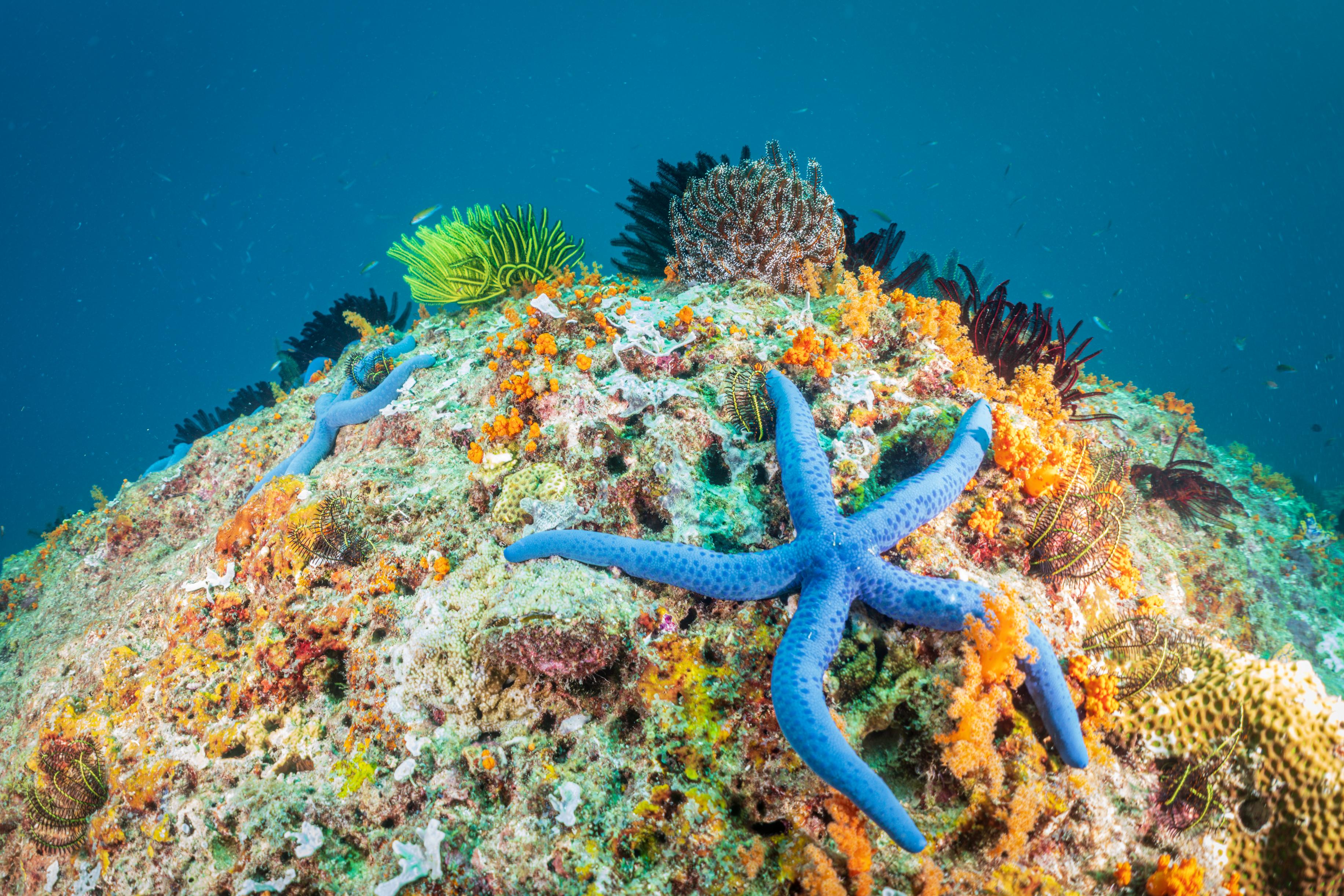
Working with our local partner, Konservasi Indonesia
Since January 2022, Conservation International has collaborated with Konservasi Indonesia, a national foundation, as its main partner in Indonesia.
Conservation International is working with Konservasi Indonesia to support sustainable development and the protection of critical ecosystems in Indonesia, both on land and at sea, for the prosperity of local communities.
Konservasi Indonesia is working to stabilize the climate by protecting and restoring rainforests and coastal mangroves, maintaining fisheries and marine resources, and building self-sustaining economies that are built on the protection, not the destruction, of nature.
31.3M
PEOPLE
dependent on nature in Indonesia1
7.9B
METRIC TONS
of irrecoverable carbon in Indonesia2
1,413
VERTEBRATE SPECIES
that are endemic to Indonesia3
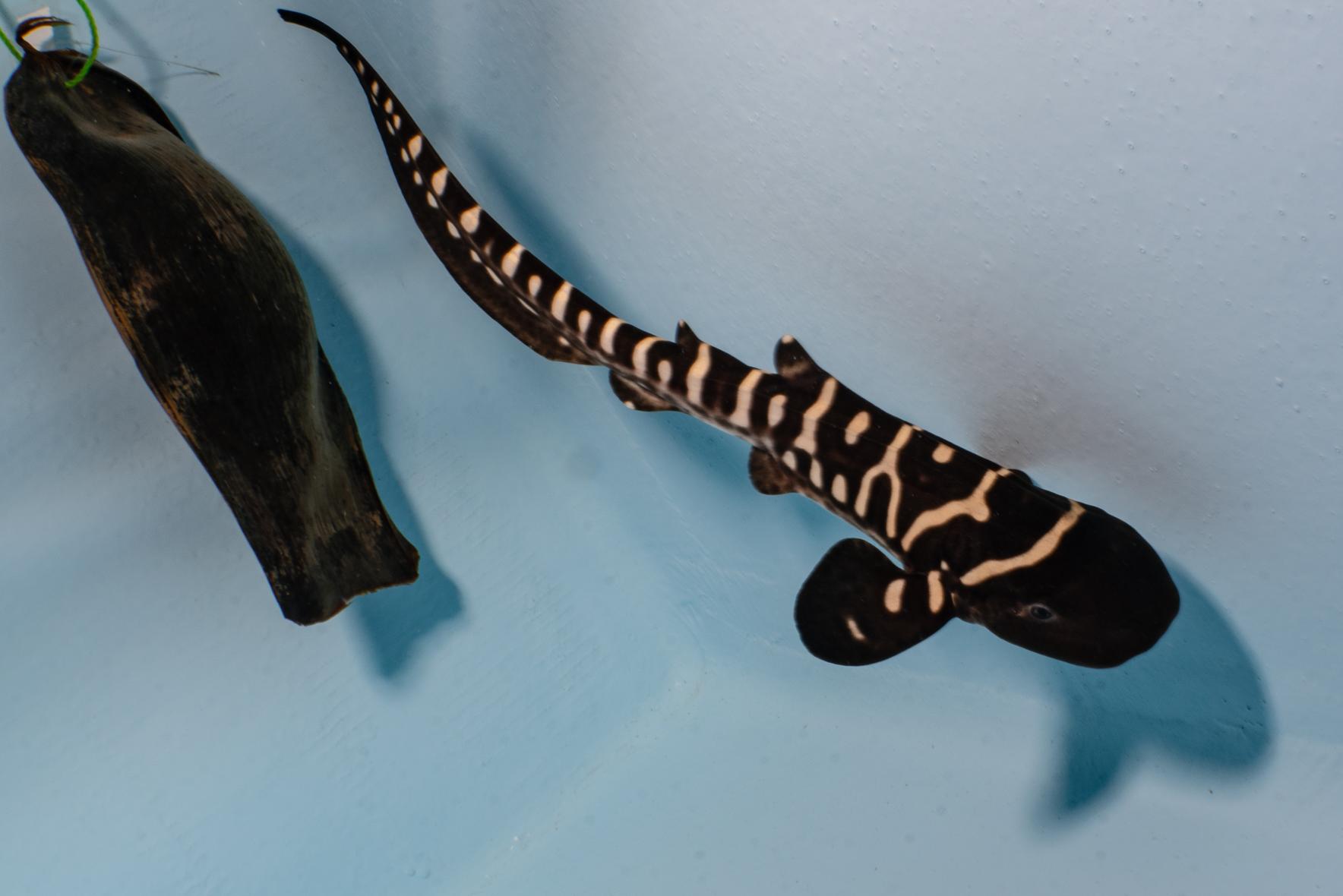
Bringing endangered sharks back to Raja Ampat
In partnership with nearly 80 aquariums, universities and environmental organizations, Conservation International and Konservasi Indonesia are leading ReShark — a first-of-its-kind captive breeding program to reintroduce threatened sharks into the wild.
In 2023, the ReShark team successfully hatched, raised and released three zebra shark pups into the waters of Raja Ampat — the first endangered sharks ever bred in captivity and released into the wild.
Once common in Raja Ampat, a remote archipelago known for its crystalline waters and extraordinary biodiversity, zebra sharks nearly vanished thanks to overfishing and poaching. But recent conservation efforts led by local communities, Conservation International and Konservasi Indonesia have sparked a turnaround: Fish populations have rebounded, and many exotic marine species have returned, fueling a local ecotourism industry that has dramatically improved communities' livelihoods as well as access to food and education.
Over the next decade, ReShark plans to release at least 500 zebra shark pups into the waters of Raja Ampat, further driving ecotourism in the region and demonstrating how the protection of nature and human well-being can go hand in hand.
References
- Fedele, G., Donatti, C. I., Bornacelly, I., & Hole, D. G. (2021). Nature-dependent people: Mapping human direct use of nature for basic needs across the tropics. ScienceDirect, 71. https://doi.org/10.1016/j.gloenvcha.2021.102368
- Conservation International (2021, November). Irrecoverable Carbon. Retrieved January 2025, from https://www.conservation.org/irrecoverable-carbon
- The IUCN Red List of Threatened Species. (2024). Table 8a: Total, threatened, and EX & EW endemic species in each country [Fact sheet]. https://www.iucnredlist.org/resources/summary-statistics#Summary%20Tables