Philippines 

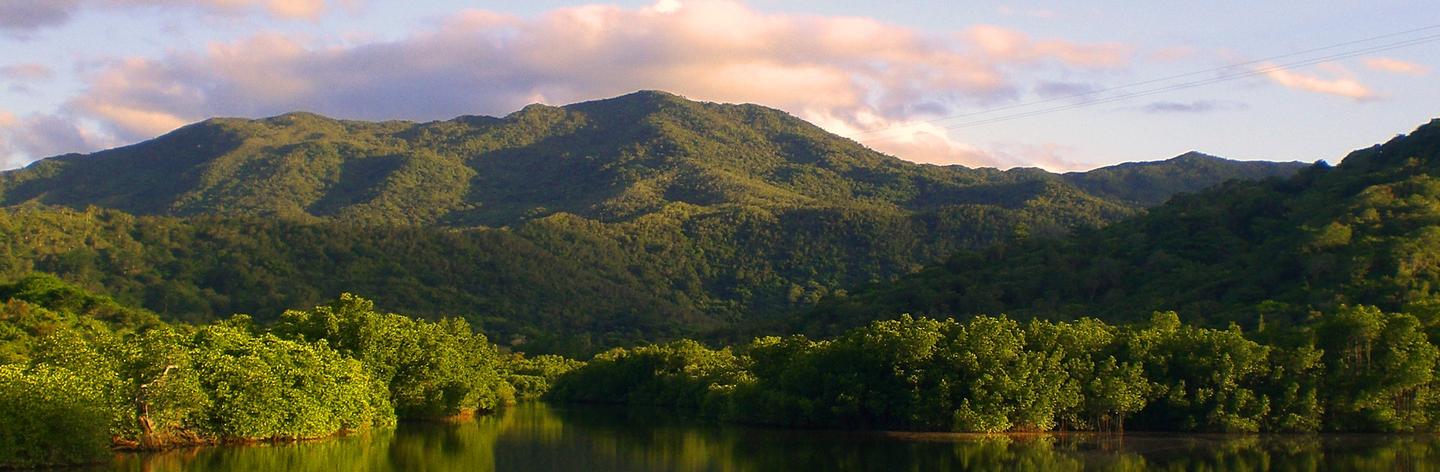
Restored mangroves around a shrimp farm in Batangas, Verde Island Passage, Philippines. Mangroves provide coastal protection from storms, reduce the impacts of floods and are important fish nurseries.
© CI/photo by Giuseppe Di Carlo
 

More than 7,100 islands fall within the borders of the Philippines hotspot, identified as one of the world’s biologically richest countries.

Many endemic species are confined to forest fragments that cover only 7 percent of the original extent of the hotspot. This includes over 6,000 plant species and many birds species such as the Cebu flowerpecker, the Philippine cockatoo, the Visayan wrinkled hornbill, and the enormous Philippine eagle. Amphibian endemism is also unusually high and boosts unique species like the panther flying frog.

The Philippines is also one of the most endangered areas. Historically logged for timber products, today, the forests are also being cleared for farming needs and for developments to accommodate the nations growing population.

VITAL SIGNS

Hotspot Original Extent (km²) 297,179
Hotspot Vegetation Remaining (km²) 20,803
Endemic Plant Species 6,091
Endemic Threatened Birds 56
Endemic Threatened Mammals 47
Endemic Threatened Amphibians 48
Extinct Species† 2
Human Population Density (people/km²) 273
Area Protected (km²) 32,404
Area Protected (km²) in Categories I-IV* 18,060
†Recorded extinctions since 1500. *Categories I-IV afford higher levels of protection.

OVERVIEW

The world's second largest archipelago country after Indonesia, the Philippines includes more than 7,100 islands covering 297,179 km² in the westernmost Pacific Ocean. The Philippines lies north of Indonesia and directly east of Vietnam. The country is one of the few nations that is, in its entirety, both a hotspot and a megadiversity country, placing it among the top priority hotspots for global conservation.

The archipelago is formed from a series of isolated fragments that have long and complex geological histories, some dating back 30-50 million years. With at least 17 active volcanoes, these islands are part of the “Ring of Fire” of the Pacific Basin. The archipelago stretches over 1,810 kilometers from north to south. Northern Luzon is only 240 kilometers from Taiwan, Province of China, (with which it shares some floristic affinities), and the islands off southwestern Palawan are only 40 kilometers from Malaysian Borneo. The island of Palawan, which is separated from Borneo by a channel some 145 meters deep, has floristic affinities with both the Philippines and Borneo in the Sundaland Hotspot, and strong faunal affinities with the Sunda Shelf.

Hundreds of years ago, most of the Philippine islands were covered in rain forest. The bulk of the country was blanketed by lowland rainforests dominated by towering dipterocarps (Dipterocarpaceae), prized for their beautiful and straight hardwood. At higher elevations, the lowland forests are replaced by montane and mossy forests that consist mostly of smaller trees and vegetation. Small regions of seasonal forest, mixed forest and savanna, and pine-dominated cloud forest covered the remaining land area.

donate now
Tell a friend
Features & Media