Because so much of the Japanese population (estimated at around 127.5 million ppl) lives in such a small percentage of the country (70 percent on three percent of the land), much of the remaining areas of Japan are quite undeveloped. Notwithstanding, only about 20 percent of the country's original vegetation is thought to remain intact.
Following World War II, the Forestry Agency of Japan promoted clear-cutting of the high-elevation conifer forests and replaced them with Japanese timber species such as sugi (Cryptomeria japonica) and Kara-matsu (Larix leptolepis). Today, plantations are widespread on Japan. However, unlike many other hotspots, Japan's remaining forests are not facing elevated threat due to logging, owing to the high cost of Japanese timber compared to cheap imports from other countries.
On the other hand, Japan's affluence, its recently reduced workweek and the resultant increased interest in leisure have put a different type of strain on the natural environment. Forests are being cleared for ski resorts and golf courses, and more roads are being built to accommodate the steady increase in automobiles and the growing desire to use private rather than public transportation. In addition, improvements in public transportation, such as the bullet train, have made it even easier to travel to once remote and little developed areas of the country.
Coastal regions and wetlands are also being lost to development, principally agricultural expansion, river channelization and road building. On Hokkaido, the wetlands favored by nesting red-crowned cranes continue to be lost to development, mainly agricultural expansion, river channelization, and road building. For instance, one-third of almost 300 km² of marshland in Kushiro has been converted to agricultural, industrial or residential use since the 1970s.
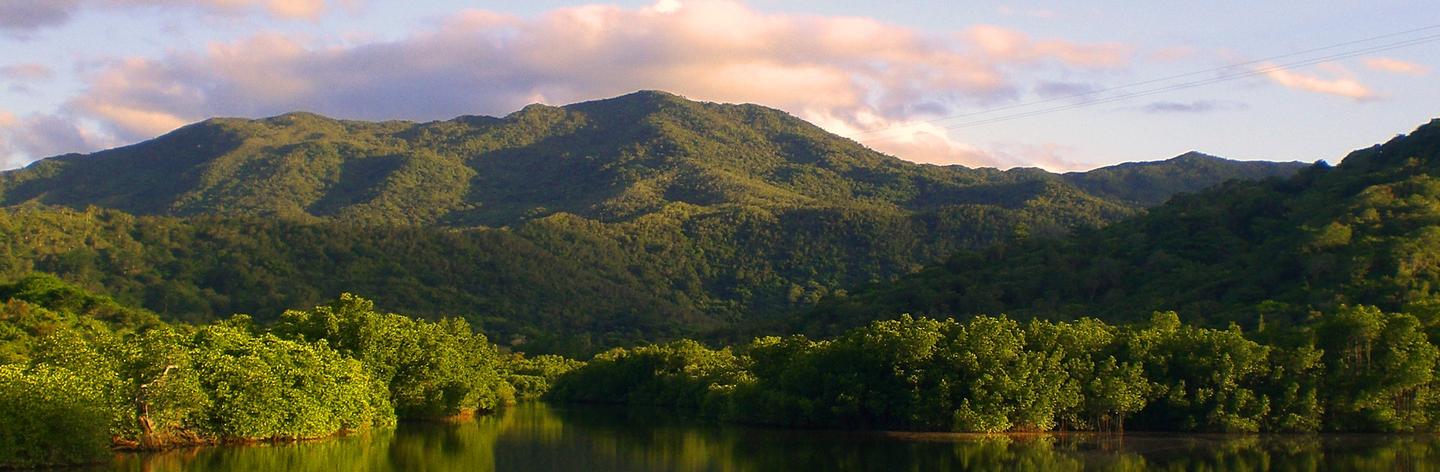
As on the main islands, the smaller islands of the Ryukyus and Ogasawaras have lost habitat to timber plantations and urban development. Nearly all the original subtropical forest on the Ogasawaras has been cleared, and in the Ryukyus, only small areas remain on Amami and Okinawa, mainly in protected areas.
Finally, invasive alien plants and animals pose a threat to the native fauna and flora of Japan. Some of these species, including the Indian grey mongoose (Herpestes edwardsi), Javan mongoose (H. javanicus) and Siberian weasel (Mustela sibirica) were introduced for the purposes of snake control but have instead caused significant declines of many native birds and small mammals. Introduced goats are a problem on several islands, and large mouth bass (Micropterus salmoides) pose a serious threat to native fishes throughout the hotspot.