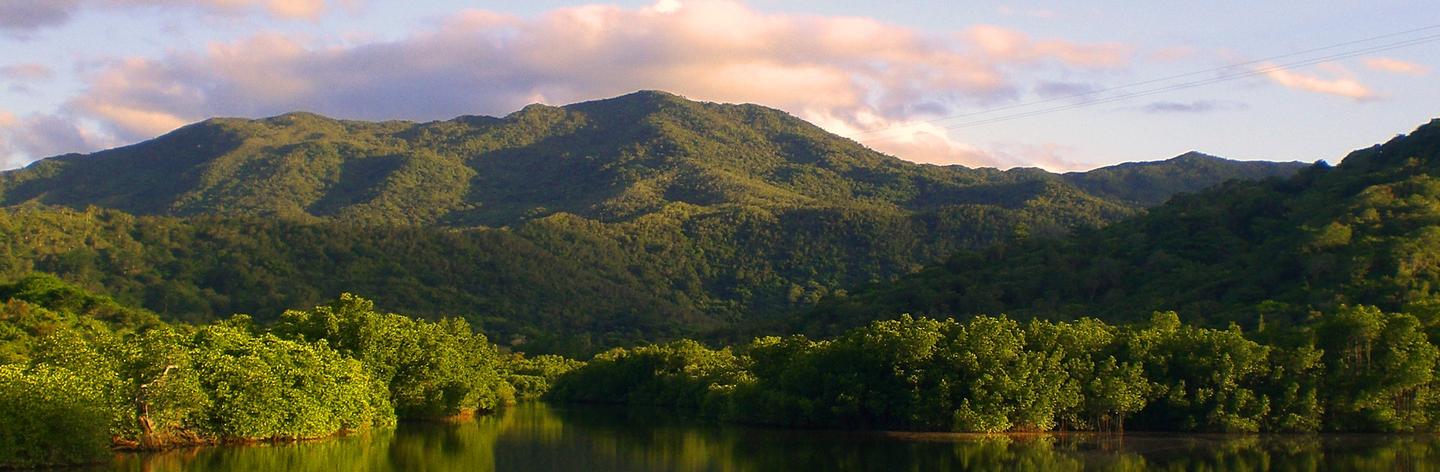
Photo Caption
Grasslands of Virachey National Park, Cambodia.
Page Content
Not much is know about the biodiversity of Southeast Asia. In Cambodia, years of conflict have prevented scientists from gathering data regularly and limited conservation efforts. Fortunately, in October 2007 our scientists were able to conduct a biological survey of Virachey National Park, one of Cambodia’s most unique protected areas. While the final report is still pending, preliminary results provide a glimpse into this poorly studied and fascinating area.
Virachey National Park is located in the northeast corner of Cambodia, near the borders with Laos and Vietnam. It is the largest national park in Cambodia, and one of the least accessible. Mountain ranges with no footpaths or villages have both protected the area and prevented biological assessments.
The park contains many types of habitats, including bamboo, pine forest, semi-evergreen rain forest, and dry dipterocarp forest. The most widespread habitat is its tropical evergreen rain forest, most of which is in pristine condition.
Subsection 01
The team consisted of local and international scientists, led by Conservation International.
Mr. Neang Thy (reptiles and amphibians, Government Counterpart, MOE)
Dr. Jodi Rowley (amphibians, CI)
Dr. Bryan Stuart (reptiles and amphibians, Museum of Vertebrate Zoology, USA)
Mr. Stephane De Greef (ants)
Mr. Heng Naven (freshwater fishes)
Mr. Som Sitha (tortoises and freshwater turtles)
Mr. Hay Dalino (bears)
Ms. Sett Sophak (bears)
Dr. Piotr Naskrecki (insects, CI)
Staff of Virachey National Park
The team flew via helicopter into Virachey National Park from the provincial capital, Banlung, and surveyed the area for 15 days.
The objective of the survey was to gain a better understanding of the biological importance of Virachey National Park and highlight its importance for biological conservation. The survey will lead to the production of a detailed report for the Ministry of the Environment, which will help the ministry raise funds to protect and conserve the unique biodiversity of Virachey National Park.
Subsection 02
Full results of this report are still pending, however, the preliminary report indicates that the surveyed area of the camp contained an extremely high diversity and abundance of species, including at least:
Reports included direct observations of several large mammal species (e.g., Sambar deer (
Cervus unicolor), wild dog, also known as dhole (
Cuon alpinus), and various species of wild cattle) and recent tracks and signs of other mammals (e.g., bears, clouded leopards). Many of these mammals are considered globally threatened.
IN DEPTH: Read more about the species discovered and identified from the preliminary report.