Where We Work
The Ocean
Africa & Madagascar
Democratic Republic of Congo
Equatorial Guinea
Liberia
Madagascar
South Africa
Asia-Pacific
Europe & Central Asia
North & Central America
South America

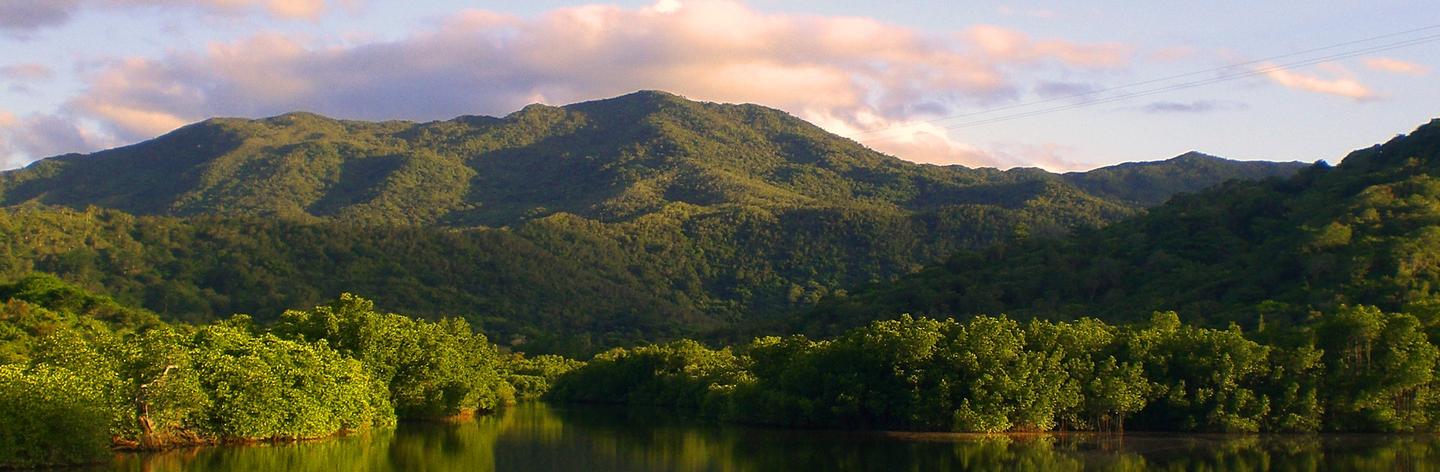
 Ankeniheny-Zahamena Corridor

© CI/Photo by Sterling Zumbrunn
 
Relying on key principles of good governance such as transparency, monitoring and clear rules, CI works with multiple partners to develop a co-management system that involves stakeholders at various levels and ensures that unique biodiversity and essential ecosystem services are protected.
In 2003, the Government of Madagascar made an unprecedented commitment to triple the surface area of protected areas throughout the country in an effort to conserve its unique biodiversity and essential ecosystem services.

Implementing this commitment involved creating a new legal framework, selecting sites, establishing resource use rules and developing governance arrangements. The Ankeniheny-Zahamena Corridor (CAZ) is among the most advanced in its establishment as a protected area.

Covering approximately 425,000 hectares (approximately one million acres) along the eastern escarpment of Madagascar, CAZ is a region of rich biological diversity and home to hundreds of local Malagasy communities. The diverse forests provide essential ecosystem services upon which local people rely for their daily subsistence, but they are under pressure from slash-and-burn agriculture, illegal logging and other unsustainable practices.

IN PHOTOS: Exploring the Wonders of Madagascar

Having received temporary protected status in 2005, CAZ is a legally recognized protected area, which ensures conservation of the area's unique species. Because the area is home to headwaters of important rivers that irrigate agricultural fields, provide hydroelectric power, and supply local people with water for household use, its conservation is an important strategy for ensuring water security in the region.

The forest also serves as a carbon sink. To mitigate the effects of climate change, CI and its partners are working to reduce deforestation and avoid further carbon emissions, as well as planting additional trees that can capture more carbon. The reforestation component of the work includes planting fruit trees and other multiple-use forest gardens. This is an approach to help local people adapt to the effects of climate change while improving their livelihoods.

Relying on key principles of good governance such as transparency, monitoring and clear rules, CI works with multiple partners to develop a co-management system that involves stakeholders at various levels and ensures that unique biodiversity and essential ecosystem services are protected.

The CAZ governance model is grounded on hundreds of local community associations that are responsible for managing small areas of the forest. This approach is how CI and its partners ensure that the benefits from conservation reach those most affected by it. For instance, the governance arrangement incorporates conservation measures that target cultural and spiritual sites. These measures aim to highlight the importance of these sites vis-à-vis local people's history and identity. In addition, CI has worked with partners to bring the economic value of CAZ to local people by developing tourism in the area. This work maximizes the recreational cultural benefits that CAZ provides while also developing the support activities that multiply those benefits through market activities.

IN DEPTH: Discover how ecotourism helps benefit both people and nature.

CI has partnered with key organizations with development expertise to provide technical assistance to local farmer associations in an effort to improve food security. This assistance is helping to improve agricultural yield while ensuring markets for locally-produced products. CI has also developed a grants program that provides small sums of money to community-level associations to develop incomegenerating projects. To date, over 135 projects have been supported through these grants at CAZ.

A community-level health-population-environment (HPE) program has established links among sound natural resource management, family planning and improved health services. Efforts to date have resulted in 800 health agents trained in HPE and 9,000 children less than 5 years old vaccinated. We are also undertaking a study to assess the impact of bushmeat consumption on disease transmission and human health.

Through establishing a protected area with a resilient co-management system that is able to integrate specific activities to address multiple ecosystem services, CI and its partners are developing a model that is being replicated throughout Madagascar and is generating important lessons for policymakers.

LEARN MORE: Find out how CI uses forest carbon initiatives to mitigate climate change.

donate now
Tell a friend
Features & Media