There’s a simple logic behind most government budgets: keep energy and food cheap, keep people working. In practice, this often means helping the people who grow the world’s food and fiber.
Every year, governments spend public money on fishing, farming and forestry — encouraging farmers to use more fertilizer, lowering the cost of raising cattle, and helping fishers increase their catch.
Those payments, called subsidies, often end up damaging nature. It happens largely by accident. For example, when all that cheap and over-applied fertilizer runs off into nearby rivers. When ranching pushes into forests. When fishing fleets begin to take more than the ocean can handle.
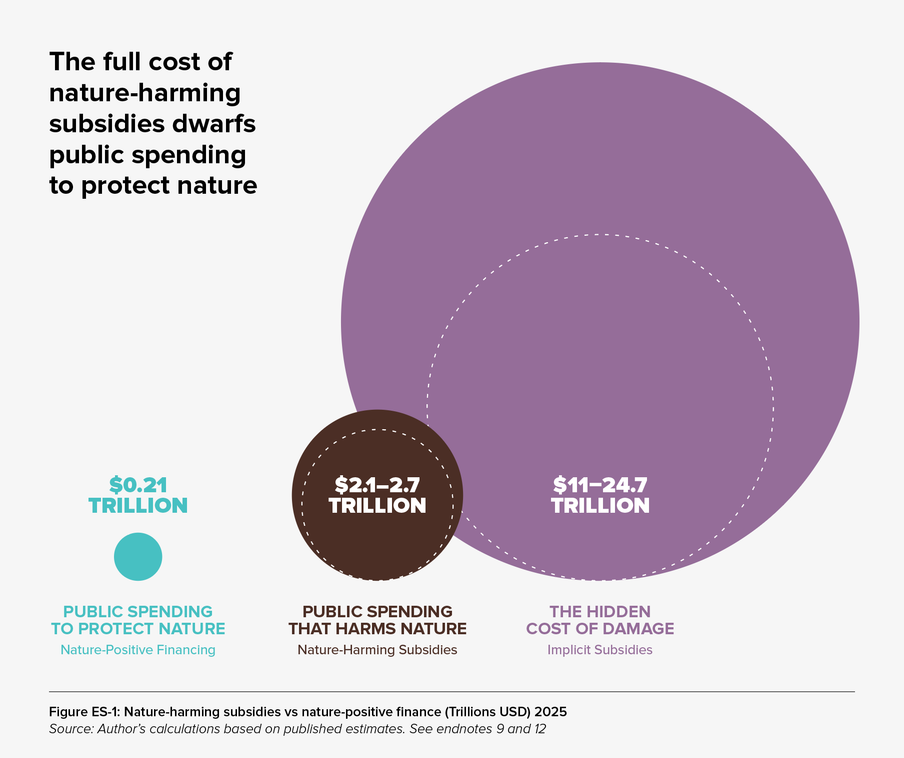
In a new report, Conservation International found US$ 2.1–2.7 trillion in government subsidy spending each year that drives deforestation, overfishing and pollution. The price tag only mounts from there. Dealing with the fallout from those subsidies costs a mind-boggling amount: as much as US$ 24.7 trillion a year.
Amid the United Nation’s biodiversity summit, where subsidy reform is on the agenda, we asked Conservation International policy experts Jennifer Hole and Faryde Carlier how any of this makes sense, and what it would take to change course.
It's hard to read about trillions in spending that harms nature and not look for someone to blame. Is there anyone?
Jennifer Hole: Not in the way you might think. Governments aren't setting out to harm nature. Putting money toward affordable food and secure livelihoods is perfectly reasonable. What our report shows is how far the side effects travel — into water, soil, forests, and coasts.
Intention aside, these misplaced subsidies are a catastrophe for nature. Governments spend between US$ 2.1 trillion and US$ 2.7 trillion every year on subsidies that directly harm nature — and that's only the start of it. There’s also a hidden cost — the cost of the damage that follows, paid not just by governments but by households, businesses and communities — somewhere between US$ 11 trillion and US$ 24.7 trillion a year. For scale, the high end of that is like a fifth of the global economy. So, yeah, this is a big problem.
Can you make that second bill — the clean-up fee — feel real?
Faryde Carlier: Take fertilizer. It’s pretty miraculous stuff. The process of adding nutrients like nitrogen and phosphorus to our crops plays a huge role in supporting a global population of eight billion people.
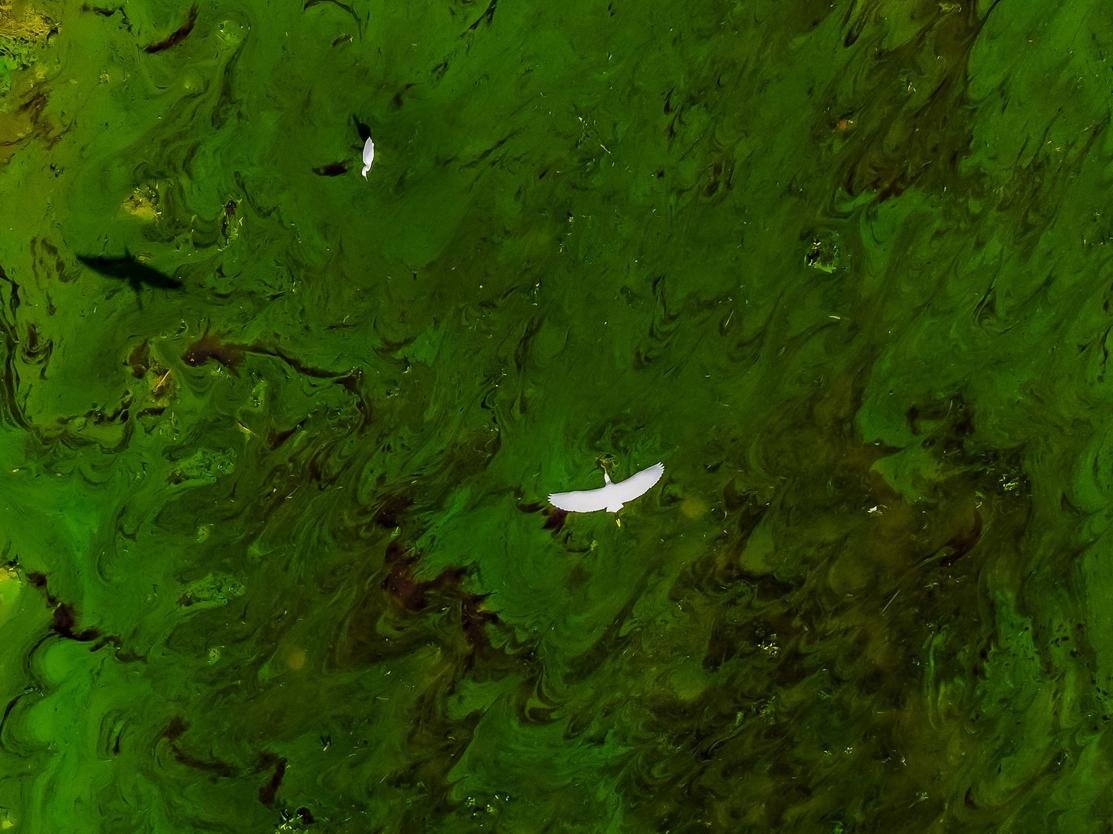
But let’s say a government spends US$ 1 million a year buying that fertilizer and handing it out to farmers. The farmers then have access to free or very cheap fertilizer to liberally apply across their fields. Of course, a portion of those nutrients soak into the crop’s roots and help it grow. But the rest may wash away into nearby rivers and lakes, where it feeds a different kind of photosynthetic organism — algae. Soon the algae grow so thick that it uses up the water’s oxygen, and the fish die. That could, theoretically, mean something like US$ 10 million a year in water treatment and soil restoration.
Those numbers are obviously hypothetical, but it gets at the truth behind the report — governments are paying twice.
Ok, but surely the subsidies are at least helping farmers and fishers?
Carlier: Well, actually, only for some. That's another thing the report finds. The subsidies aren't raising yields as much as they promise, and they aren't always reaching the people who need them most. Access to subsidies is often tied to the scale of production and land ownership. That means that benefits tend to flow to wealthier, larger producers — while smallholders and family farmers see far less. In Sub-Saharan Africa, for example, agricultural subsidies deliver around US$ 5 to the top income quintile for every US$ 1 to the bottom.
And what amount goes toward protecting nature, by comparison?
Hole: Public funding for nature comes to about $210 billion a year. That’s real money, but if you set it against many trillions in damage, it can start to feel like a drop in the bucket.
You’re starting to make me hyperventilate a little.
Hole: Don’t panic. The reason I love to work on this issue is because it's actually such a huge opportunity to do better. If you think of the hidden cost of the damage as a rapidly inflating balloon, the US $2 trillion, give or take, in harmful subsidies is the air still being pumped into it. Ease off, or redirect that money toward nature-friendly practices, and the balloon starts to deflate, which frees the money we already put toward nature to do far more good. Nature needs more funding, full stop, and I hope it gets it. But shrinking the harm, wherever we can, makes the world’s budget go further.
Okay, so how do we get there?
Hole: It starts with seeing what’s actually being spent, which is harder than it sounds, because in a lot of cases governments don’t have data on what a given subsidy does. Brazil is running a national audit of all its subsidies for exactly that reason, to understand the scale and where the money is going. From there you can build a plan around the changes that would matter most and are the most feasible. Some of that means fixing subsidies that already exist, and some means getting new ones right from the start, so they’re designed to work for nature at the outset.
Helping governments find those openings is what Conservation International’s initiative, Accelerating Rapid Transition of Subsidies and Incentives, or ARTSI, is built to do.
What does a subsidy that helps nature look like?
Carlier: Think of practices that keep land healthy instead of wearing it out — the kinds of things Conservation International supports around the world: interspersing crops with fruit trees, growing shade-grown crops, and letting grazing land rest, so it can recover.
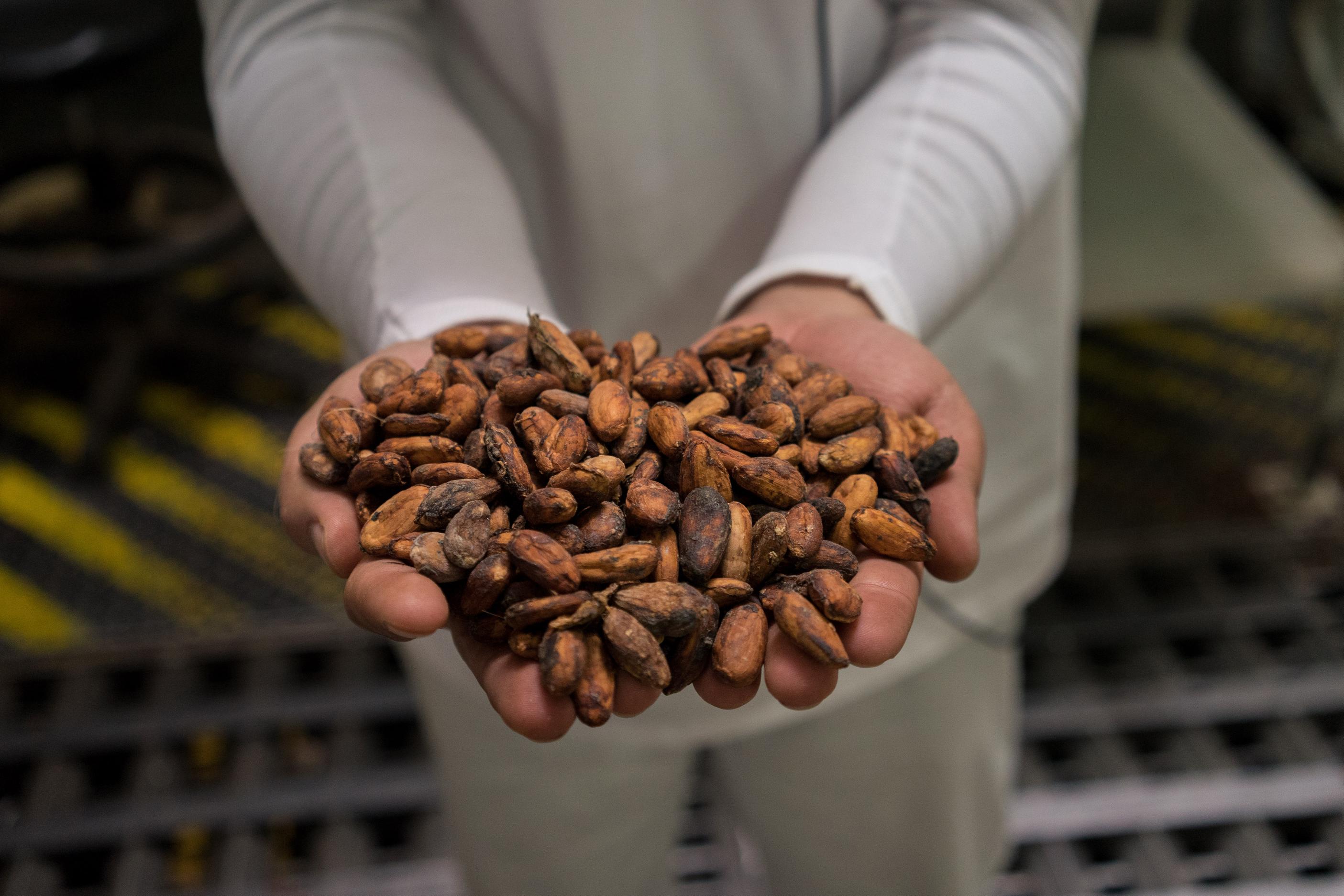
For example, in Colombia, farmers can switch to growing cacao under shade trees, which is better for the land but requires new equipment and takes time to start earning. A standard loan would come due long before they’d made any money, so most wouldn’t want to risk it. We are working with government to align credit conditions with the production cycle of sustainable cacao — so the sustainable choice is one a farmer can afford.
Why does this matter right now?
Carlier: Because governments are sitting down together at the biodiversity COP in Yerevan, Armenia right now, and subsidy reform is on the agenda. Countries have already made a promise. Under Target 18 of the Global Biodiversity Framework they signed, they committed to reducing harmful subsidies by at least US$ 500 billion a year by 2030. As a world, we’re not on track, so we’re pushing governments to put in writing that they’ll speed up. Outside the negotiating rooms, momentum is building too: Armenia’s presidency is launching the Yerevan Call on positive incentives, and a group of countries is coming together to help deliver on it.
Hole: And it only works if the people affected are part of it from the start. A small family farmer who relies on a payment to keep the family going will understandably resist a change if nobody helps them through it. So governments need to bring farmers, fishers, and other affected communities into the design early, and give them the support they need to thrive.
Read the full report “Paying Twice: The Fiscal Case for Reforming Nature-Harming Subsidies” here.