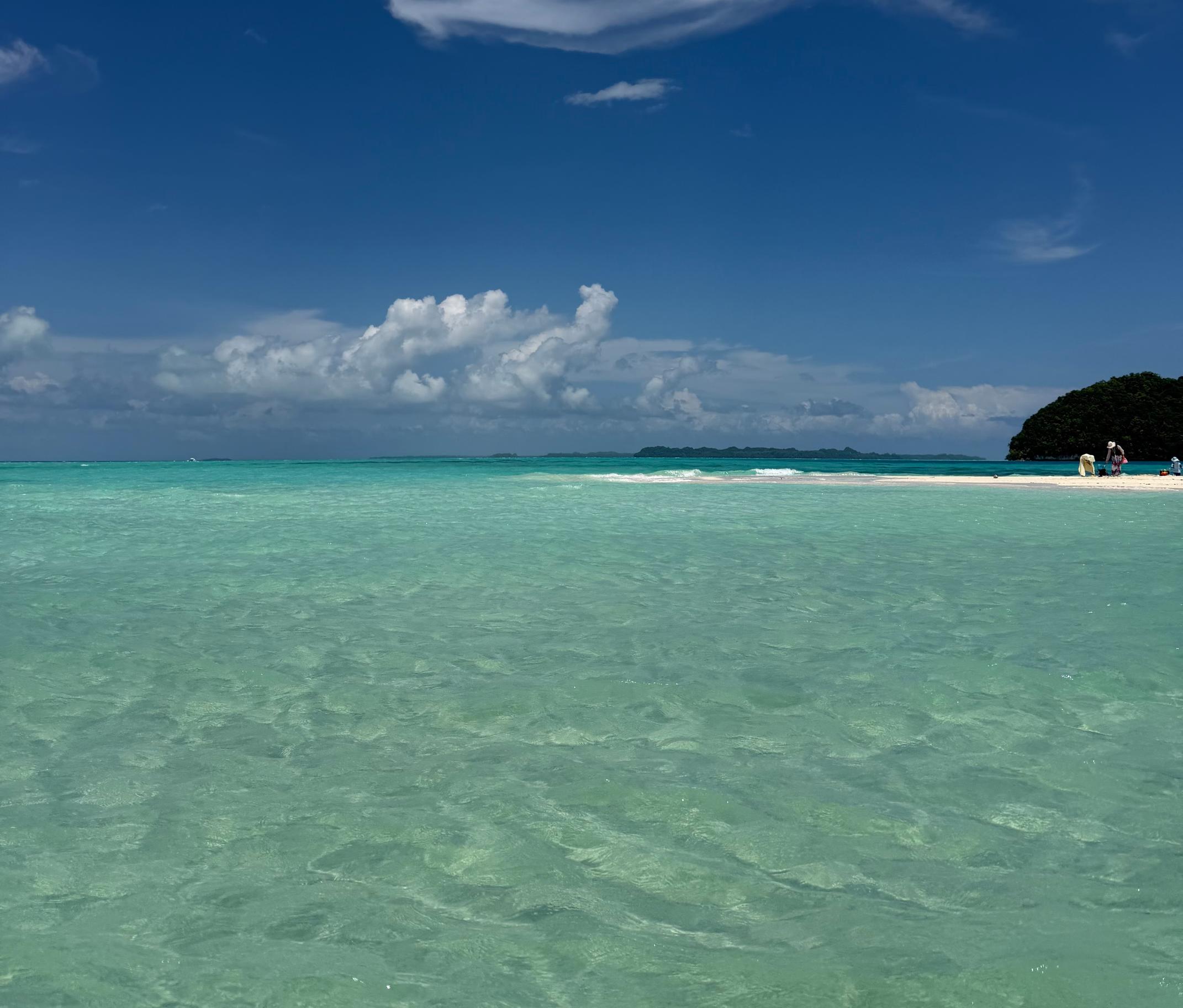
As legend goes, the tiny Pacific island nation Palau began with a giant clam.
In the empty sea, the clam grew — bigger and bigger — until it sired Latmikaik, the mother of human children, who created them with the help of storms and ocean currents.
That founding myth still echoes in how Palauans relate to giant clams today. The animals remain woven into daily life and culture and play an outsized role in keeping the country's reefs healthy.
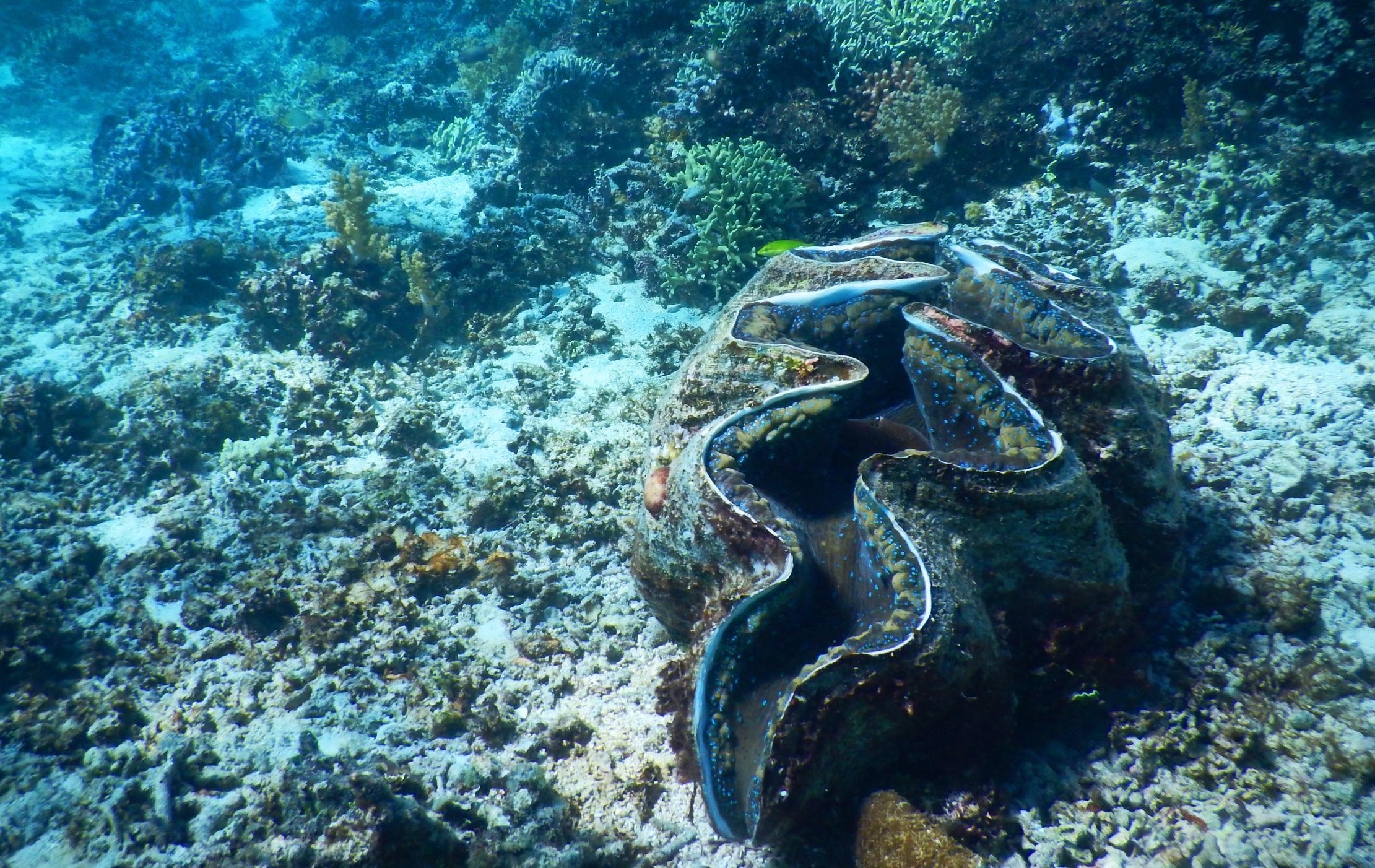
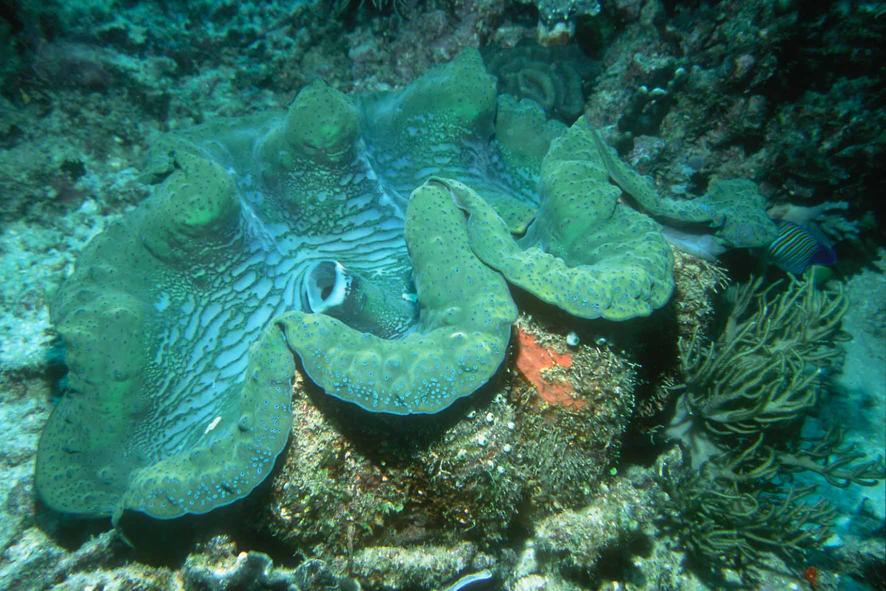
It's easy to see how these massive mollusks inspired a creation story. Giant clams can grow dense shells up to 4.5 feet wide and weigh more than 500 pounds. They are so large, that fish and crabs find safe haven from predators in the folds of their mantles, while coral and sponges routinely grow on their shells. As they breathe, they draw in seawater, filtering out pollution washed into the ocean from the land.
For generations, Palauans have harvested the clams to feed their families. But as demand for wild clams has grown alongside an expanding tourism industry, and climate change has accelerated, clam populations have plummeted. Of the eight giant clam species found in Palau, several are endangered, while the true giant clam — the largest of them all — is now critically endangered. Across the entire Pacific, populations have dropped by roughly 80 percent over last century.
Today, communities are grappling with how to manage what remains. The way forward, says Tarita Holm of Conservation International-Palau, is raising clams by hand. In other words, clam farming.
Last month, Conservation International backed the opening of a community-based hatchery built to grow the country's aquaculture industry and take pressure off the struggling wild population. Run in partnership with Watson and Sons Aquaculture and the Palau Aquaculture Alliance, the hatchery is expected to supply community farmers with approximately 25,000 juvenile clams each year. Project leaders hope it’s the first step toward a network of hatcheries across the country. The project has also opened a path for women — who typically glean wild clams for additional household income — to move from wild harvesting into clam farming.
Palau was the birthplace of giant clam farming. The practice spread from there to neighboring countries across the Indo-Pacific — but stalled at home, held back by inconsistent access to juvenile clams and a lack of support for farmers.
That history is what first attracted Tom Watson, of Watson and Sons Aquaculture, to Palau as a Peace Corps volunteer in the 1970s. Today, his third-generation aquaculture business is working to balance protection and production — rebuilding self-sustaining wild populations while selling clams for food and ornamental shells.
Watson believes aquaculture can be scaled to a point that clams from farms can restock marine protected areas where they’ve disappeared due to overharvesting.
“Instead of people bringing wild clams onto their farms, we want to reverse that,” he said. “We want people to take animals from their farms and put them into the wild.”
Building that industry, though, comes with challenges — from limited production capacity to inadequate infrastructure, all of it compounded by climate change.
“The seed we've been using is a very strong species, used to being exposed to adverse conditions,” Watson said. “But we've lost more than we should have due to heat stress.”
This year's El Niño has him especially worried. During El Niño events, sea levels around Palau drop, leaving reefs — and the clams on them — exposed to higher temperatures for longer stretches. That kind of prolonged exposure causes stress and, eventually, bleaching.
Climate isn't the only threat. As giant clams have become a sought-after menu item at restaurants, theft has become one of the industry's most immediate problems.
“Once the clams get larger, people will steal them and sell them to restaurants,” Watson said. “We might have clams that took five years to raise and are ready for market, but we're competing with people stealing from our own farm.”
Theft, in other words, is a symptom of a deeper imbalance: demand for giant clams has outpaced what farmers can supply. Staci Lewis, who worked with Conservation International and led the first value chain assessment of giant clams in Palau, has heard as much directly from restaurant owners — everyone she spoke with said they'd buy more clams if they could get them.
That gap, Lewis says, is also where the opportunity lies. Expanding clam farming, she said, could deliver a triple benefit: better livelihoods for farmers, more supply for both the domestic and global market, and less harvesting pressure on wild clam populations. Done right, she added, people who benefit from the reef will have reason to look after it — for years to come.
Watson sees that vision stretching well beyond Palau's shores. He hopes to replicate the aquaculture model to restore wild clams across the islands of Micronesia, the Pacific, the Indo-Pacific and into the Red Sea to create “an oasis in the ocean.”
To describe it, Watson reaches for an ancient metaphor. “Archimedes said, ‘Give me a place to stand, and I can move the earth.’ I can stand in Palau — I have a short fulcrum, but I have exponential numbers of clams, so I can have an outsized impact,” he said.
“It's not just for Palau — it's for the reef throughout the Indo-Pacific.”
This project is delivered by the Palau Aquaculture Alliance and Watson and Sons Aquaculture Palau in collaboration with Conservation International, with support from the Manaaki Fund and the New Zealand Ministry of Foreign Affairs and Trade (MFAT).
The views expressed in the article do not necessarily reflect the official policy or position of the New Zealand Government.