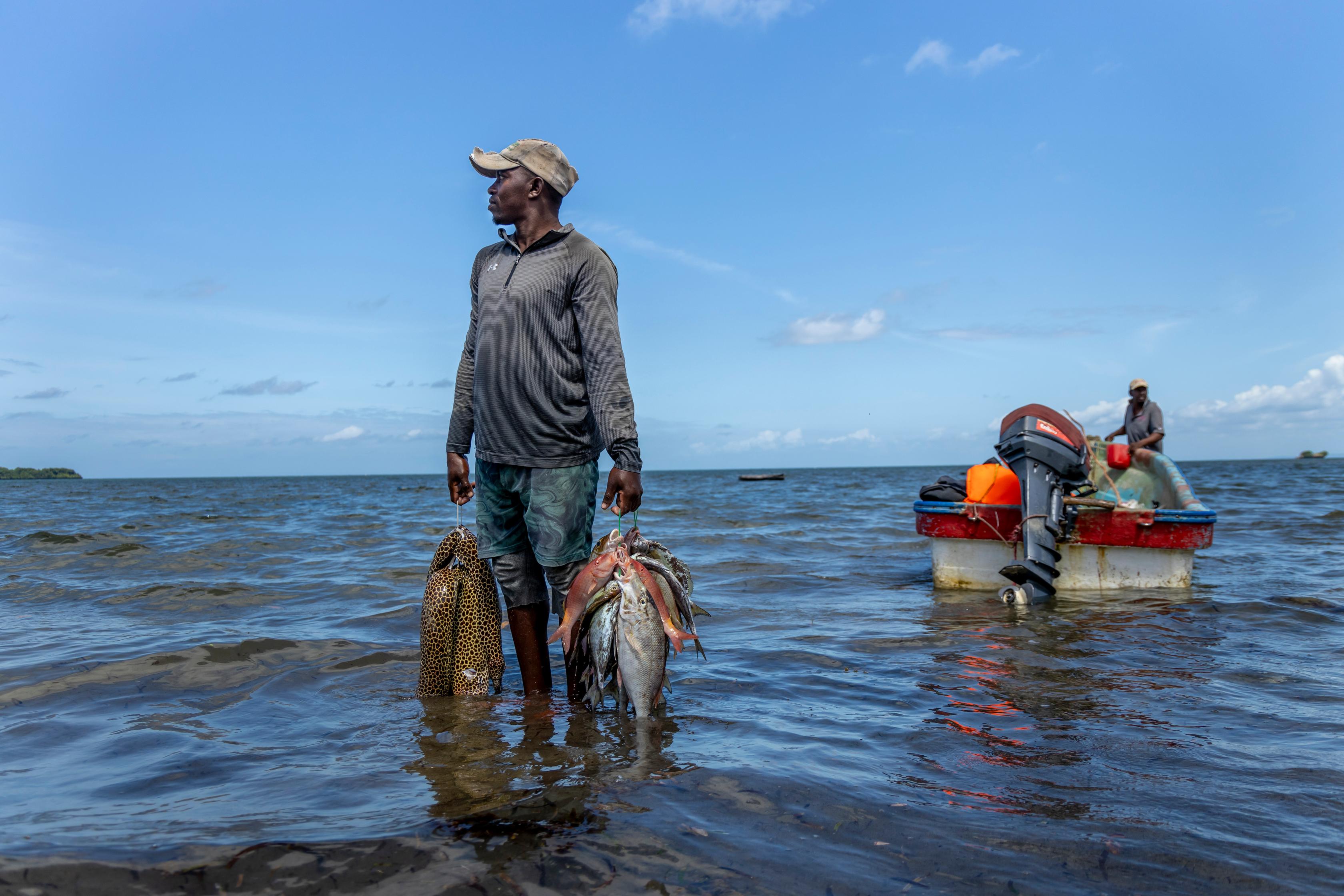
Picture a fisher heading out at dawn in a small wooden boat.
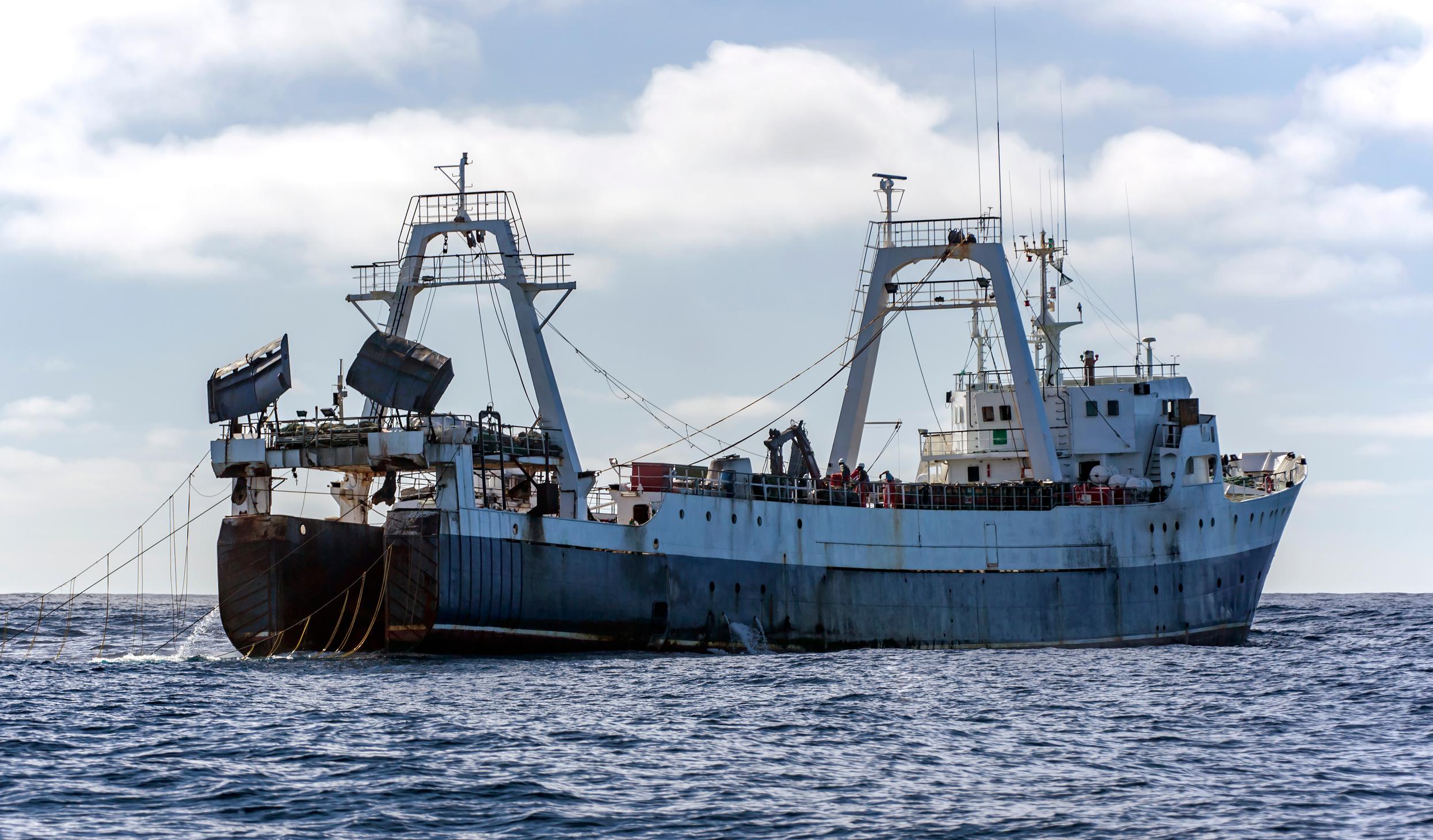
Not far offshore, a massive industrial vessel works the same waters. The coastline is a protected area for small fishing boats. But the big boats fish right along the edge, dragging a net across the seafloor that scrapes up everything in its path — not just fish, but the breeding grounds and habitat they depend on.
Over years, the fisher’s catch keeps shrinking. And with less fish, the prices keep rising at the market. Suddenly, fish is scarce within a fishing community.
That's the reality detailed by a new Conservation International study, which explains how industrial and distant-water fleets can crowd out local fishers and disrupt fragile coastal ecosystems. From the Field spoke to Melissa Cronin, the study's lead author and Elena Finkbeiner of Conservation International, a co-author, to discuss the stakes for people and nature.
Let's start broad. What does industrial fishing look like across the globe?
Melissa Cronin: Extremely complex, extremely diverse. Some industrial fisheries are very well managed, others create challenges both for conservation and people. One common thread is often advanced fishing technology.
One example is an industrial bottom trawl — a large, funnel-shaped net towed across the ocean floor. Along with its intended catch, it can scoop up whatever’s in the water — sharks, rays, sea turtles, sometimes even marine mammals. And on the human side, the industrial fishing experience is very different than operating a small boat. Workers, especially migrants, are often paid below legal minimums, face unsafe conditions, or become trapped by debt and forced labor.
And what is a “small-scale” fishery?
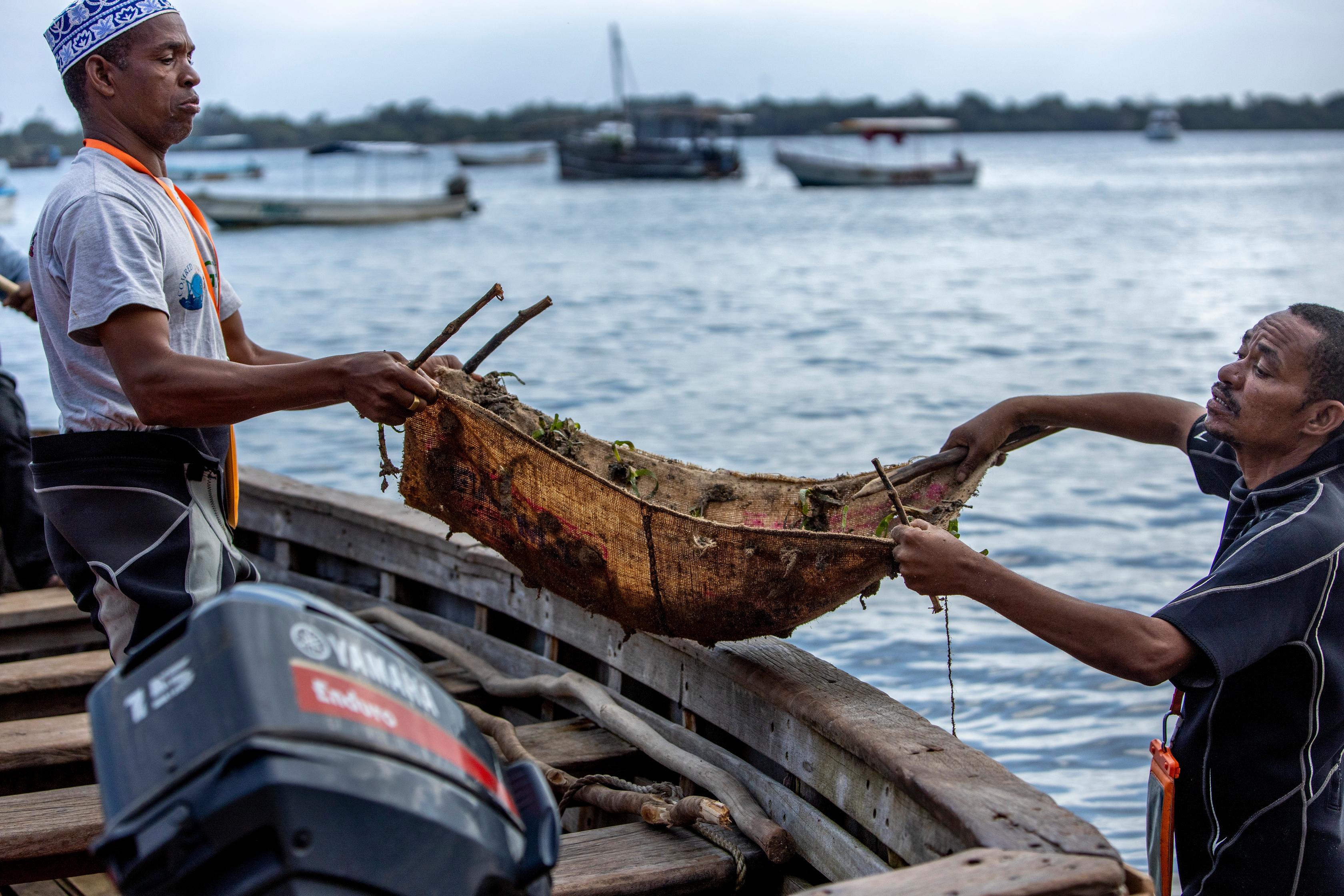
Elena Finkbeiner: When we say that, we’re often talking about communities who live and fish along the coast. Some are commercial fishers, while others fish purely for subsistence. They often use hand tools, basic fishing gear and small boats close to shore. In a lot of coastal towns, the fishery isn't just an income source — it's an identity, a way of life and the reason the town exists. It also creates livelihoods on shore, especially for women, who are tremendously important in fish processing and marketing, and puts dinner on the table.
When did start to recognize the potential for conflict?
Cronin: Years ago, I was in Manta, Ecuador, which is the South American capital of tuna fishing — a massive industrial port. And I'm standing on the dock looking at these huge vessels, built to haul in nets that can stretch on for the better part of a mile. Then, almost by accident, I notice a handful of tiny skiffs nearby — tiny boats, mostly made of wood, some fiberglass. And they're fishing too, just on a wildly different scale.
The next morning, I went to the fish market and there it was: skipjack tuna for sale, the exact same species fished by the large industrial vessels. This was the small-scale catch, there on a table, sold directly by the fisher. That experience really piqued my curiosity about how the interactions between these two very different modes of fishing.
That moment turned into an actual global study. What did you set out to find?
Cronin: My question was about vulnerability. I wanted to find out how much conflict between the industrial fishery could heighten vulnerability for small-scale fisheries, especially in these critical coastal ecosystems.
It's more of a topic-setting paper — in other words, it sets the stage for a conversation looking at which countries are most exposed to this conflict and why. But some of what we found does say a lot on its own. Within 25 kilometers of shore, 90 percent of the industrial vessels we could identify were trawlers — a fishing method that can disrupt ocean habitats in ways that are difficult to detect until much later.
Ultimately, we found that vulnerability was highest in countries with lower levels of development and weaker governance. Countries in West Africa and Southeast Asia are likely to be hit hardest — in places where coastal communities are, in a very real sense, surviving off what they pull out of the ocean.
Why does a fisheries conflict paper matter to Conservation International's work?
Finkbeiner: These coastal fishing waters contain mangroves, seagrass meadows, coral reefs — some of the most biodiverse ecosystems on Earth, which store an outsized share of the planet's carbon and buffer coastlines against storms. So when we talk about meeting our biodiversity and climate goals, we're really talking about protecting places along the coast where people also live and work and fish. This fight over who gets to fish these waters isn't separate from the world’s climate or biodiversity mission — in fact, getting it right here can make all the difference.
What does that reality look like on the water?
Finkbeiner: Liberia is the clearest example, and it’s the place that changed how I think about this work. It has mangrove swamps that can stretch inland for miles, threading through nearly every fishing village along the water. These settlements often have no paved roads, no electricity, often no running water. The fish coming off the water isn't a side income. It’s everything.
Conservation International is helping these communities build more resilient and sustainable livelihoods. We provided access to small loans through a community fund, plus training on how to manage money — and in return, communities agreed to things like protecting mangroves and fishing more sustainably. It’s real, tangible support. But that only gets you so far if you ignore who else is fishing those same waters. My Conservation International colleague and study co-author, Katy Dalton, often advocates for managing small-scale and industrial fisheries holistically to effectively advance sustainability and equity outcomes in these critical coastal ecosystems. She is exactly right.
And by that you mean the industrial fleets.
Finkbeiner: Yup. But it’s worth pausing on a distinction: In many cases, these are distant-water fleets, which travel from one country into another’s waters under an access agreement that lets them pay to fish there. In Liberia's case, distant-water fleets are a big part of the pressure on small-scale fishers and their communities.
In effect, this means one country is letting another extract the fish that its own coastal communities depend on?
Cronin: In some cases, yes. Some countries have created these coastal zones specifically meant to conserve near-shore waters for small-scale boats, called “preferential access areas,” which exclude industrial fleets including distant-water ones. But, in some cases, industrial and distant-water vessels are still fishing right along its edge — sometimes with trawlers which can cause long-term damage to the ecosystem by scraping everything off the ocean floor.
That’s why this is such a big deal. To succeed in a place like this, where people and nature are so vulnerable, we have to consider how high-capacity vessels operating in or near these waters might be in conflict or competition with coastal community livelihoods.
Is there anything that actually works to ease this?
Cronin: Designating special areas for small-scale fisheries is one — at least 44 countries have these preferential zones now. That's a start. But we have to look at larger economic forces like harmful fisheries subsidies. Right now, at a global level, industrial fleets get about three-and-a-half times more government support per person than small-scale fishers do. A lot of that money covers fuel, which lets big boats keep fishing even when it wouldn't normally pay off. Cut that support back, and the playing field could tilt a little more fairly.
Then there's the fishing deals themselves — the agreements that let one country's fleet fish in another country's waters. Much of the money from those deals does not reach the coastal communities who may be in competition or conflict with industrial fishing. Fairer and more transparent deals could change that.
Bring this home for someone standing in a grocery aisle. What can they actually do?
Finkbeiner: A lot, actually. Most of us are stuck in what I'd call a commodity trap — we default to the same three things: shrimp, salmon, tuna. And most of that seafood was caught far away, shipped through long supply chains where you have no idea who caught it, how, or under what conditions.
But if you're open to eating something different, and you live near the coast, you probably have another option. There's something called a community-supported fishery — same idea as a CSA box, but for seafood. My dad and I belong to one in Monterey. Every week, we get a pound of whatever local fishers caught that week. There's a national directory called the Local Catch Network — you search your zip code, and it connects you to small-scale fishers near you.
It's a small choice. But it's one that actually reaches the people this whole study is about. If there's a way to eat seafood and know exactly where it came from — who caught it, and how — why wouldn't we choose that instead?