It’s easy to understand why people want to plant trees.
Ambitious reforestation efforts — now aimed at planting or conserving a trillion trees — have captured public attention, and with good reason: Earth’s forests are absolutely vital to staving off a climate crisis and protecting nature.
But what about grasslands?
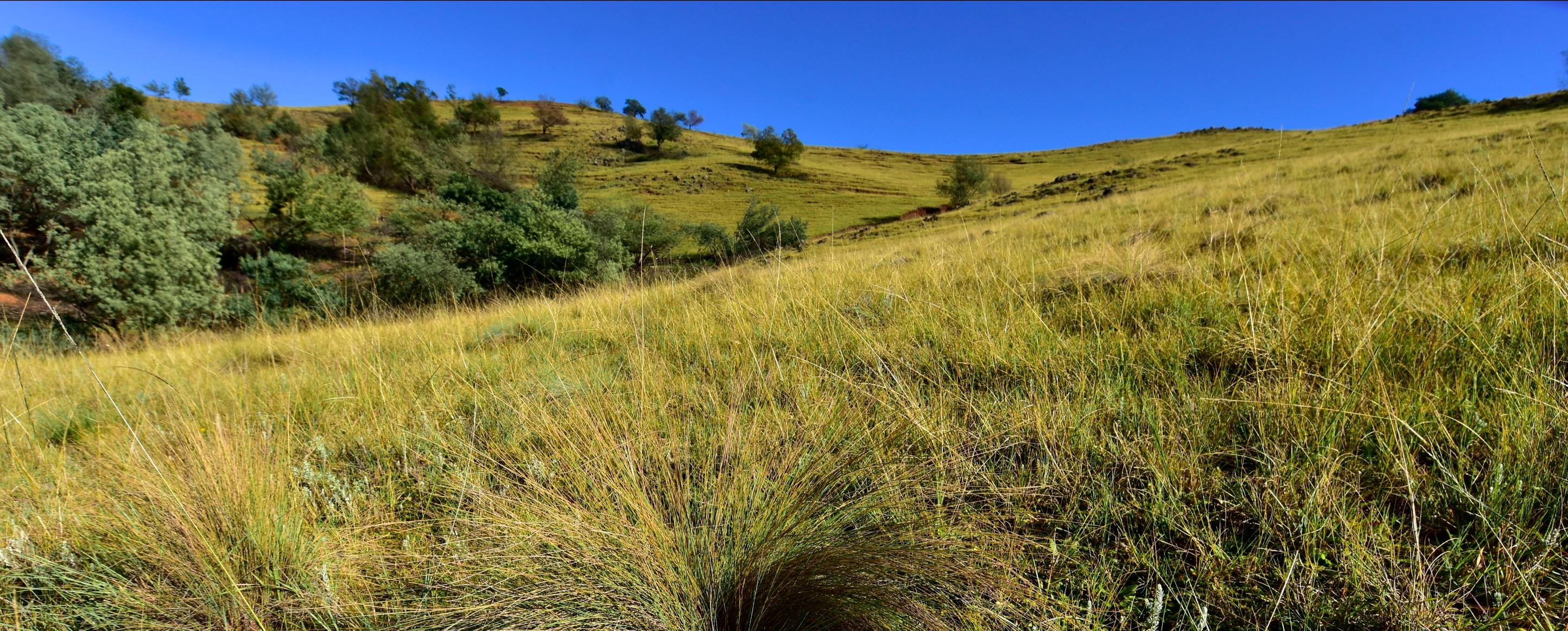
Stretching across 40 percent of the planet, grasslands hold more than a third of the world’s land-based carbon in their vast underground root and soil systems. They are bastions of biodiversity and contribute to the livelihoods of 1 billion people worldwide. In some cases, grasslands are disappearing faster than forests — yet they are overlooked and undervalued.
“Ironically, some grasslands are being threatened by inappropriate climate actions, like planting trees where they don't belong,” said Conservation International scientist Heidi-Jayne Hawkins. “That’s a problem for all grassy ecosystems — whether it’s Brazil’s Cerrado, or India’s grasslands or South Africa’s savannas. So, we asked, what can we do that's really a win for people, biodiversity and climate?”
According to a new study co-led by Hawkins, one answer lies in bringing wildlife back to the grassy ecosystems they have helped shape for millennia — or at least mimicking the natural processes that keep grasslands in balance. Hawkins spoke with Conservation News about how “wilder” lands benefit communities and climate — and what it will take to get there.
What’s the state of grasslands worldwide?
Heidi-Jayne Hawkins: Not good. They are the most threatened yet least protected ecosystem worldwide. Take the Amazon rainforest; people tend to think of it as Brazil’s most threatened ecosystem. Really, it’s the Cerrado, a tropical savanna, which is disappearing nearly four times faster. Its total size has been halved largely due to agricultural expansion.
In South Africa, where I live, we’re seeing trees grow in areas where they don’t belong as savannas become warmer and wetter due to climate change. At the same time, fires, which are a natural part of the grassland ecosystem, are suppressed. And large herbivores like elephants, which maintain savannas by trampling trees and clearing dense vegetation, are disappearing. The result is that too many trees are outcompeting grasses — reducing food for wild and domestic grazers, depleting groundwater, and drying up streams. This is all exacerbated by the continued loss or fragmentation of wild habitats.
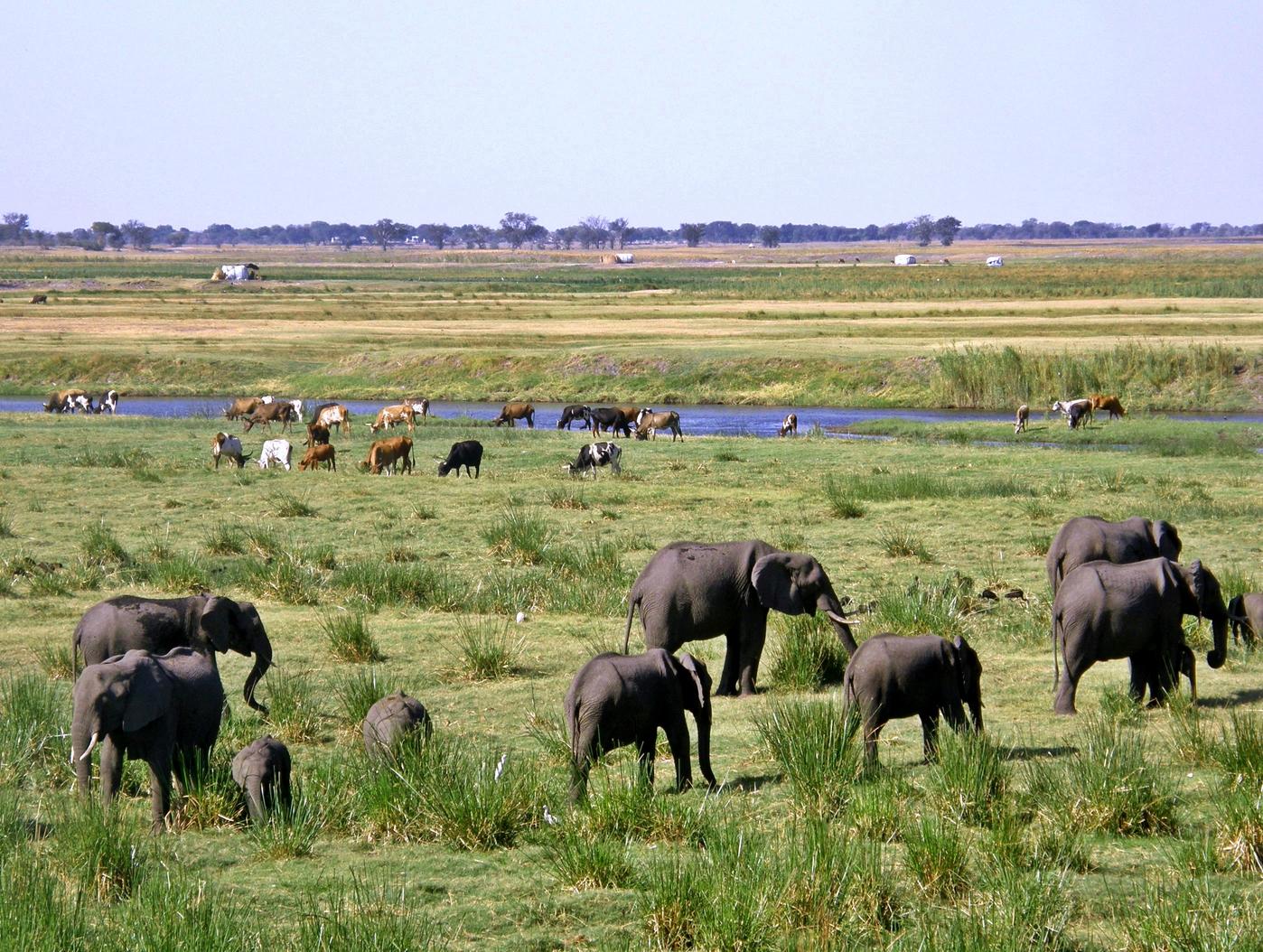
© JV Rooyen
Traditional livestock grazing practices can exist in harmony with wildlife and promote ecological balance.
Your study makes the case for ‘wilder’ rangelands, what does that mean?
HJH: We used the word ‘wilder’ intentionally because we wanted to be inclusive of the people and livestock that live on those lands.
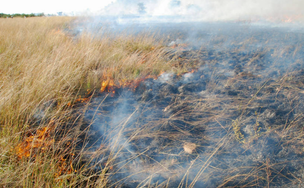
Wilder rangelands refers to the idea of reintroducing populations of wild animals to rangelands — that is, areas where livestock range freely. It’s also about restoring natural processes, like fire. This is a sensitive issue — too frequent and intense fires are certainly devastating for wildlife and people. But most grasslands must burn occasionally if they’re to retain their open nature.
Essentially, our study found that returning rangelands to wilder states has clear benefits. The most obvious benefit is boosting biodiversity by restoring populations of wild animals to historical levels. This, in turn, keeps lands healthy. And healthier lands are good for the climate and communities — including for ranchers’ and farmers’ livelihoods. They rely on thriving rangelands to produce forage, which impacts the weight of livestock, their breeding rates and, ultimately, their market value.
© AdobeStock
Controlled burns are an essential part of maintaining the health of grassland ecosystems.
How does more wildlife benefit the climate?
HJH: Let’s look at rhinos, giraffes, elephants and other large herbivores. When they feed on woody trees and excrete that matter, they are literally moving carbon into the soil. That’s because digested carbon in dung and urine is much easier for soil microbes to break down and incorporate into the soil than, say, a dead tree branch on the ground. Grasslands store most of their carbon below ground — and soil is a much more reliable store of climate-warming carbon than trees, which could be harvested or burnt.
We also know that certain wild herbivores emit about six times less methane than livestock — that’s another climate benefit. Consider that wild animals currently only make up 4 percent of the world’s mammal biomass, compared to 62 percent for livestock.
Finally, there’s the intriguing ‘albedo effect,’ which is the ability of a surface to reflect sunlight back to the atmosphere. While more research is needed, it appears that light-colored areas, such as grasslands, are more reflective than darker-colored trees. When megaherbivores keep trees out of grasslands, they are helping to keep them cooler.
So how can we make rangelands wilder?
HJH: There’s no one-size-fits-all approach. At the simplest level, introducing a more diverse array of livestock can mimic wild animals and the natural processes I’ve mentioned. Certain livestock such as goats, browse and can mimic the feeding of medium-sized herbivores, such as antelope. A level up from this would be to introduce wild animals appropriate to a specific area, while taking care to reduce conflict between livestock and wildlife through carefully positioned water points, herders and lion-proof ‘bomas’ — enclosures made from spiny shrubs or canvas.
Have some of these ideas been put into practice?
HJH: Yes, many are already being implemented in southern Africa as part of Conservation International’s Herding for Health program. That’s all about managing the movement of livestock in the presence of wildlife, and helping to revive traditional grazing practices that work with nature's rhythms to promote ecological balance.
Through the program pastoralist communities voluntarily commit to implementing planned grazing of their livestock, removing invasive vegetation that hampers grass growth and adopting wildlife-friendly practices, among other measures. In turn, among other benefits, they receive support to improve the quality of their livestock and access auctions and other markets, which supports their livelihoods.
The Herding for Health model has been successfully tested across semi-arid shrublands, mountain grasslands and subtropical savannas. It is now being applied to restore and improve the management of 7 million hectares (17 million acres) of rangelands across seven African countries.
Vanessa Bauza is the senior communications director at Conservation International. Want to read more stories like this? Sign up for email updates. Also, please consider supporting our critical work.