
With the dawn light, a piercing whoop echoes across the mountains of Cambodia.
The call of the pileated gibbon is a call-and-response concert — an unmistakably musical duet between mating pairs, with rising voices overlapping and resolving together.
For researchers at Conservation International-Cambodia, it’s music to the ears.
Between March and June 2025, experts from the organization joined rangers and community guides in the Central Cardamom Mountains, one of the most biodiverse ecosystems in Southeast Asia to capture the voices of the endangered pileated gibbons. Small recording devices were placed at three dozen locations deep within the forest, the microphones silently capturing the chorus of forest voices.
--:--
In total, 871 individual gibbon calls were detected, confirming that the pileated gibbon is thriving in this protected forest.
Gibbons, a lesser ape closely related to humans and other great apes, are among the most threatened primates, with all species listed as threatened with extinction under the IUCN Red List. For the pileated gibbon, that pressure is playing out across mainland Southeast Asia, where once-continuous forests have been broken into fragments, isolating pairs and silencing songs that once carried for miles.
“Hearing their calls at every site we monitored gives us hope — it means the forest is still healthy and our science-based conservation efforts are making a difference,” said Sareach Chea, a biodiversity expert at Conservation International.
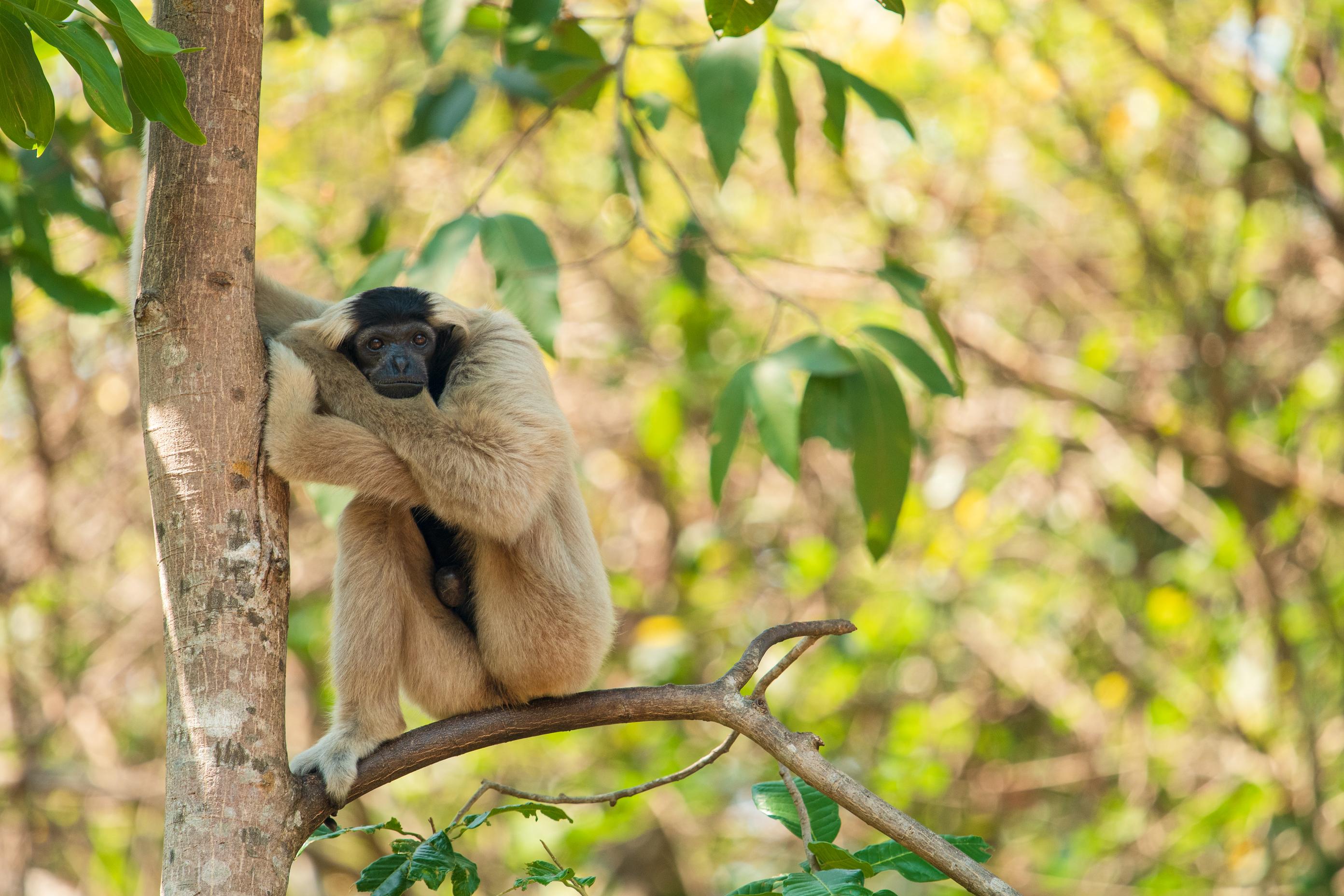
For experts, the presence of gibbons is a strong signal that the ecosystem is healthy.
Gibbons need forests that are still whole — tall, connected canopies with enough diversity to feed and shelter wide-ranging families. When roads, logging or clearing begin to fracture that canopy, gibbons are often among the first to disappear. Their absence isn’t subtle: a forest without gibbon song is one where the structure — and stability — is already starting to give way.
Scientists are still reviewing the recordings from the survey, which will help establish a clear picture of how many gibbons are in the forest today. That baseline will make it easier to track changes over time and guide conservation work in a forest where Conservation International has worked for more than two decades protecting wildlife habitat and supporting sustainable livelihoods.
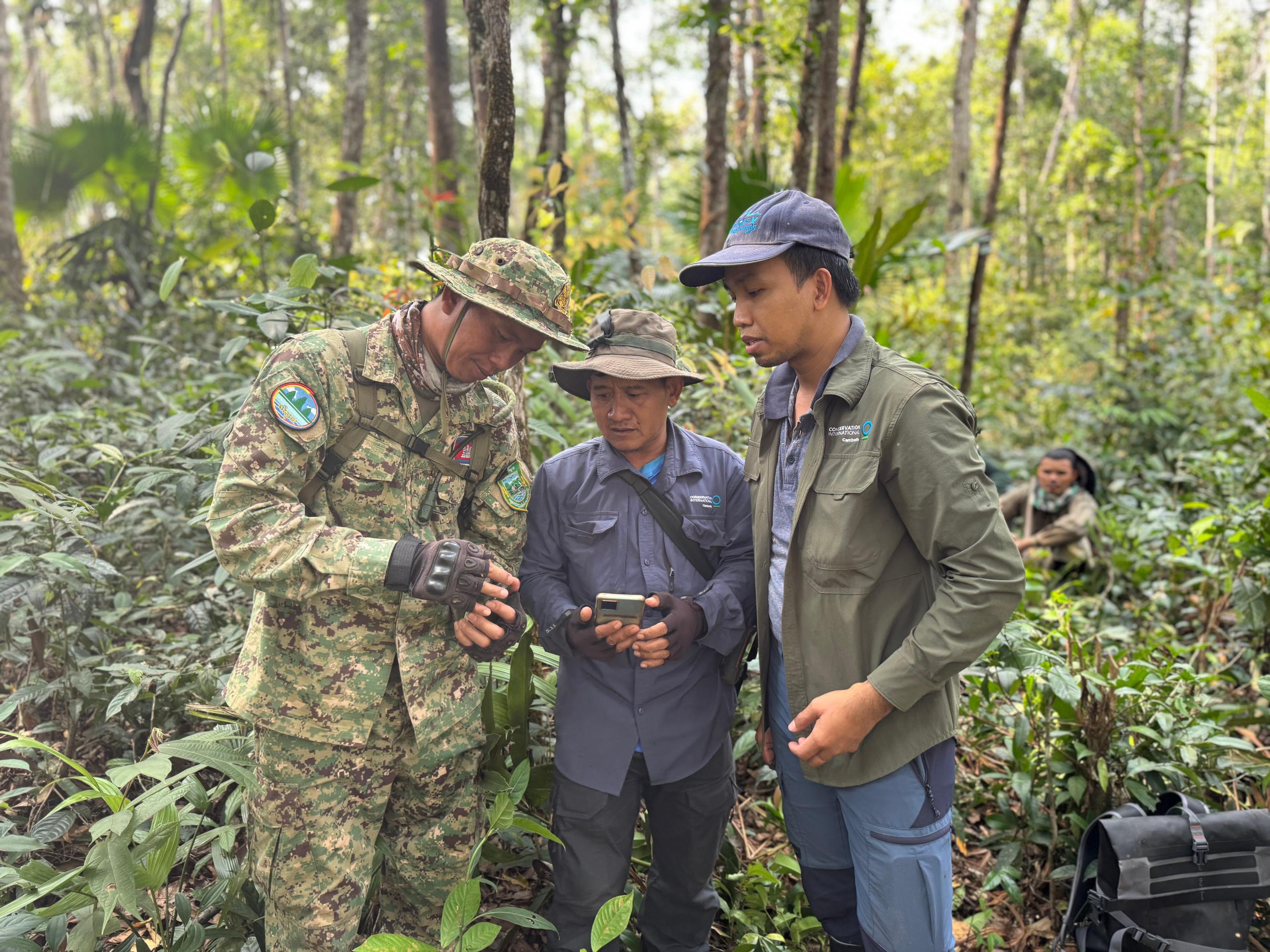
The monitoring was built around local partnership, bringing communities and Indigenous Peoples, who know the forest best, into the research from the outset. Local guides helped lead researchers through the canopy and terrain, drawing on generations of knowledge to track gibbons and place recorders where their songs were most likely to be heard.
In northeastern Cambodia, Conservation International is working to protect another gibbon species at Veun Sai–Siem Pang National Park. Here, intact forest still supports one of the region’s rarest sights: the chance to see the endangered yellow-cheeked gibbon moving freely through the canopy.
Unlike the pileated gibbon, whose dark body and pale crown blend easily into the canopy, the yellow-cheeked crested gibbon stands out more clearly once you know what to look for. Males are strikingly black with bright yellow cheek patches, females a warm buff color, and their powerful calls — louder and more abrupt than those of pileated gibbons — cut across the forest at dawn.

With support from Conservation International, community members in the region lead visitors into the forest as guides, hosts, cooks and boat drivers to see the gibbons in person. ““When communities understand the importance of forests and wildlife to their lives, they become active partners in conservation,” said Sareach.
For Sareach, hearing gibbon songs ring through the Cardamom Mountains is motivation enough.
This work is about more than numbers,” Sareach said. “It’s about listening — truly listening — to the forest. Every sound we capture is a story of life that still exists, and a promise that we’ll continue protecting it.”