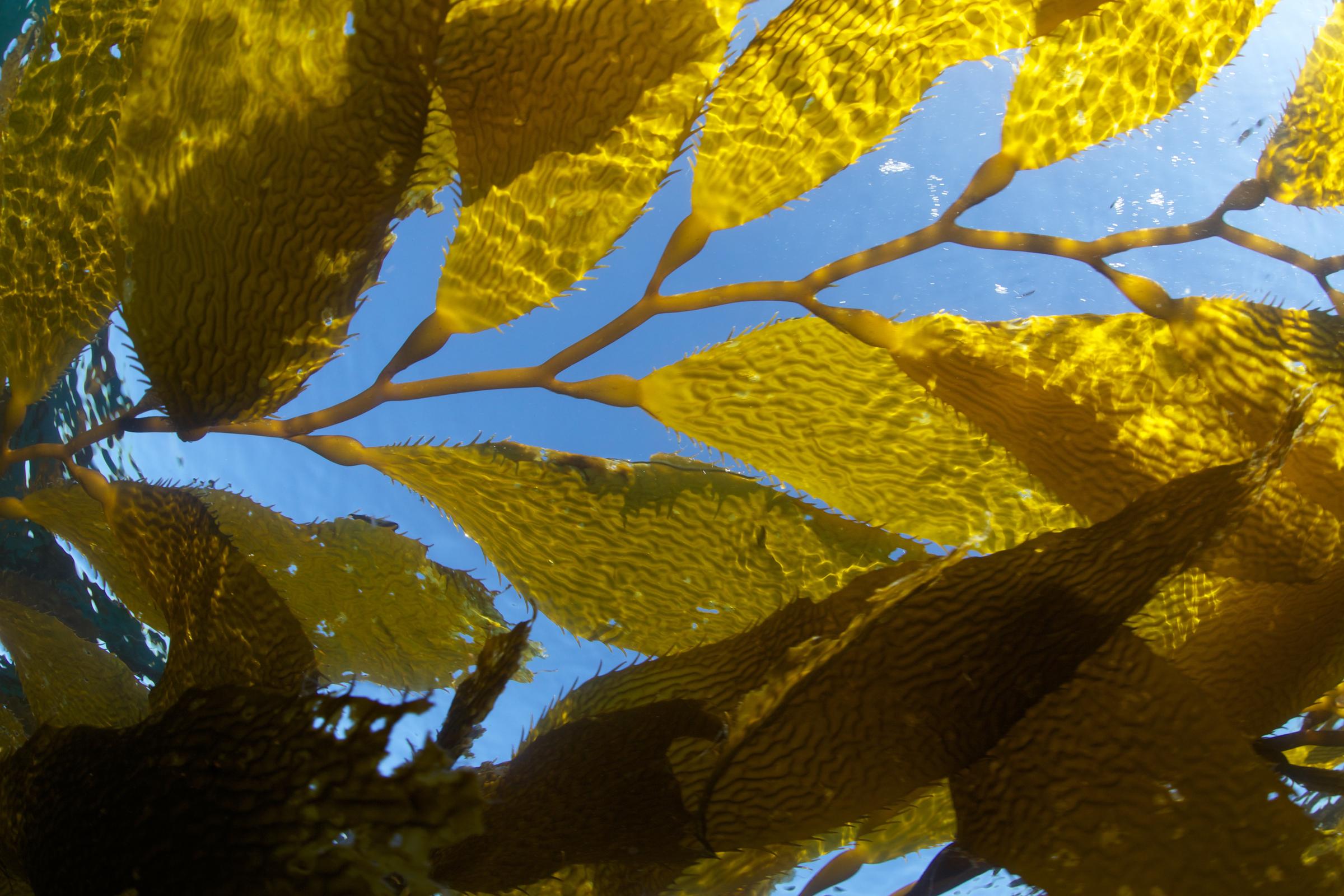
Humble seaweed is having a moment. It’s been heralded as a sustainable superfood, a biodegradable replacement for plastic packaging and a feed supplement to cut cows’ methane emissions. Now, new research shows that seaweed forests — such as massive underwater towers of kelp — may play a bigger role in fighting climate change than previously thought.
A study by researchers at Conservation International and the University of Western Australia found that seaweeds absorb as much climate-warming carbon as the Amazon rainforest. But not all seaweed forests are created equal — some offer much better climate benefits than others.
To learn why, Conservation News sat down with the study’s lead author Albert Pessarrodona, a post-doctoral researcher at Conservation International.
Conservation News: What did your research find?
Albert Pessarrodona: For years, we’ve suspected that seaweed is an underappreciated ally in the fight against climate change. Our research set out to examine that potential. We looked closely at seaweed forests, like those made up of fast-growing kelp, and found that the conservation and restoration of those forests around the world could help keep roughly 36 million metric tons of carbon out of the atmosphere. That’s roughly the same amount of carbon captured by between 1.1 and 1.6 billion trees.
But not all seaweed forests play an equal part in sequestering carbon. Location makes a big difference. Seaweed forests in temperate and polar regions absorb more carbon than those in warmer, tropical waters. That’s because cool, nutrient-rich waters support the tallest forests, which are better at absorbing carbon.
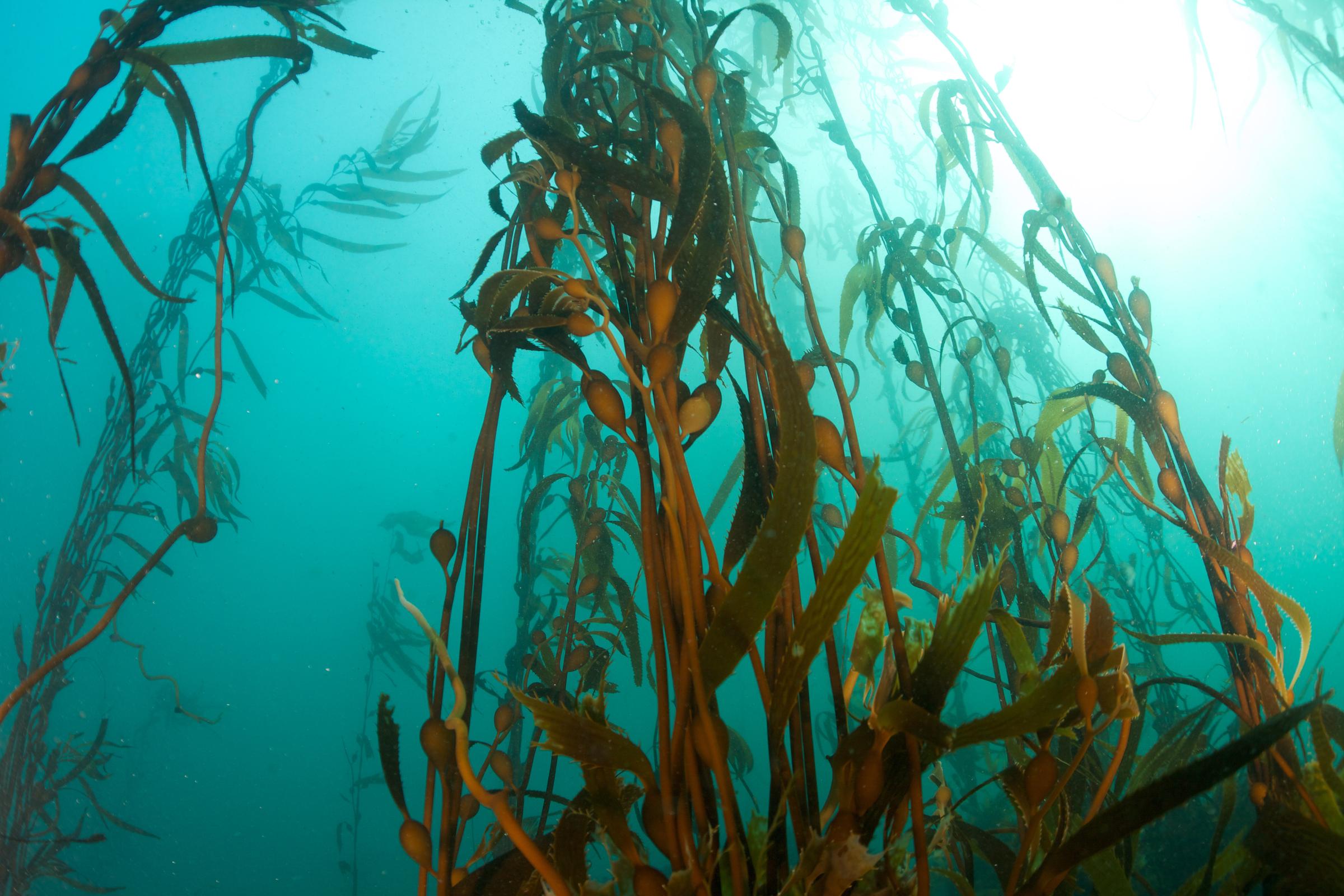
Kelp forest off the coast of Northern California. © Keith A. Ellenbogen
Given the right conditions, could seaweed be a climate game-changer?
AP: It’s complicated. We know seaweed forests absorb large amounts of carbon, but to make a difference in terms of climate change that carbon needs to be kept out of the atmosphere for a long time.
Again, location matters. Like most plants, seaweed absorbs carbon as it grows. Then, when it dies, some of it can drop to the bottom of the ocean or be buried into layers of sediment. That’s where the carbon can be sequestered for up to hundreds of years. Seaweed forests growing near the deep ocean, such as in oceanic islands and canyons, or near fjords, where lots of sedimentation occurs, have greater potential for carbon sequestration.
Until now, it has been difficult to quantify the amount of carbon seaweed forests lock away because of the challenge of measuring carbon in hard-to-reach deep sea areas. To help, we created a framework as part of this study that categorizes coastlines based on their carbon sequestration potential — and identifies areas that are among the most critical for conservation. For example, Chile’s coastline, which has many fjords, cool water and prolific seaweed forests, is going to have greater carbon sequestration potential than a coastline in the tropics that doesn’t have the same conditions.
How can these findings be applied to marine conservation?
AP: Scientists studying “blue carbon” — meaning the carbon sequestered by oceanic and coastal ecosystems — have largely focused on tropical mangroves. They’re climate superstars, but far from the only marine ecosystem that stores large amounts of carbon. Our research shows that ecosystems in other parts of the world, which have typically taken a backseat in the blue carbon space, can also play a role in protecting the climate.
It’s encouraging to see evidence that kelp forests in areas like Australia’s Great Southern Reef or off the coasts of Norway, Chile and Japan — places we previously thought had limited opportunities to combat climate change — have the potential to sequester significant amounts of carbon. But we only get those benefits if we protect these underwater forests or restore the ones that have been lost. Seaweed forests are disappearing at alarming rates around the world because of pollution and ocean warming. For example, in Tasmania and Northern California kelp forests have declined by 95 percent.
We hope that this research will bring attention to the importance of seaweed forests — from storing carbon to increasing biodiversity to supporting fish habitats worldwide. There’s no silver bullet when it comes to curbing climate change — it’s an all-hands-on-deck effort that needs as many solutions as possible. Our research proves that protecting and restoring seaweed forests belongs in the world’s climate toolkit.
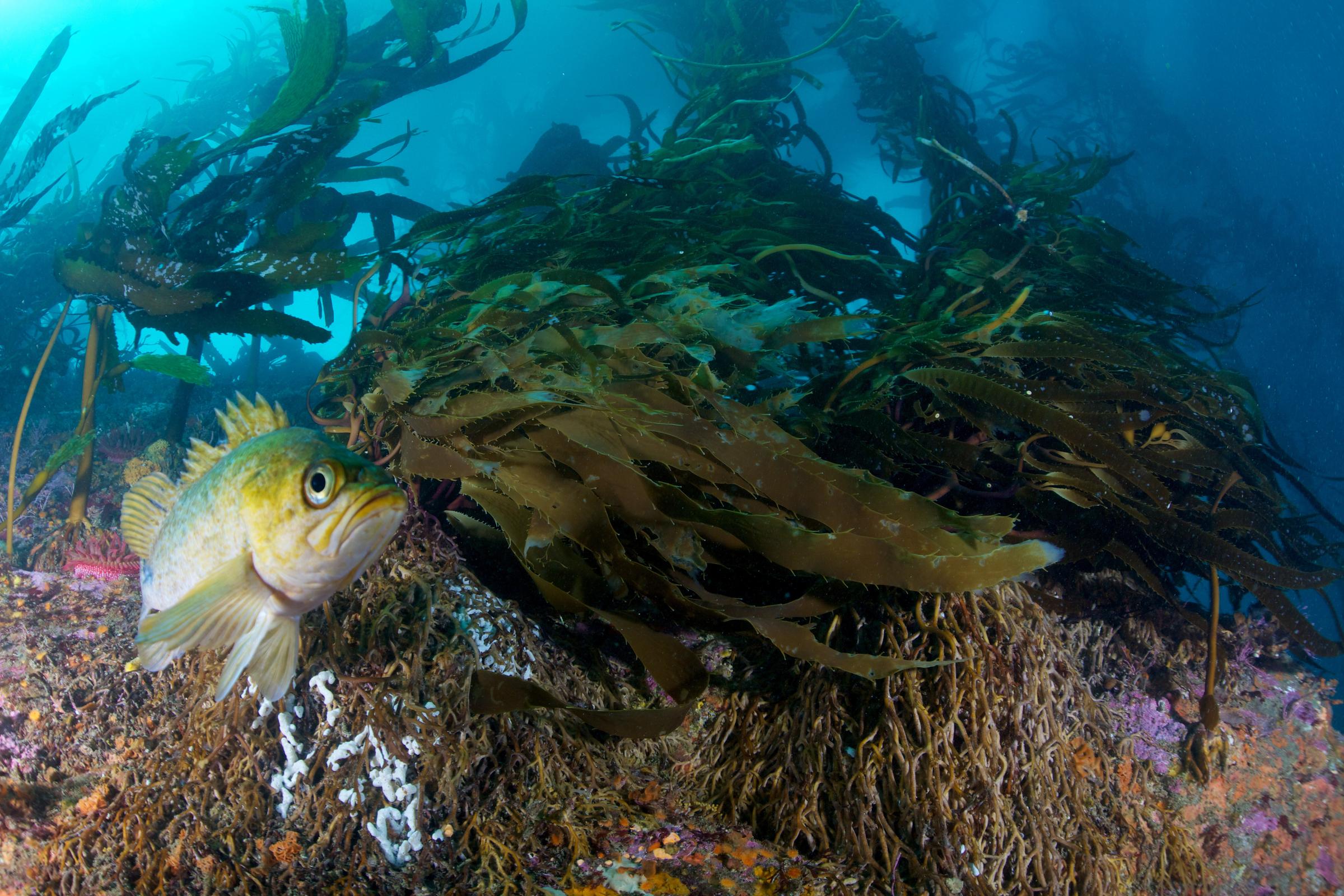
Kelp forest and coral reef off the coast of Northern California. © Keith A. Ellenbogen
Mary Kate McCoy is a staff writer at Conservation International. Want to read more stories like this? Sign up for email updates. Also, please consider supporting our critical work.