Under cover of night, in the flooded forests of Pursat, Cambodia, a camera trap recorded a ghost.
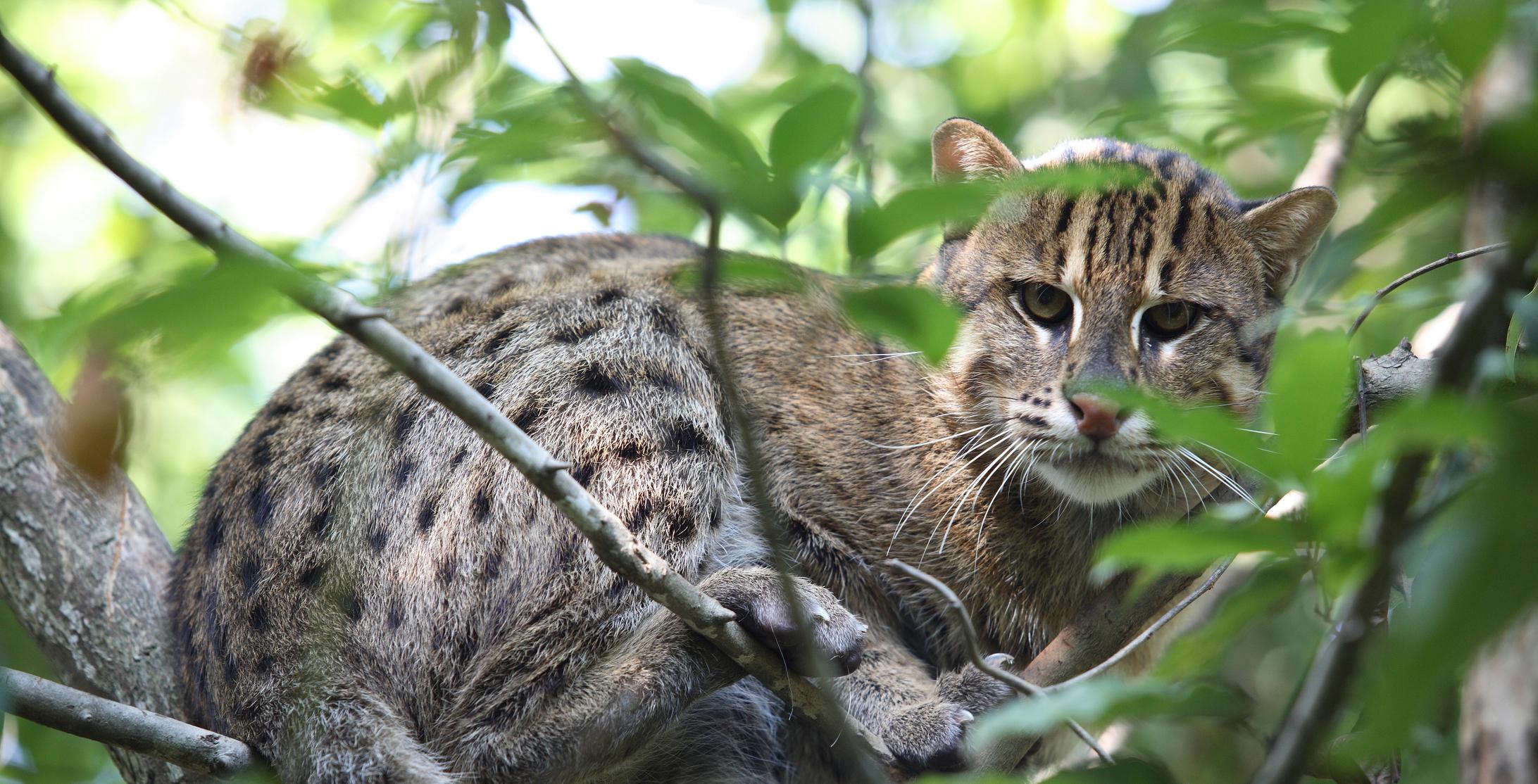
In the monochrome glow of infrared light, a fishing cat (Prionailurus viverrinus) padded along the water’s edge before slipping back into the darkness. The species is so rare it borders on myth in its habitat of South and Southeast Asia. Yet, over the last year, this single adult fishing cat has been photographed dozens of times.
Its sighting in Pursat marks a turning point in the restoration story of Tonle Sap, Southeast Asia’s largest freshwater lake.
“It’s a thrilling discovery,” said Sony Oum, who leads Conservation International’s work in Cambodia. “But its sighting indicates so much more than just the return of the fishing cat — it’s a testament to the hard work of the community to restore their wetlands.”
For 15 years, Conservation International, the Royal Government of Cambodia and 16 local fishing communities have worked to restore Tonle Sap — the world’s largest inland fishery — by preventing pollution and overfishing and removing harmful invasive species like non-native mussels, giant sensitive tree and water hyacinth.
Today, the partnership is responsible for bringing more than 1,000 hectares (2,470 acres) of the degraded flooded forest back to health by planting native trees, protecting areas of the wetland that remain intact and organizing community patrols to stop illegal activity and wildfire.
The fishing cat’s presence is the clearest sign yet that their approach is working.
Across Cambodia, many of the country’s largest predators have vanished. In a landscape reshaped by decades of habitat loss and hunting, the quiet return of a mid-sized carnivore carries outsized meaning.
“The cat’s return suggests fish are abundant enough to sustain a hunter,” Oum said. “It suggests the flooded forests have regained some of the underbrush that predators need to hide from prey. It suggests that, at least here, the wetlands are recovering.”
While most cats have a reputation for avoiding water, fishing cats are natural swimmers. About twice the size of a house cat, they wade through the wetlands with ease — their flattened ears form a watertight seal for diving into the water to catch a meal, while their partially webbed paws help them swim and scoop up fish from the shallows.
Their hunting prowess makes them an essential part of the wetland ecosystem by keeping fish populations in check. Yet, experts estimate that less than 10,000 of the elusive and vulnerable predators remain in the world.
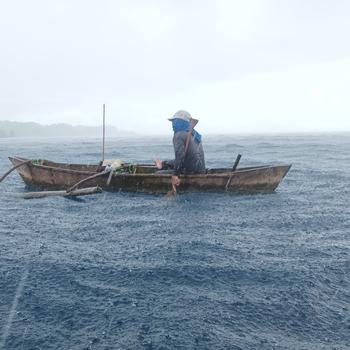
A restored Tonle Sap is about more than a single species. More than 1.5 million people live in the area — many in stilt houses and floating villages — and rely on the seasonally flooded forests for their freshwater, food and fuelwood.
While threats remain, including the construction of hydropower dams upriver, Oum said this is a moment to step back and be proud of what they’ve accomplished.
“Not long ago, the flooded forests were facing destruction,” he said. “Today, we see restored swamp forests bringing native wildlife home — like otters, birds and the enigmatic fishing cat.”