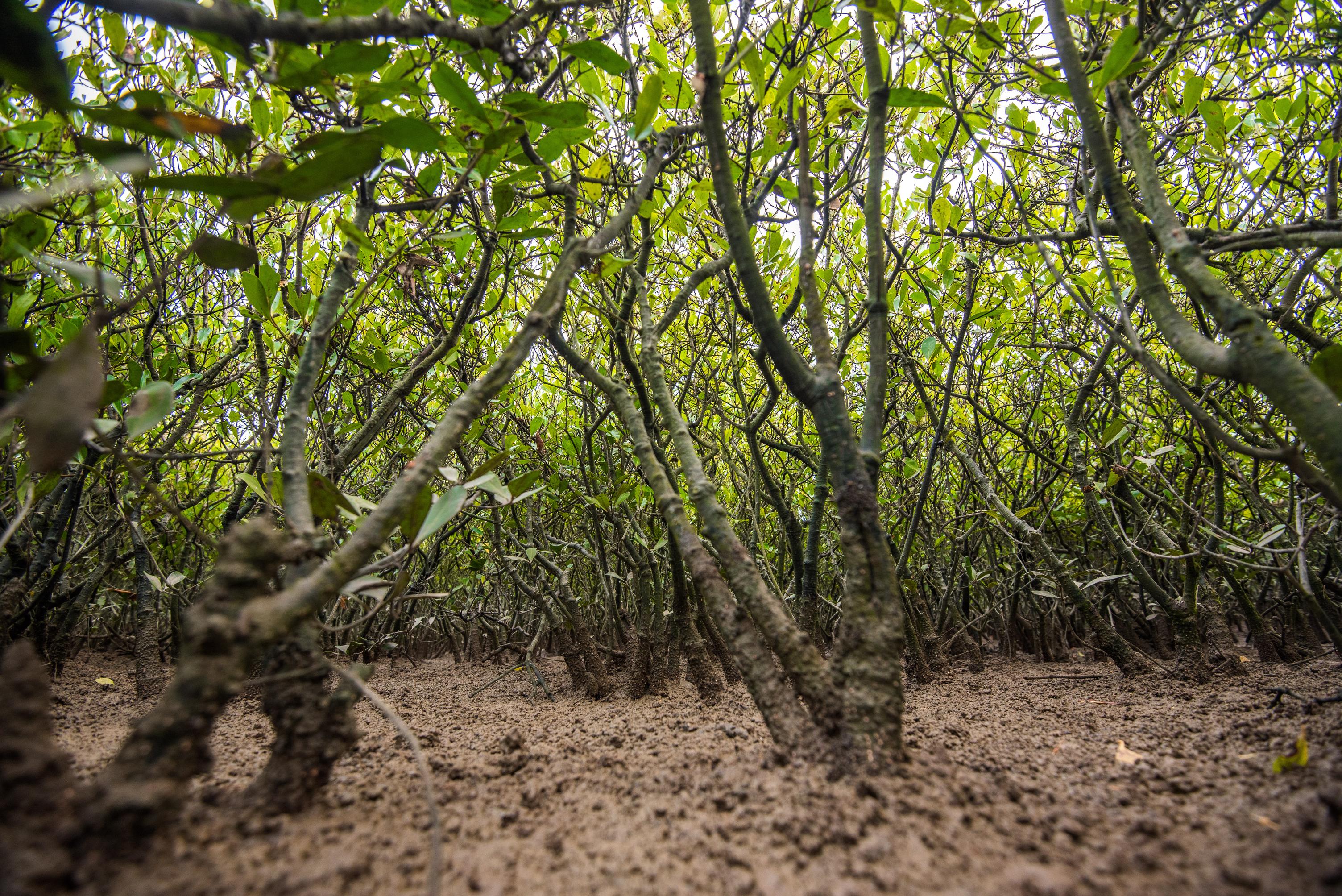
Nature is one of the most powerful tools we have against climate change.
A healthy forest, wetland or grassland acts like a giant sponge for carbon — pulling it out of the air and locking it safely away. Scientists call this a carbon sink.
But when a forest is cut down or burned, it releases the carbon it had stored, adding to the problem instead of solving it. Nature-based solutions are actions that protect, restore and manage ecosystems so they keep doing their job as carbon sinks — instead of becoming a source of the pollution we're trying to stop.
This isn't a small piece of the puzzle. A landmark study found these solutions could deliver over 30 percent of the emissions reductions the world needs by 2030 to prevent runaway climate change.
What are the different types of nature-based solutions?

Protecting forests
Tropical forests hold a lot of carbon, so when we protect them we prevent billions of tons of carbon dioxide from entering the atmosphere each year. Conservation International works with governments and communities to establish and strengthen protected areas, combat illegal deforestation and ensure that forest conservation lasts for generations.
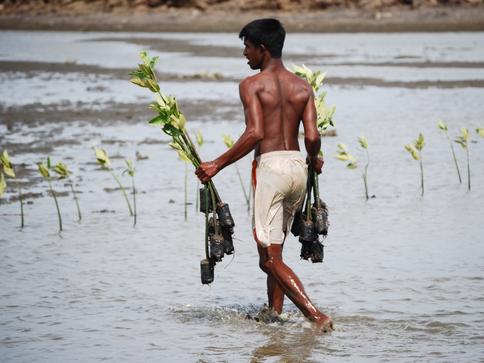
Restoring degraded ecosystems
By replanting and rebuilding forests, mangroves, peatlands, and grasslands that have lost their vegetation, Conservation International helps once-degraded land to hold carbon again (or to become a “carbon sink”). Restored ecosystems rebuild habitat, protect watersheds and restore livelihoods for local communities.
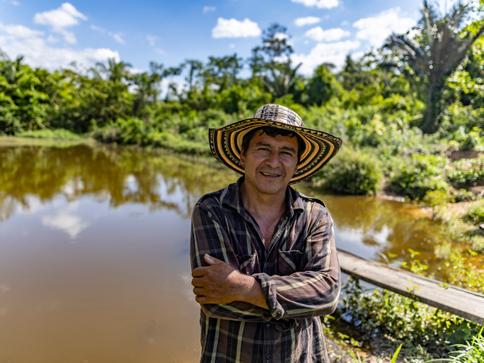
Improving working lands
Agriculture accounts for over a third of global land use. How that land is used matters enormously to our climate. Simple changes — disturbing the soil less, planting cover crops, managing forests more carefully — trap more carbon in the ground while still producing food. Conservation International helps farmers and foresters adopt these practices.
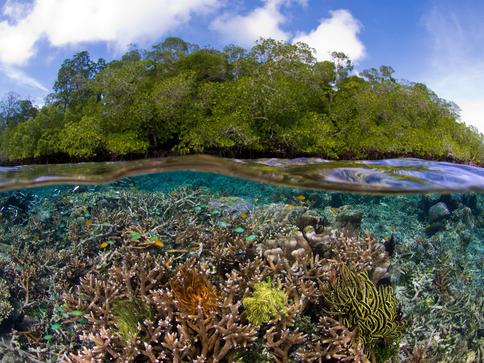
Helping people adapt
Ecosystems, when healthy, do a lot of work to protect people from disaster, including by buffering communities from floods and sea-level rise, or ensuring food availability. Conservation International’s ecosystem-based adaptation helps ensure whole natural systems, like forests, wetlands or coral reefs, can thrive, storing carbon and helping people mitigate and adapt to climate change.

Protecting and restoring nature is immediately scalable, relatively inexpensive, and doesn't need technical leaps of faith.”
Why do nature-based solutions to climate change matter?
The science is clear: Nature is one of our most powerful tools against climate change, with benefits that no engineered solution can currently replicate. Nature-based solutions are cost-effective, and they have the additional benefit of protecting against critical biodiversity loss too. Conservation International’s Exponential Roadmap for Natural Climate Solutions identifies how the land sector alone could create a 10-gigaton carbon sink by 2050, which would be equivalent to removing more than twice current U.S. annual emissions from the atmosphere every year.
Definitions
What is carbon sequestration?
Carbon sequestration is the natural process by which forests, soils, wetlands, and other ecosystems absorb climate-warming carbon dioxide from the atmosphere and store it away, where it cannot contribute to warming. In nature, this happens continuously: trees absorb carbon dioxide through photosynthesis and lock it into wood and roots; wetlands accumulate carbon in waterlogged soils; seagrasses and mangroves sequester carbon in their tissues and the sediments beneath them.
This is why protecting and restoring natural ecosystems is more than conservation, it’s a climate strategy. When people cut down forests or drain wetlands, stored carbon releases into the atmosphere. But when we protect or restore such natural areas, those ecosystems continue pulling carbon out of the air and keep existing stores safely locked away.
What is carbon capture, and how is that different from nature-based solutions?
Carbon capture, sometimes called carbon capture and storage or CCS, is a related but different strategy. Where sequestration relies on natural ecosystems to absorb and hold carbon, carbon capture and storage uses industrial technology to capture carbon dioxide directly from power plants or factories and inject it into underground geological formations. Both aim to keep carbon out of the atmosphere, but nature-based solutions do that and also help biodiversity, community resilience and clean water, which no industrial technology can replicate.

Less than 3 percent of climate funding
Do nature-based solutions receive enough funding?
Not yet! Nature receives less than 3 percent of global climate finance. But nature-based solutions are one of the most cost-effective strategies available. Nature-based solutions also offer other benefits, like protecting biodiversity and providing healthy, green spaces for people to use.
What is Conservation International doing to support nature-based solutions?
Conservation International is a leading proponent of nature-based solutions to climate change. We know that to help resolve the climate crisis, the world needs both ecological integrity and community partnership. Conservation International builds its approach to nature-based solutions around four pillars:
Protect
Keeping the most carbon-rich, biodiverse ecosystems intact before they are lost. This includes forests, peatlands, and coastal blue-carbon ecosystems that store irreplaceable amounts of carbon.
Restore
Rebuilding degraded ecosystems so they can go back to helping the climate and biodiversity. Conservation International prioritizes restoration in high-potential areas where nature can recover in ways that have a large impact.
Transform
Changing the ways people use land, particularly in agriculture, forestry, and coastal management, so they support rather than undermine climate goals. This requires changes to government policies, economic markets and community engagement.
Finance
Channeling public and private investment to fund protection and restoration at levels that make a difference. Conservation International’s work includes developing standards and guidelines for high-integrity natural climate finance that makes a real impact on people and nature.
Multiply Your Impact

Your support reaches further than you think.
Every private donation helps unlock additional funding from governments, foundations, and institutional partners — multiplying impact by up to 300%