Editor’s note: Around the world, innovative businesses are helping to solve some of the biggest environmental challenges of our time. Yet doing so can be risky. Conservation International’s investment fund, CI Ventures, provides support for early-stage companies that are benefiting people and nature. In this occasional series, startup founders join CI Ventures’ investment experts to share their stories.
Plastic is pervasive. It’s in our air, lands and waters — and even our bodies.
Each year, the United States alone generates 287 pounds of plastic per person, and less than 10 percent of that is recycled. The rest clogs landfills and oceans, endangering marine life and human health, and contributing to climate change.
Sway, a California-based startup backed by Conservation International’s impact investment program, CI Ventures, is disrupting this cycle. Sway is using seaweed to replace the plastic in packaging like food wrappers and those ubiquitous single-use shopping bags. Their work seeks to answer a simple, yet potentially revolutionary, question: “What if plastic was regenerative rather than destructive?”
CI Ventures has supported Sway since its inception — from early prototypes to new technologies, which could enable seaweed to replace flexible plastics at scale.
Conservation News sat down with Julia Marsh, Sway’s CEO and co-founder, and Gracie White, who leads CI Ventures’ ocean investments, to learn how the company is fighting plastic pollution.
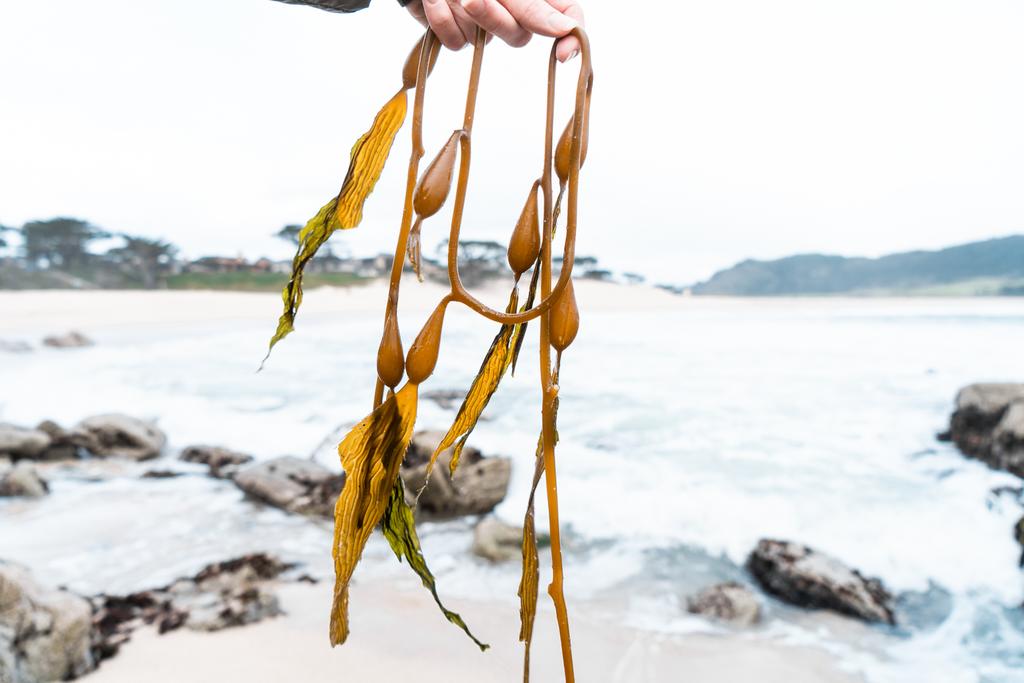
© Edges of Earth
Seaweed collected in Monterey Bay, California.
Sway turns seaweed into plastic. How does that work?
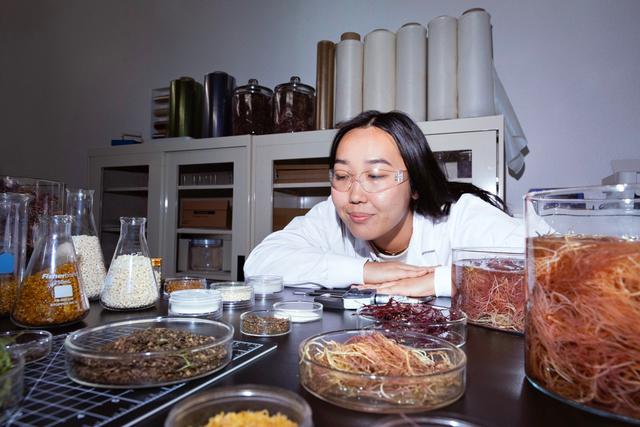
Julia Marsh: Conventional plastics are made by melting and forming petroleum-derived resin into finished products, like the single-use plastic packaging used to keep foods fresh. In our lab, Sway has created a resin made entirely from stretchy natural polymers that mimic the look and feel of plastic. Our material is derived from seaweed and plants, and sourced from responsible ocean farmers around the world. It is designed to fit right into the same machinery that creates traditional plastics, meaning we don’t need to overhaul manufacturing systems. Best of all, it decomposes after use.
You describe plastic waste as a “design flaw.” How so?
JM: Plastic pollution is often the result of poor design choices made at the beginning of production. According to some estimates, approximately 80 percent of environmental waste is determined at the design stage. I’m a designer myself; I see how packaging design choices can help make products more beautiful, more accessible and more efficient. Good design can lead to meaningful impact.
And from CI Ventures’ perspective, what’s exciting about Sway?
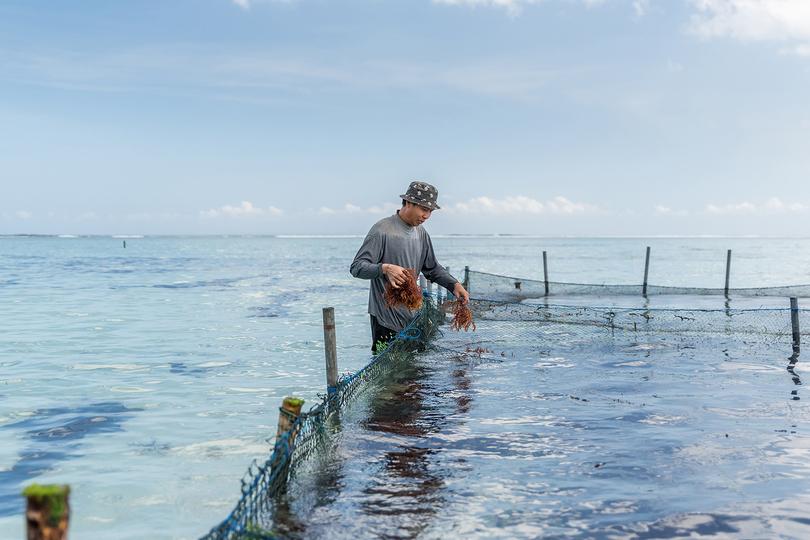
Gracie White: There are several factors that excite me. First, they aren’t sourcing just one type of seaweed. They are using a wide variety of species from different countries, from Mexico to Brazil to Indonesia and beyond, which is which helps mitigate risks of supply issues. The seaweed industry is growing, but it lacks regulation. That lack of regulation has led to some supply chain and production practices that can actually degrade the environment and hurt farmers’ livelihoods. Our hope is that as Sway grows, they could become a major purchaser of seaweed from Latin America and Southeast Asia. And if they're implementing certain sustainability standards, then those standards will be implemented throughout seaweed supply chains more broadly.
© Sway
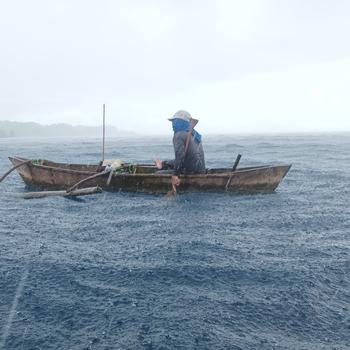
A seaweed farmer in Indonesia.
What hurdles have prevented better, most sustainable plastic products?
JM: Traditional plastics have been around for more than a century, during which time plastic manufacturers have become heavily subsidized through state and local tax breaks. While there has been progress in developing more sustainable plastics using renewable feedstock alternatives — like corn, potato and sugarcane — these materials fall short in terms of performance, cost and scalability. To truly beat traditional plastic, we have to match or exceed its inherent benefits — and this takes time.
How do you get others to buy into this vision?
JM: No matter where in the world you live, it’s easy to see our planet has a plastic problem. Consumer and regulatory pressures are driving brands to make sustainability commitments left and right, yet greenwashing is rampant and bioplastics currently on the market often have major shortcomings. True solutions can feel difficult to identify.
Seaweed can purify and clean our seas, enhance marine biodiversity and boost coastal economies. I think creating everyday materials from this abundant resource is appealing on a broad level — and offers prospective consumer packaged goods brands a compelling, sustainable business case, which will ultimately entice them to work with Sway.
© SnackTime
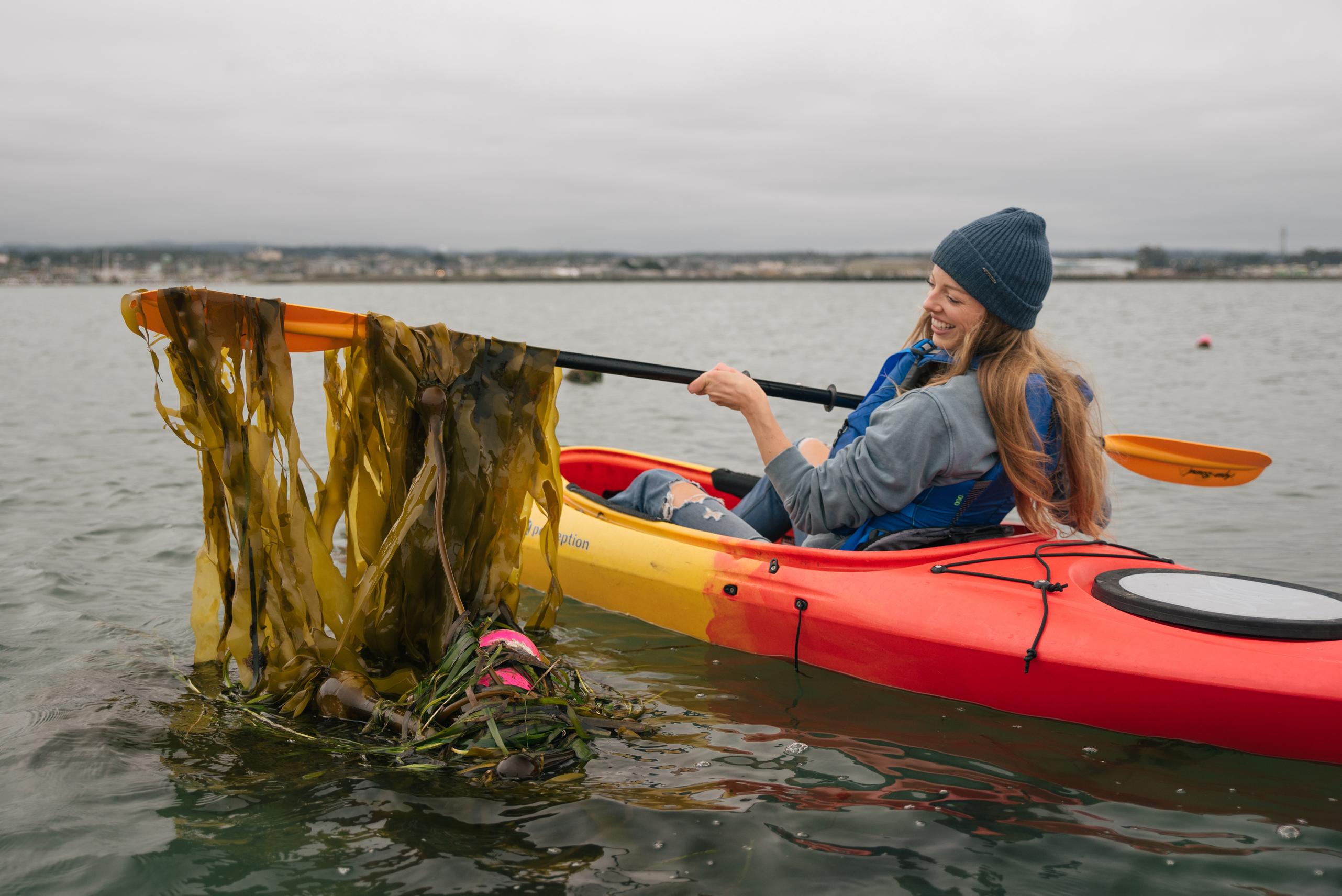
Sway Materials Engineer Amanda Guan.
What changes do you think we’ll see in production in the next decade?
JM: Rather than degrading our planet, so-called “regenerative feedstocks” like seaweed have the capacity to nourish ecosystems at every step of the supply chain. We anticipate that over the next decade, brands, investors and policymakers will better understand and prioritize using nature as a climate solution. That includes using materials derived from plants and other renewable materials as opposed to non-renewable materials, like petroleum.
GW: When I first started at CI Ventures, I didn't anticipate investing in materials, like plastic replacements or recycled fishing nets. I thought our portfolio was going to be really focused on fisheries and aquaculture. But actually, these new and innovative “ocean-positive” materials have become a really interesting pillar of our portfolio, alongside investments that are more focused on marine life and sustainable seafood. Growing more seaweed in an environmentally friendly way, especially if it can provide an alternative livelihood for coastal communities, is particularly exciting. I think there are going to be some really interesting enterprises in this space, and it’s something that I'm looking forward to investing in more.
More stories from CI Ventures investees:
- Meet the startup that's making seaweed more sustainable
- Meet the startup putting cattle to work for conservation
- Meet an organic food startup with Indigenous roots
- Meet the startup using magnets to keep sharks at bay
Max Marcovitch is a staff writer at Conservation International. Want to read more stories like this? Sign up for email updates. Also, please consider supporting our critical work.