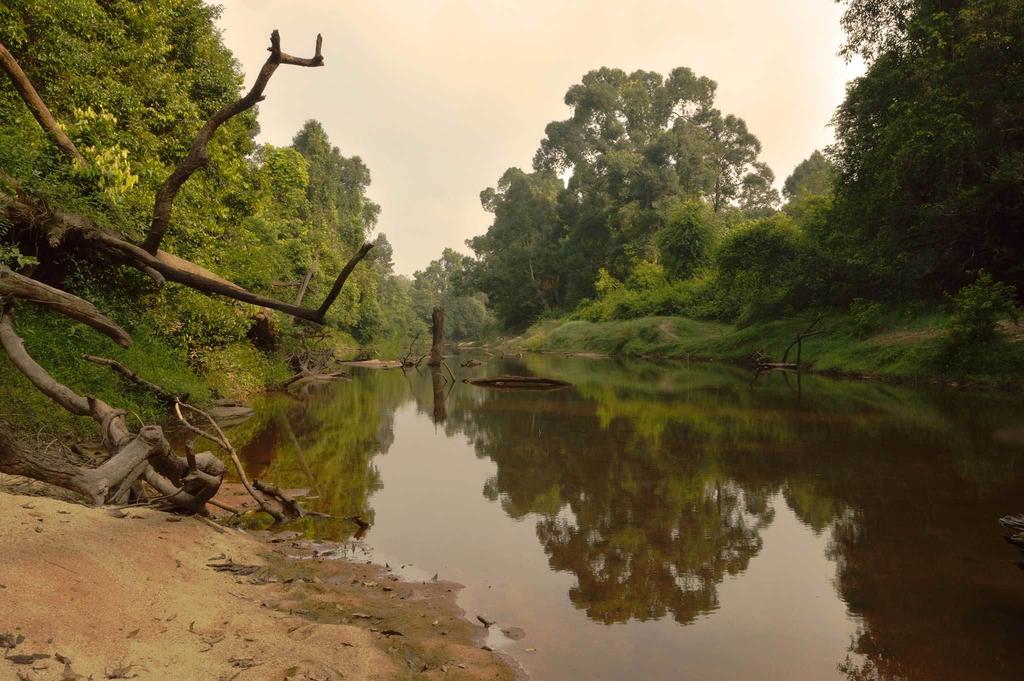
The Central Cardamom Mountains are some of Southeast Asia’s most pristine expanses of wilderness — long considered a refuge for rare species.
Now, a new study from Conservation International and the Cambodian government provides an unprecedented peek into the region’s elusive wildlife, confirming just how vital it is.
In the first camera trap study of its kind in the Central Cardamom Mountains, more than 100 species — almost a quarter of which are threatened or endangered — were recorded by 147 camera traps over nearly a year.
Researchers say the study confirms the critical conservation value of the Central Cardamom range, where Conservation International, alongside the Chourng and Por Indigenous communities, has worked for more than two decades to protect wildlife habitats and support sustainable livelihoods.
The findings hint at an even greater treasure trove of biodiversity.
“Capturing images of 108 species on the camera traps is impressive,” said Thaung Ret, an ecologist and Conservation International’s lead researcher in Cambodia. “Yet that represents only a fraction of the animals present — think about the insects, canopy birds and aquatic species that are out of the camera’s view.”
Camera traps are widely used to monitor biodiversity and guide conservation. Activated by motion or infrared sensors, they allow scientists to observe animals in their natural habitats.
With data in hand, Ret and other researchers hope their findings will help expand protections and curtail the growing threat of poaching and deforestation in the area.
“Before, in many ways, we were working blind,” Ret said. “This study has allowed us to ‘see’ into the forest. Now we have the proof, and we can focus our efforts and protect this globally important sanctuary.”
Here are glimpses of the wildlife the team uncovered:
Pileated gibbon

© Conservation International
With long arms that allow it to swing from branch to branch at speeds of up to 56 kilometers per hour (35 miles per hour), the pileated gibbon is an iconic species in the region — and a standout find for Ret. It is extremely rare to see these shy primates on the ground, as they prefer to be high in the forest. When they aren’t sleeping (pileated gibbons can snooze for 16 hours per day), they travel long distances, rarely staying in the same tree from one night to the next.
The Cardamom Mountains have the largest population of pileated gibbons in Southeast Asia, but they are highly endangered. Their numbers have dropped by more than half over the past 45 years, and are expected to continue to decline largely due to habitat loss.
Sunda pangolin
Juvenile pangolins, like the one in this video, are known to ride on their mothers’ backs during the first three months of their lives. During the survey, camera traps snapped 18 photos of Sunda pangolins — an astonishing number for this elusive, nocturnal mammal. As insectivores, Sunda pangolins play a vital role in the forest by controlling termite populations, which might otherwise damage trees. It’s estimated that one pangolin can devour more than 70 million insects per year.
Critically endangered, Sunda pangolins have the grim distinction of being the most trafficked mammal in the world. While there are few reliable estimates of its population, it’s believed their numbers have dropped by 80 percent in recent decades as poachers seek their scales and meat for sale on the international black market.
Sun bear
Named for the golden patches of fur on its chest — which are said to resemble the rising sun — the sun bear is the smallest of all bear species, measuring up to 1.5 meters (5 feet long). With a 10-inch-long tongue made for snatching honey from beehives, these nocturnal creatures love the treetops, where they often build nests.
Yet, poaching of the bears’ gall bladders for traditional medicine and the destruction of their habitat for agriculture has caused their populations to decline by more than 30 percent globally. Today, only 10,000 sun bears remain, occupying about a third of their historic range, according to estimates.
Dhole
© Conservation International
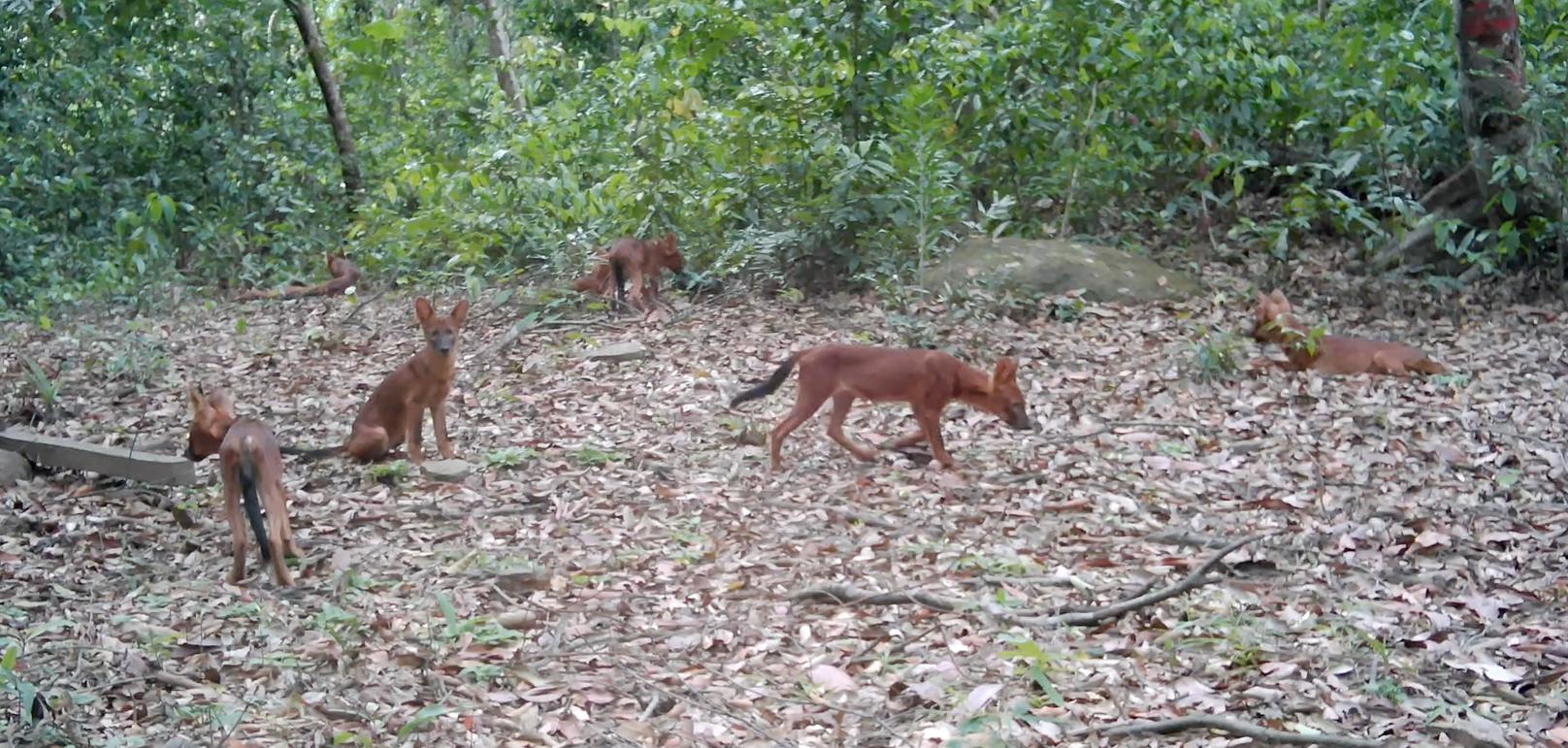
Relatives of dogs and wolves, dholes are social creatures — traveling and hunting in packs of up to 30 individuals. The Central Cardamom Mountains are thought to hold Cambodia’s largest population of these endangered wild dogs.
With fewer than 2,500 remaining in the wild, dholes are one of the region’s last remaining apex predators, Ret said. Habitat loss is the greatest threat to their survival, yet disease and human incursion also pose problems. The wild dogs are susceptible to diseases passed on by domestic dogs that encroach on their habitat.
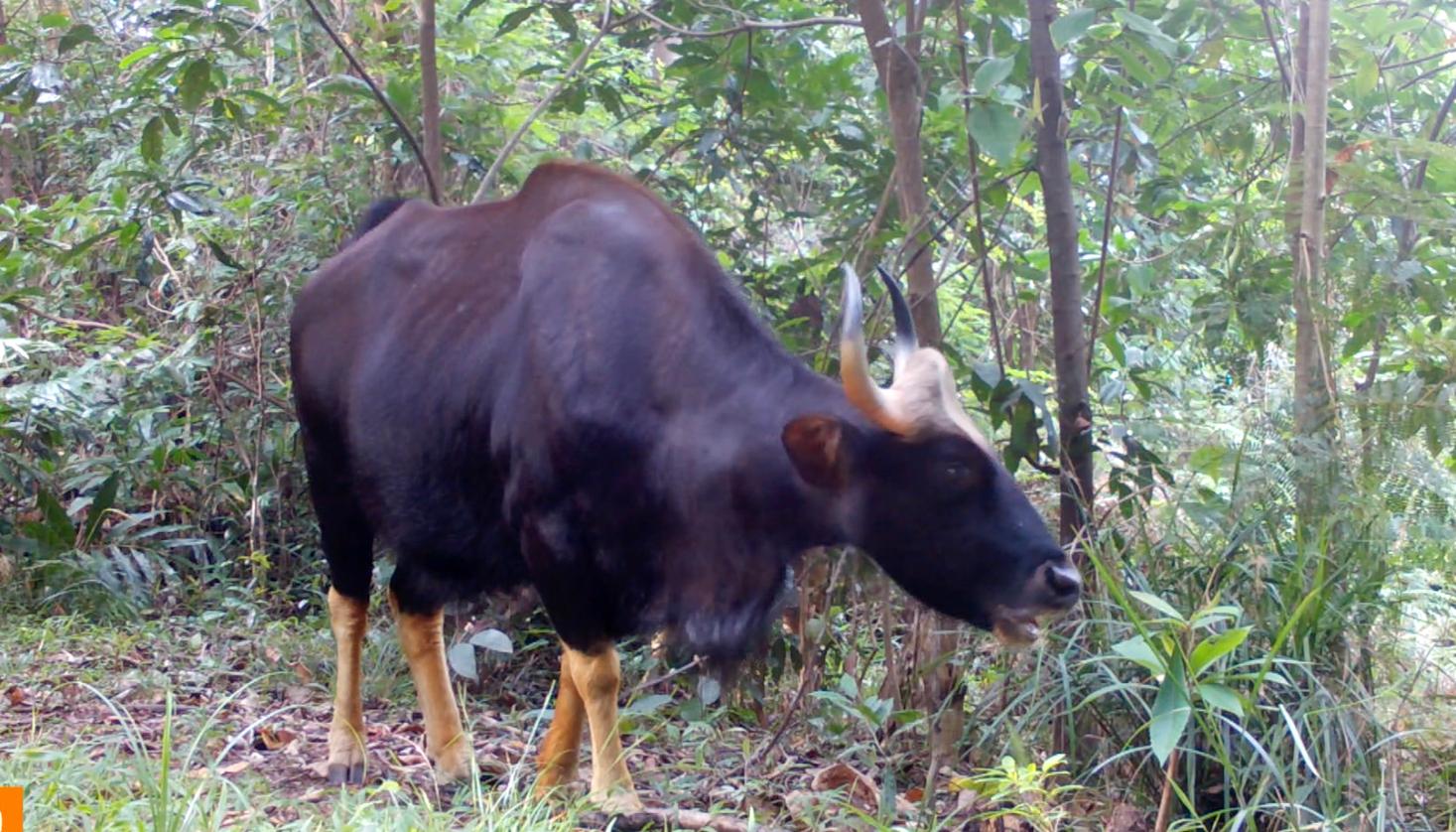
Gaur
© Conservation International
The largest of the world’s wild bovines, gaur are close relatives of domestic cattle. They were once found all over Southeast Asia, but today their range has been dramatically reduced, mainly due to agricultural expansion.
Camera traps detected only a few gaur — indicating there aren’t many left in the Central Cardamoms, likely due to hunting, Ret said. Listed as vulnerable on the IUCN Red List, their populations have declined by more than 70 percent in some parts of their range.
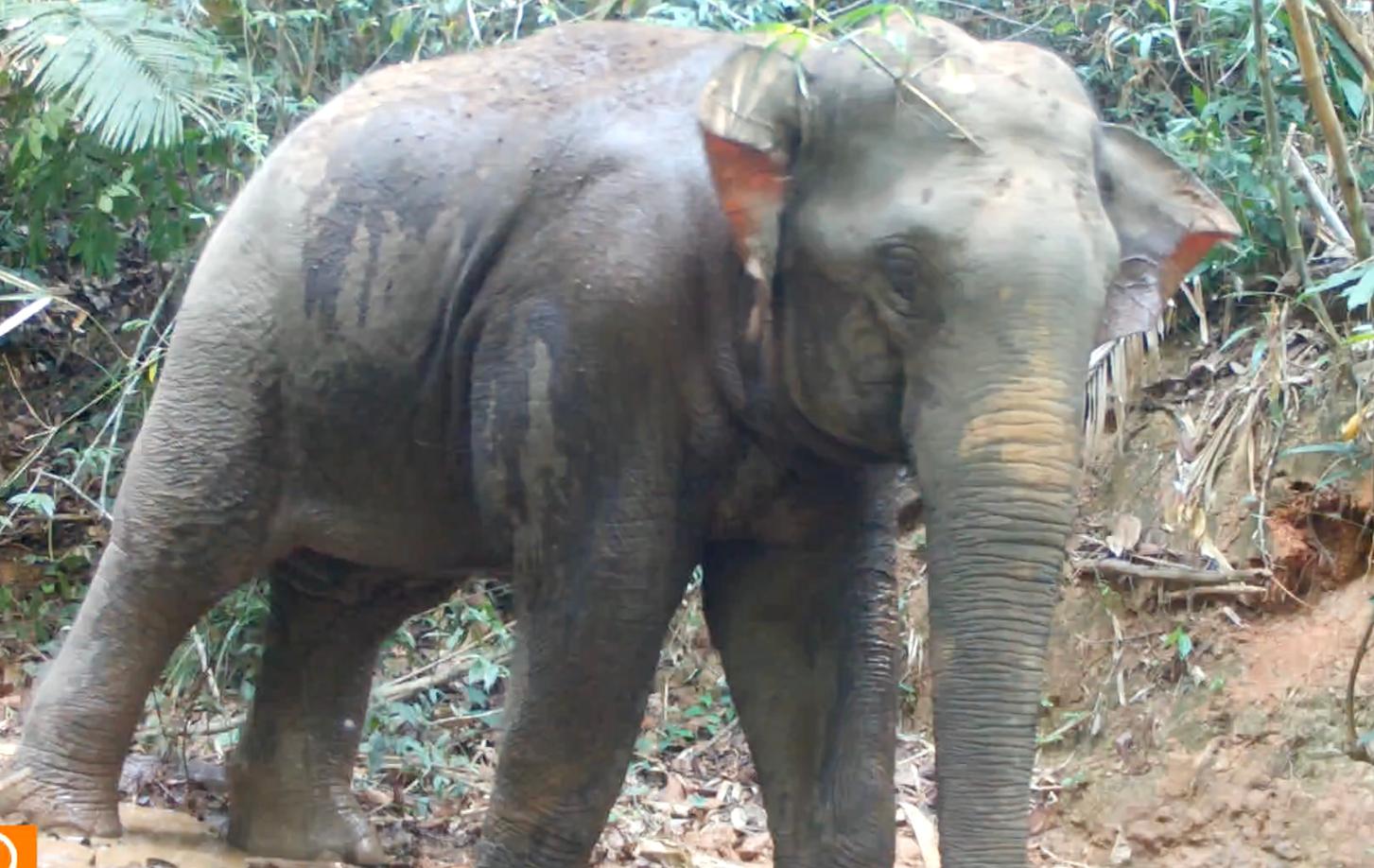
Asian elephant
© Conservation International
Fewer than 50,000 Asian elephants remain in the wild, having lost 95 percent of their historic range. Around the world, these giants are threatened by poaching, habitat destruction and climate change. In the Cardamom Mountains, less than 100 Asian elephants are thought to survive. While researchers only saw a few in the survey, they say that given the protections and healthy habitat of the central mountain range it could be a refuge for the endangered species.
Asian elephants are revered as cultural icons and deities. They also play an important role as ecosystem engineers, traveling vast distances and carving new paths through dense brush, while spreading seeds that restore forests. Ret and the other researchers hope their popularity will draw greater attention to their plight — and that of other endangered species in the region.
“All of these species are connected, and they play a vital role in the Cardamom’s ecosystem,” Ret said. “To be able to document this stunning amount of life is a real privilege. But we’ve just scratched the surface, the more we learn about the rich web of life in this area, the better we’ll be able to protect it.”
This species monitoring project was largely funded by the United States Agency for International Development (USAID) through USAID Morodok Baitang Activity, with additional co-financing from Conservation International, the Legacy Landscape Fund and the Procter & Gamble Company and the leadership provided by the Ministry of Environment. The contents of this study are the sole responsibility of Conservation International and do not necessarily reflect the views of USAID or the United States Government.
Mary Kate McCoy is a staff writer at Conservation International. Want to read more stories like this? Sign up for email updates. Also, please consider supporting our critical work.