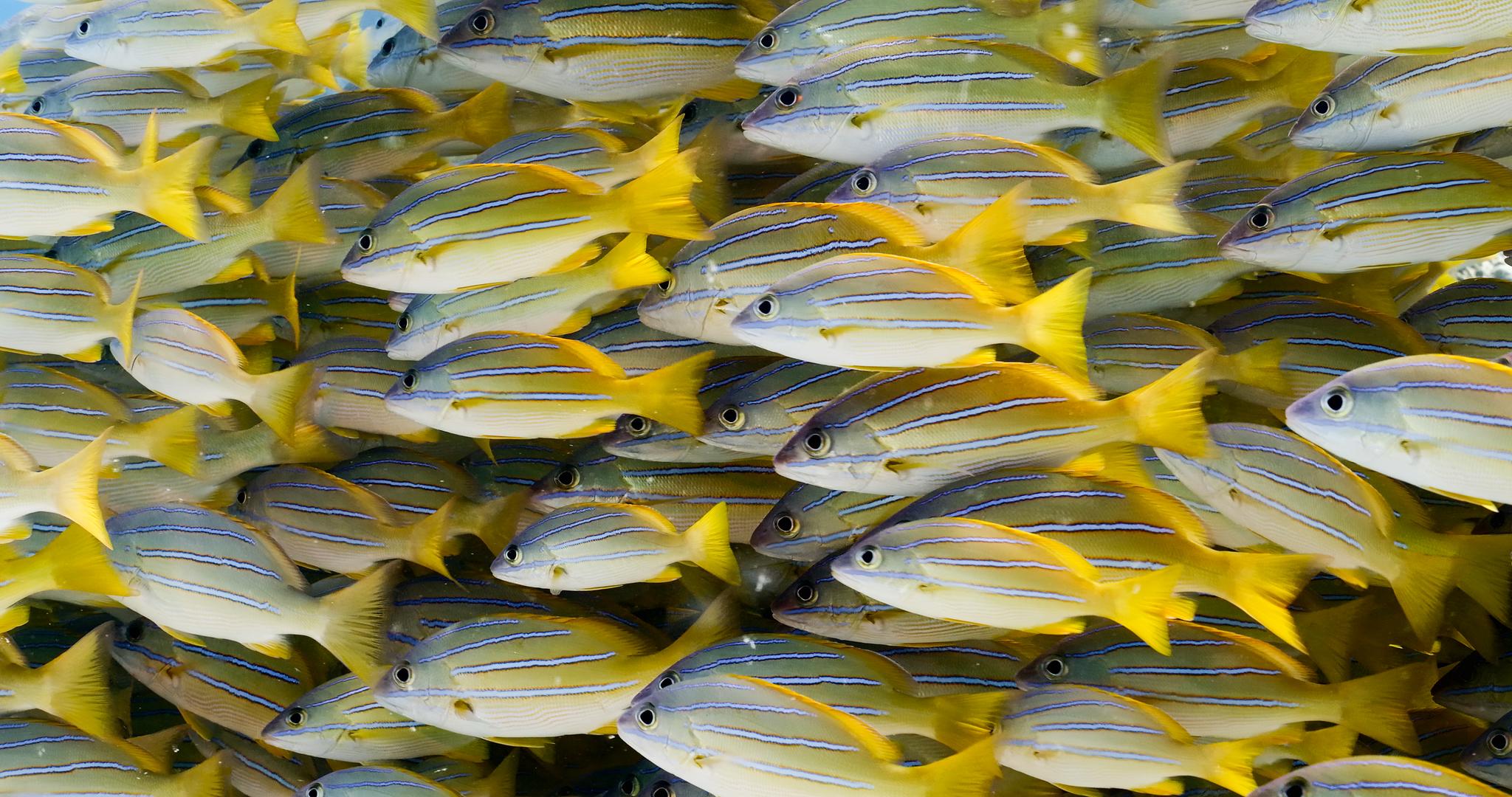
A beautiful species of fish thrives in the waters off the Hawaiian islands.
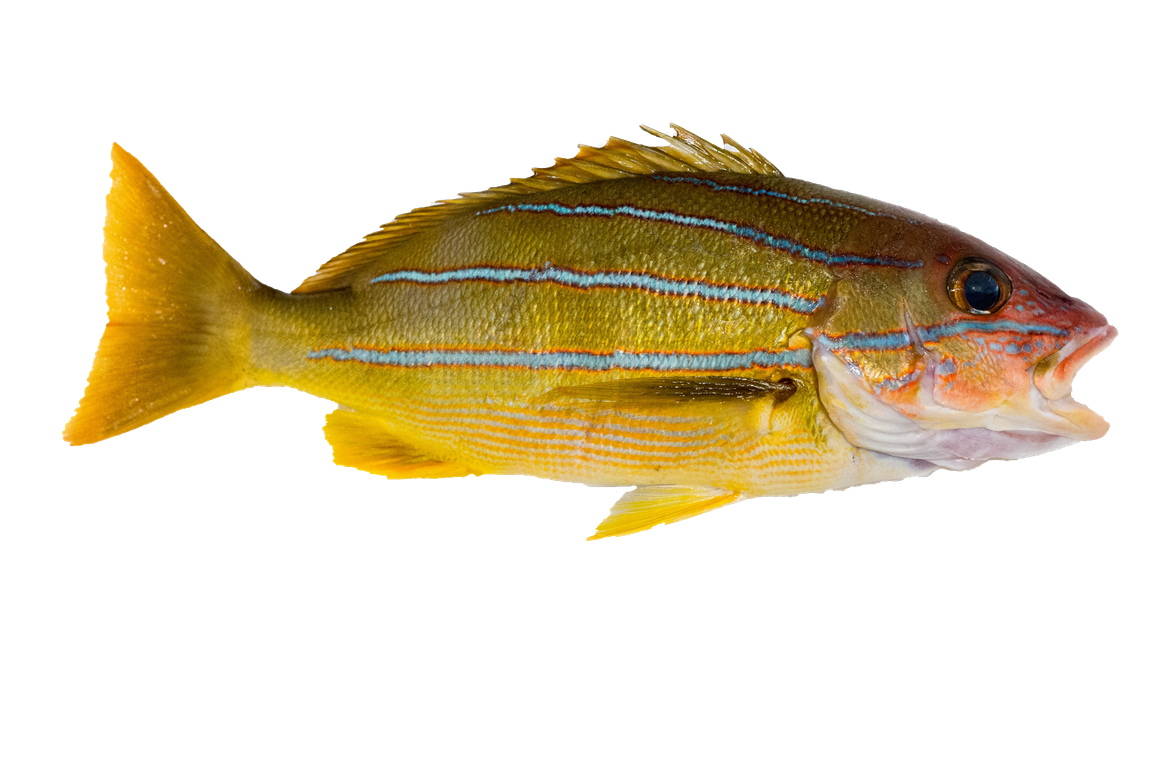
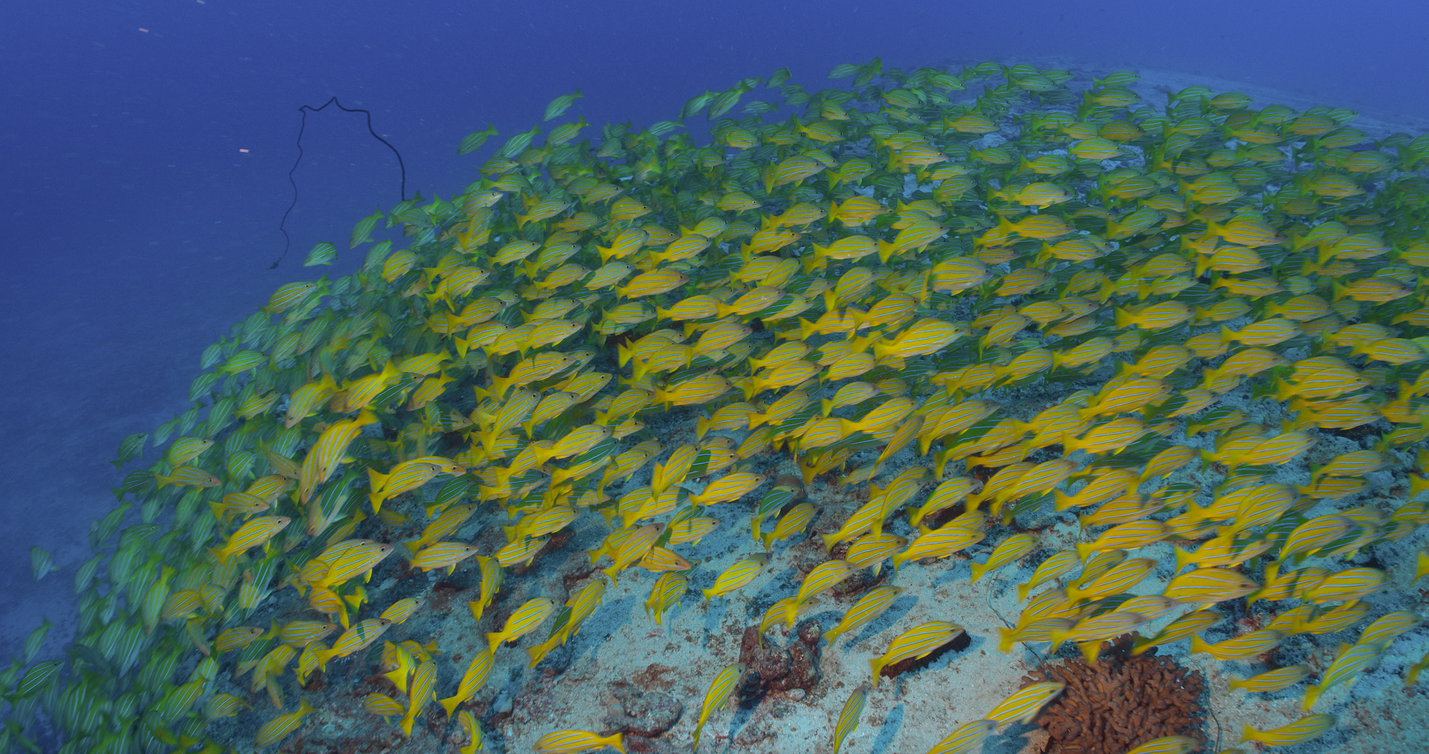
It’s the bluestripe snapper, Lutjanus kasmira, known locally as ta‘ape.
And it is a ravenous, ruinous menace.
Measuring less than a foot long (30 centimeters), lemon yellow with electric-blue stripes, ta‘ape doesn’t look like much of a threat. Native to the Indian Ocean, the handsome species was introduced to the Hawaiian archipelago decades ago to help decrease dependence on pricy imported seafood.
But the ta‘ape made itself at home, exploding in population by feasting on native fish — and on local fishermen’s wallets.
The result: A marine ecosystem out of balance, native fish species being pushed to extinction, and devastation for the local fishing industry.

What would it take to turn the tide against ta‘ape?
Taking on this rapacious species would require something creative. Then Conservation International and local partner Chef Hui stepped in.
By then, one thing had become clear: It turns out that ta‘ape is delicious.
With that in mind, Conservation International and partners started promoting this fish throughout the seafood supply chain, working with commercial fishers and with chefs at local restaurants. Consumers now see that they can eat a tasty meal while supporting the local economy, improving island food security, and helping to reduce a species that — unlike tuna or other tasty native reef fish — can’t be overfished.
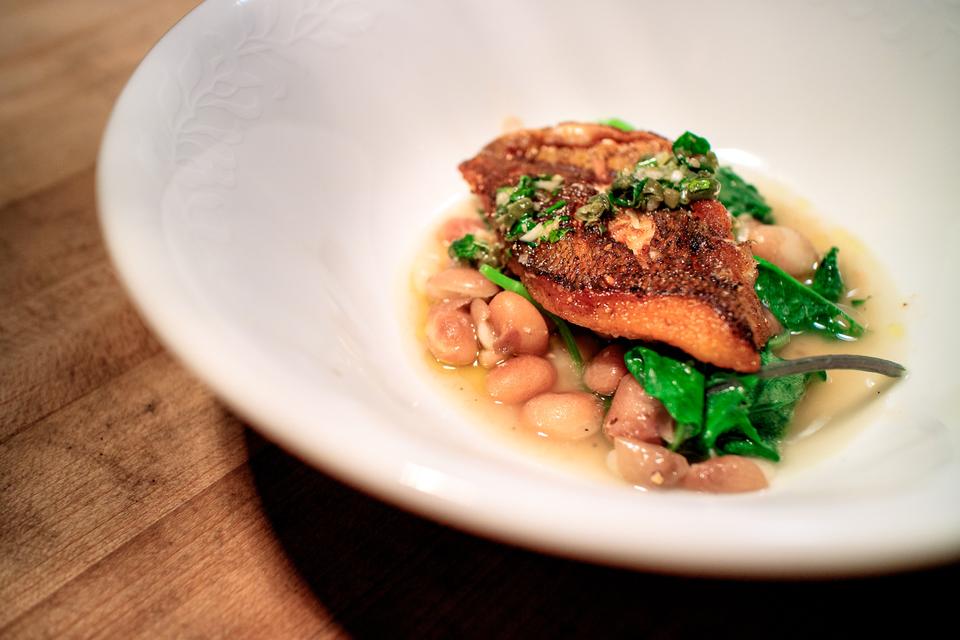
Now, more than 30 businesses and restaurants across the islands have committed to sourcing this invasive fish, amid growing demand for taʻape on menus.
But we didn’t stop there.
Working with luxury Italian designer P448, we helped pioneer the processing of ta‘ape skins into leather for use in the company’s shoes.
To start out, we helped P448 source 2,000 ta‘ape skins from fishermen on the island of Moloka‘i for the collection — the first time ta‘ape skins have been tanned at a commercial scale (in an environmentally friendly process, of course). Those skins were transformed into some 900 pairs of shoes.
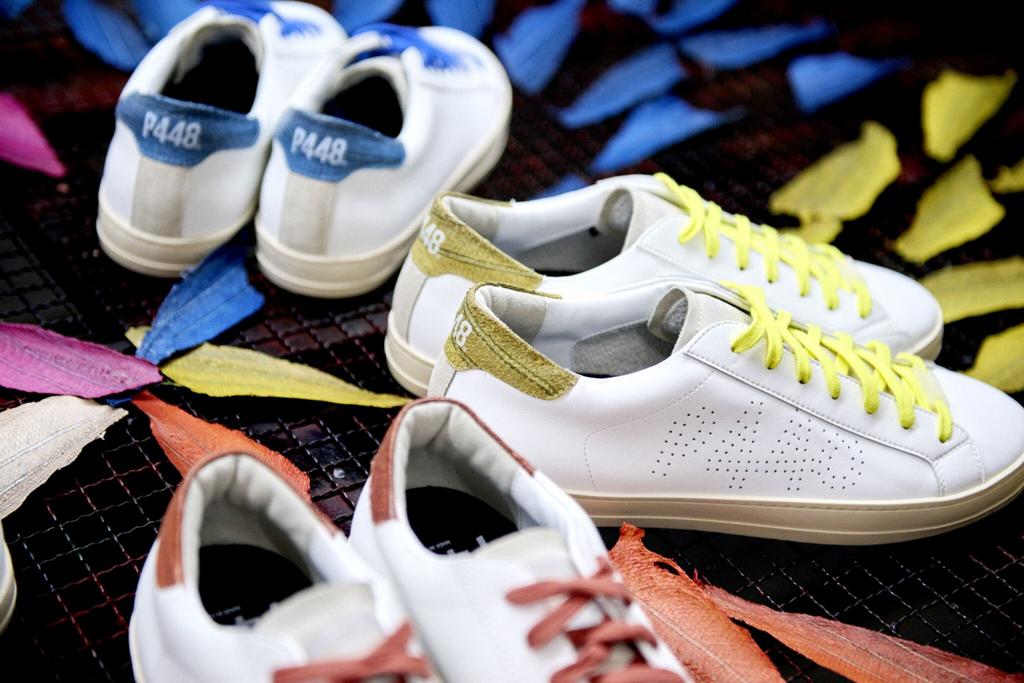
The shoe collection represents a culmination of our long-lasting partnerships with the seafood community we’ve built for over a decade in Hawai‘i. Not only can we eat them to beat them, we can wear them and apply this idea of using invasive fish leather to benefit our fishermen and economy.”
A Closer Look
Get a glimpse of how we’re working with local partners in Hawai’i to tackle the ta’ape.
You can support projects like this
More Stories
CLIMATE
Small towns, big impacts
In Bolivia, small communities taking charge of the forests they depend on

BIODIVERSITY
From the Himalayas to the sea
In the Eastern Himalayas, nature’s bounty supports millions of people. Can this region cope with climate change and the loss of wildlife before it’s too late?