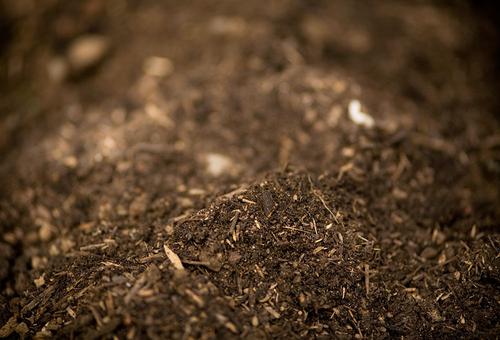
The earth beneath our feet teems with life.
In a single handful of soil there are billions of bacteria, scores of species of fungi, thousands of microscopic creatures like nematodes, and animals like arthropods and earthworms.
These hidden microbial worlds are the building blocks of nature. They keep our farmland healthy, fuel our food systems, help hold climate-altering carbon and make life as we know it possible.
Now, scientists warn, that world is in danger of collapsing before we even fully understand it.
A new study from Conservation International and the International Union for Conservation of Nature (IUCN) says that one in five assessed soil-dependent species is threatened with extinction — and that figure may only scratch the surface.
In addition, 20 percent of the 8,500 species reviewed lack sufficient data to evaluate at all, said Neil Cox, Conservation International and IUCN scientist and study author. The change in land cover and soil chemistry — such as the use of agrochemicals — is largely to blame.
“Soil sustains nearly every essential part of human life, yet we know remarkably little about the thousands of species that keep it healthy,” he said. “We are flying blind on one of the most critical ecosystems on Earth.”
Soil is the most biodiverse habitat on Earth — home to nearly 60 percent of all species. It also produces 95 percent of the food humans eat and could store more than a quarter of the carbon needed to meet global climate targets.
But scientific attention tends to follow what the eye can see.
The creatures easiest to spot get the most attention. Burrowing species like rabbits and gophers are relatively well studied — but the fungi, bacteria and invertebrates that do the essential work of keeping soil productive remain almost entirely unknown to conservation science.
“With a gopher or a prairie dog, you can watch it, tag it, track it,” Cox said. “But with fungi and invertebrates, you’re dealing with millions of organisms in a single handful of earth — many of which we’ve never even named.”
That invisibility has a cost.
Without urgent intervention, the collapse of soil biodiversity could unravel the agricultural systems that feed the world and accelerate the very climate instability scientists are racing to prevent.
Reversing that trajectory starts with changing how we farm.
Around the world, Conservation International is helping farmers grow crops in ways that work with nature. By blending fruit trees, timber species and nitrogen-fixing plants with crops — a practice called agroforestry — farmers can boost soil fertility, reduce erosion and diversify their income. This helps restore degraded land, support biodiversity and increase resilience to climate change.
The study’s authors say we also must dramatically expand the number of soil species on the IUCN Red List of Threatened Species — the global benchmark for extinction risk — and to start treating it with the same urgency as other threatened species like tigers, elephants or corals.
“The Red List helps guide the world on what gets protected,” Cox said. “Soil species hold entire ecosystems together, yet they barely appear on it. That’s a fundamental gap in how we understand life on Earth.”