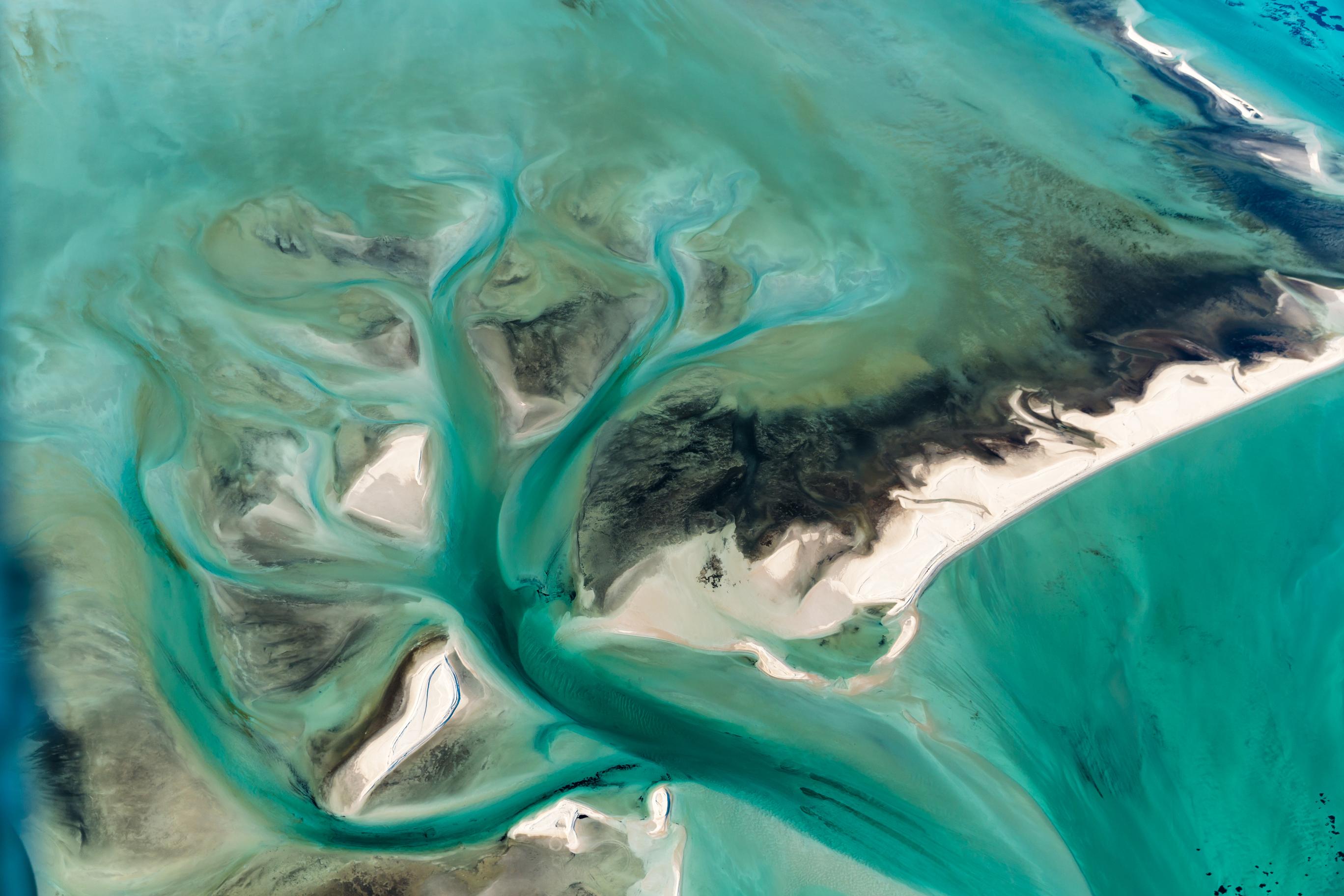
The seagrass meadows of Shark Bay can be seen from space.
From orbit, the shallow shoals of westernmost Australia appear almost bioluminescent — a sweep of teal in a sea of royal blue. This living band of color is so expansive that, until recently, scientists didn’t realize it was all one plant.
When scientists sequenced samples from across the bay in 2022, they found identical DNA. What looked like a patchwork of plants was actually one clone — possibly the largest organism on Earth, which has been expanding across a seagrass meadow larger than the state of Rhode Island for more than 4,500 years.
And it gets stranger.
The species, called Poseidon’s ribbon weed (Posidonia australis), isn’t just a clone; researchers believe it may be a polyploid — a hybrid between two related species that carries two full sets of chromosomes. Polyploids are common in nature but often can’t reproduce in the usual way.
In Posidonia’s case, cloning is an adaptation that allows it to not only survive but thrive. But homogeneity could also breed vulnerability — especially in the age of climate change.
Michael Wear, an Indigenous Australian of Malgana descent, whose family has lived in Shark Bay for millennia, saw the collapse of the meadow unfold in real time.
“In 2011, we had a heat event where the water got so hot so fast that the seagrass couldn’t cope,” Wear said. “It happened in stages — patches disappearing, then bigger sections. By the third year, you could see the full impact.”
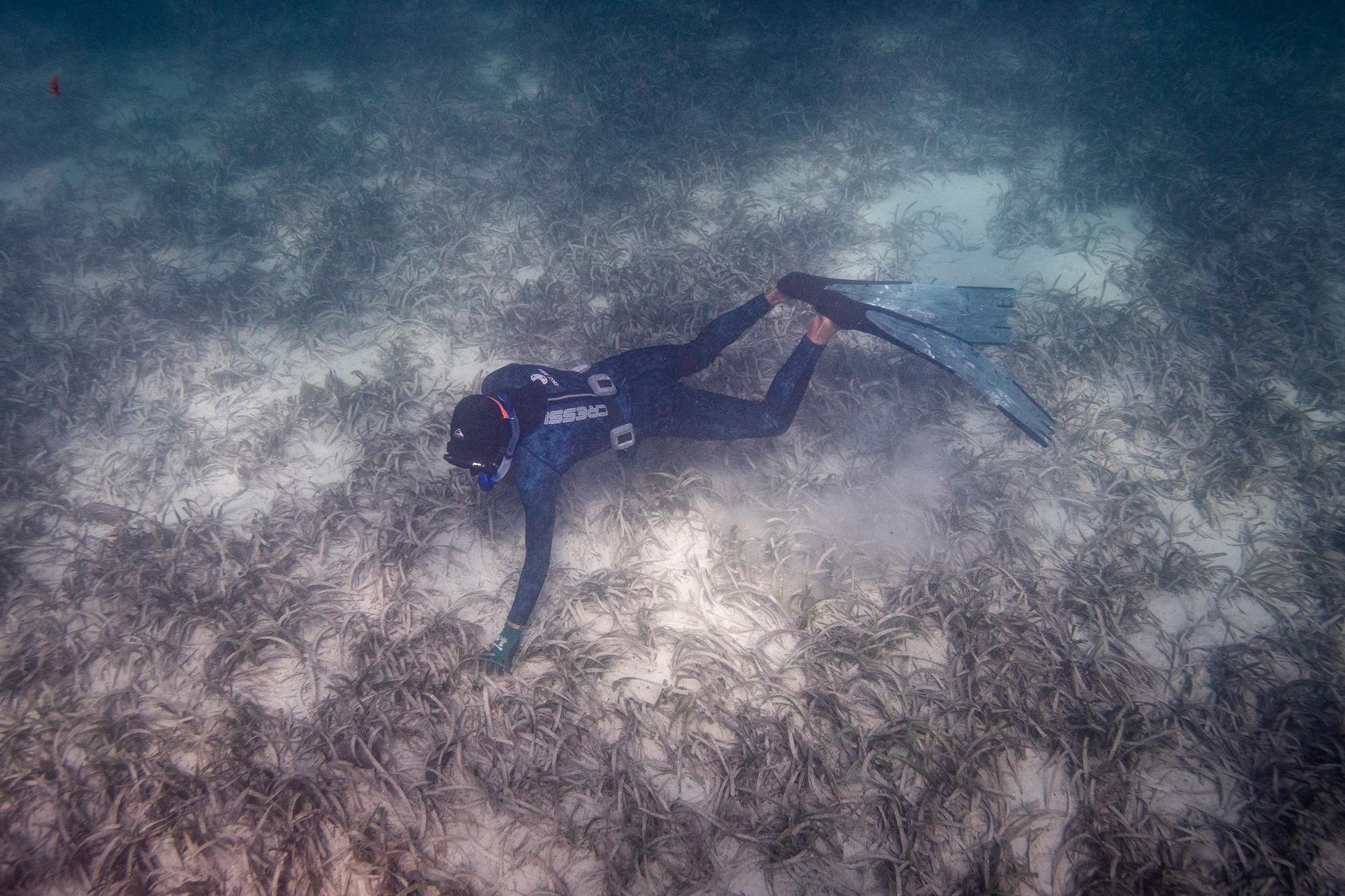
In total, about 36 percent of the meadow was lost — an area about the size of Greater London — the largest die-back of seagrass ever recorded anywhere in the world. When the heat faded, the meadow didn’t simply bounce back. Scientists say full recovery from a disturbance this large will take years or even decades.
That loss carries consequences far beyond Shark Bay. Seagrass meadows are among the planet’s most efficient natural carbon sinks, storing vast amounts of carbon in their roots and sediments for centuries. When large sections of the meadow died, that stored carbon was disturbed — turning a living climate buffer into a source of emissions.
“I remember thinking, okay. What do we do now? When Country changes, you ask why, and you act,” Wear said, using the Aboriginal idea of Country — a living relationship with place.
In response, Wear founded Tidal Moon, a start-up supported by Conservation International, that is working to restore degraded sections of the seagrass meadow. The effort involves divers in the water, diligently replanting seagrass one patch at a time, while exploring how the restoration might rebuild a centuries-old trade of an unlikely creature: the humble sea cucumber.
Beneath the seabed
In the months after the heat wave, Wear watched. He walked the shoreline, talked with family, and returned to the same places again and again, looking for what had changed — and what hadn’t.
As more seagrass died, he could see the marine wildlife begin to suffer. Shark Bay is among the last strongholds for dugongs — endangered cousins of the manatee that rely almost entirely on seagrass for food. The scale of the dieback put them — along with dolphins, turtles and countless other species — at real risk.
But one detail kept pulling at Wear: the sea cucumbers were thriving when almost everything else was under stress.
“They’re not striking animals at first glance — kind of slug-like, really,” Wear said. “But don’t be fooled. Sea cucumbers are extraordinary.”
In the shallows, he noticed dugongs grazing around them, leaving pockets of seagrass untouched. The animals avoid biting down where sea cucumbers sit because they find them unpalatable. And beneath the seabed, the sea cucumbers were doing quiet work of their own: as bottom feeders, they turn over the sediment and recycle nutrients, enriching the seafloor in ways that help seagrass grow back faster. In deeper water, coral near strong sea cucumber populations seemed more resilient — as if the animals were acting, in Wear’s words, “like antibiotics.”
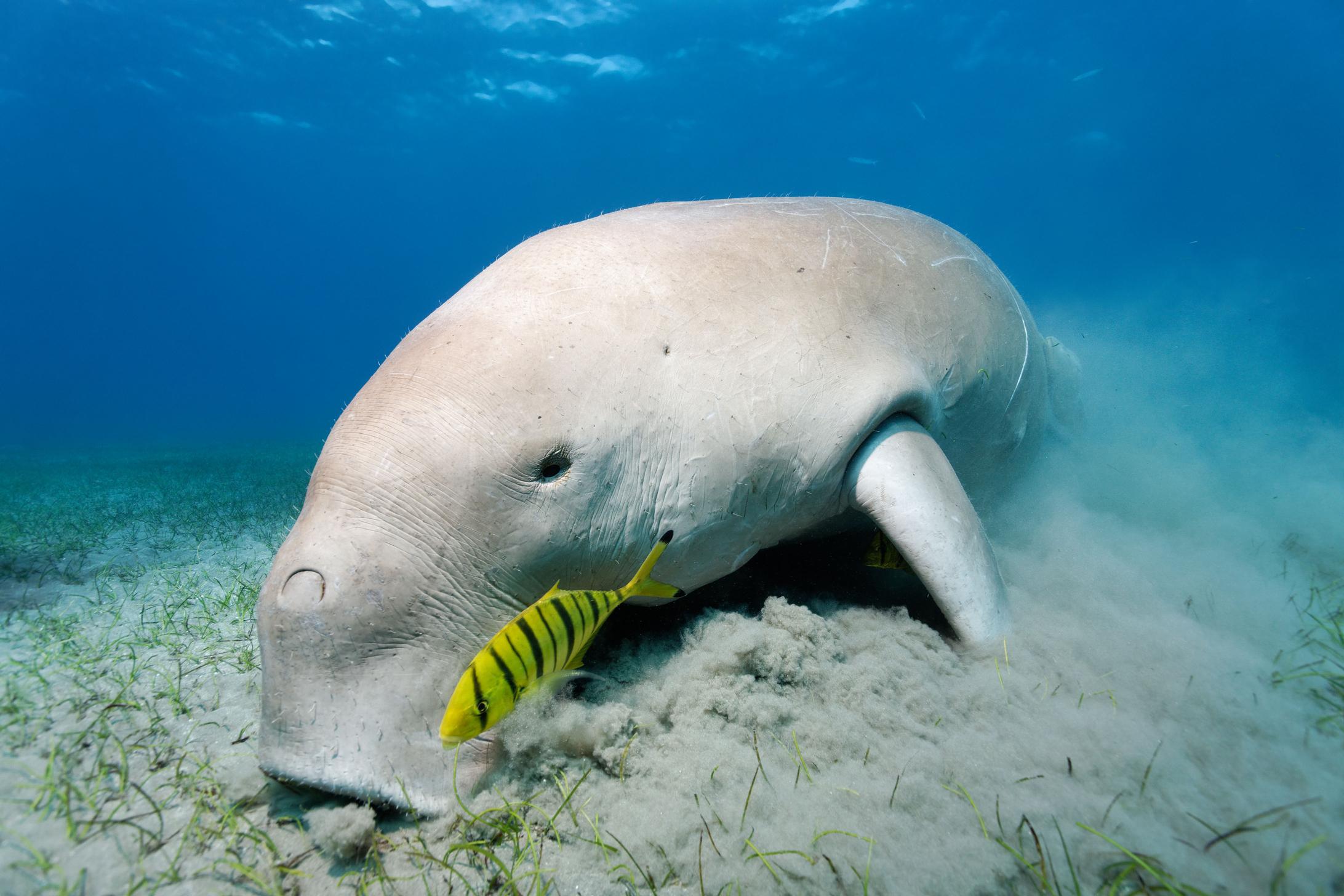
An idea began to take shape: More sea cucumbers meant that the meadow had a better chance at rebounding. And sea cucumbers happen to be very valuable.
For centuries, these marine invertebrates have been harvested, dried and traded as an edible delicacy across the Asia Pacific region — part of a long, cross-cultural economic exchange that has shaped coastal trade over vast distances.
“The trade, the culture, the commodity has been around for roughly 700 years in my community,” Wear said. “It’s the perfect commodity because it’s always in demand. And it was the perfect way to build an ocean conservation effort at scale.”
Saltwater people
Long before Shark Bay was studied from orbit, it was known through tides and seasons, fishing grounds and shallow reefs. Wear comes from families whose lives have always been shaped by this coast.
“My people have been here for about 25,000 to 30,000 years. I’m a direct descendent of all those old people,” Wear said. “It’s my responsibility.”
Tidal Moon builds on that lineage.
If sea cucumbers could be farmed responsibly in Shark Bay — in a way that restored seagrass rather than depleting it — they could support both the meadow and the local economy. That became the foundation of Tidal Moon, the enterprise he founded to build a self-sustaining model for restoration in Shark Bay.
Alongside sustainably harvested sea cucumbers for international markets, Tidal Moon is developing health and beauty products — capsules and serums made from sea cucumbers — with proceeds flowing back into replanting the meadow.
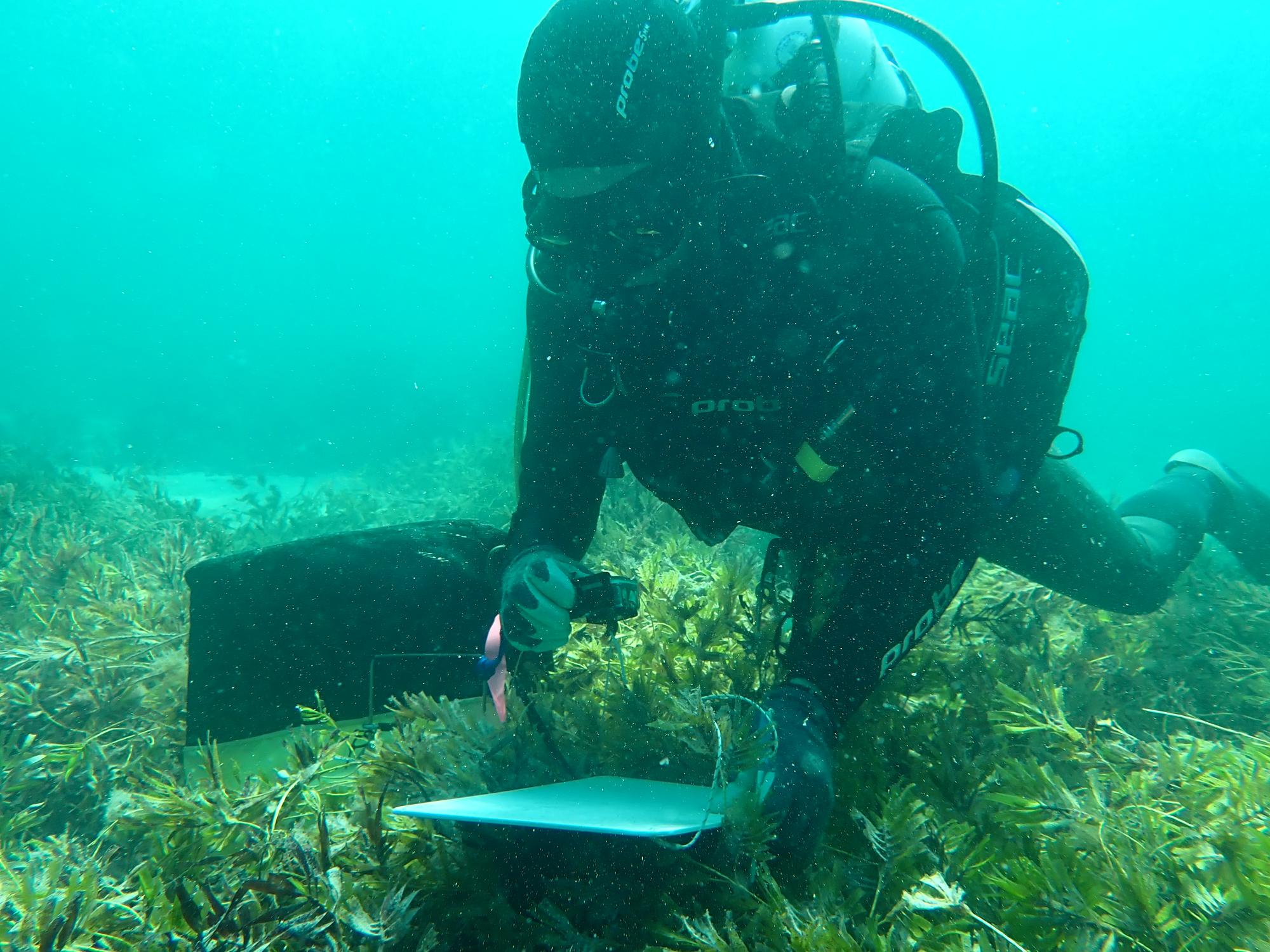
Today, with early support from Conservation International, that vision is moving from concept to practice — with Indigenous divers planting seagrass by hand and helping build a sea cucumber fishery designed to sustain the restoration.
The process begins with a choice about which plants to move. The divers will collect seagrass from the warmer shallows — plants that are destined to die in the sun when the tide receded.
“The team plans to move seagrass that’s already grown up in warmer water,” explained Virginia Simpson, Conservation International’s Australia lead. “So, when you transplant it into deeper areas, you’re putting a more heat-tolerant plant back into the natural system. Those restoration sites have held up better in later heat waves. You’re not just restoring the meadow — you’re building climate resilience into it.”
For now, the work will be small and deliberate — pilot plots, careful planting, early proof of what’s possible. Scaling it will take time. And money.
“It’s a big, expensive job. There’s a thousand square kilometers of seagrass to replant,” Simpson said. “We’re helping Tidal Moon build bridges toward long-term finance for sustaining this effort.”
That support has come through, first, Conservation International’s Asia Pacific Technical Assistance Facility, which helps launch early-stage restoration efforts in carbon-rich ecosystems. Now, more recently, from the new Blue Carbon+ fund — an investment vehicle programmed by Conservation International and The Nature Conservancy designed to back businesses that promote and contribute to healthy blue carbon ecosystems.
Today, Conservation International’s global team, alongside Conservation International–Australia, are working with Tidal Moon to explore new sources of long-term funding — including emerging environmental markets that could help sustain the restoration of Shark Bay’s seagrass meadows for decades to come.
The benefits will hit close to home for Wear.
“I’m focused on human capital,” he said. “Aboriginal people — saltwater people — who already have a natural talent for being in the water. All I’m trying to do is scale that. Give people the qualifications to do seagrass restoration and build a middle-class workforce in Shark Bay. When the next heatwave comes, you can mobilize. You get people in the water. You restore the damage.”
As human hands begin to slowly knit back together a plant that can be seen from space, Wear looks to the sea and land itself — and to the many generations who have cared for it before him.
“I reckon if Country could speak,” Wear said, “it would say: don’t stop. Keep going.”