TIME’s Earth Awards, an annual recognition of individuals driving meaningful progress on climate change, just honored two of conservation’s most distinctive voices — both members of Conservation International’s board of directors.
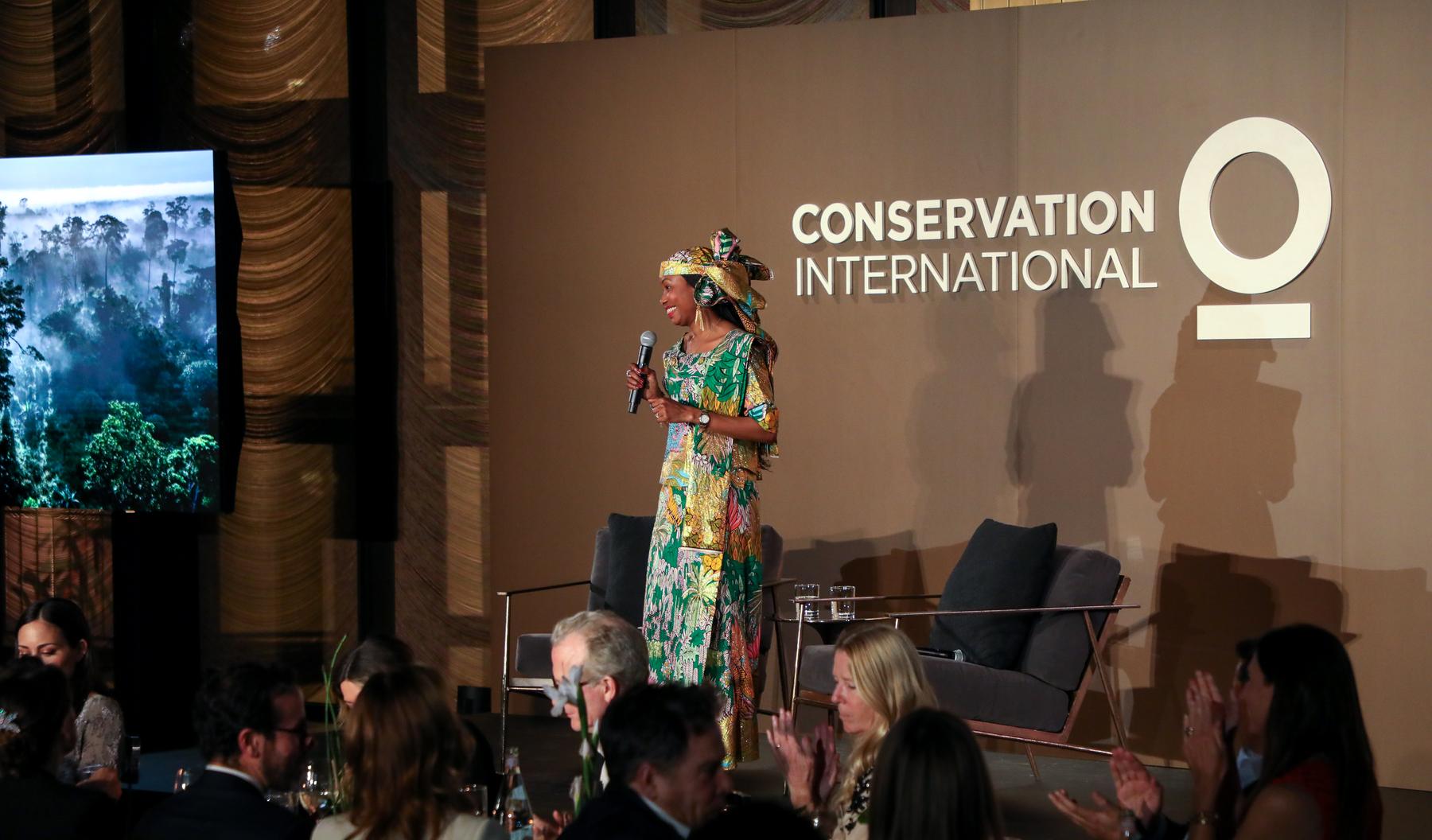
Fashion designer Stella McCartney and Indigenous climate leader Hindou Oumarou Ibrahim were honored at a ceremony in London on March 26. Their entry points into environmental advocacy could not appear more different. But what they’ve built from those beginnings traces a remarkably similar arc: a refusal to separate their identity from their work.
For Ibrahim, president of the Indigenous Women and Peoples Association of Chad, identity is the work. She has spent decades amplifying Indigenous voices in the spaces that most urgently need to hear them — international climate negotiations, UN forums, global policy rooms.
“Our Indigenous Peoples’ knowledge is not written in algorithms,” she told the ceremony’s audience. “It is written in relationships, in observation, in respect, in generations of living in harmony with nature.” She arrived in London carrying, as she put it, more than her own voice: “I carry the voice of my community. I carry the voice of Indigenous Peoples. I carry the voice of those who are often unheard.”

McCartney came to that same stage with a different kind of tenacity.
When she entered the fashion industry after graduating from Central Saint Martin’s in 1995, she was ridiculed as an "eco weirdo" for refusing animal skins or feathers. She kept going anyway —and changed an entrenched mindset along the way.
Her pitch to the industry today remains urgent: “Every second, a truckload of textiles is burned or buried. Hundreds of millions of trees are felled for clothing fibers. We can — and we must — do better.”
These two trailblazing women are united by a shared conviction: that the people closest to nature — Indigenous communities, local craftspeople, rural farmers — aren’t obstacles to solving the climate crisis. They’re the solution.
For decades, this premise has shaped Conservation International’s work, from the Amazon basin to the savannas of Africa, where we are helping local artisans and farmers find pathways to global markets while adopting practices that protect the nature we all rely on.
Ibrahim puts it plainly: “If we trust Indigenous Peoples’ leadership, secure land rights, fund communities directly, and redefine well-being beyond profit, then the future is not something we fear. It is something we build together.”
Read TIME’s profiles of the honorees:
Stella McCartney Made the Planet Fashionable—And She’s Not Done Yet
Hindou Oumarou Ibrahim Asks What Happens If Everything Goes Right for the Planet