At Brazil’s southernmost tip, a convergence of warm tropical currents with frigid Antarctic waters creates one of the planet’s most extraordinary marine ecosystems.
For twenty years, researchers and environmentalists have fought to protect it from overfishing and the encroachment of offshore windfarms.
Their efforts have paid off.
Last month, with support from Conservation International and local partners, the Brazilian government established the Albardão Marine National Park, 1 million hectares (2.5 million acres) of fully protected ocean. Roughly the size of Jamaica, it is the largest marine protected area in the South Atlantic — and the first in Brazil in more than a decade.
“There is nowhere else on Earth like Albardão,” said Natali Piccolo, a scientist with Conservation International-Brazil. “Protecting it is a win not just for Brazil — but for marine life across the globe.”
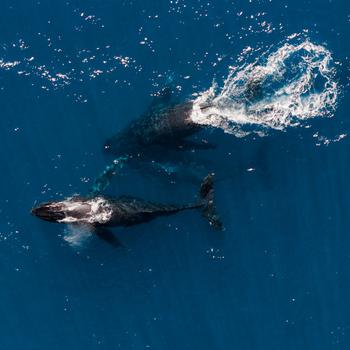
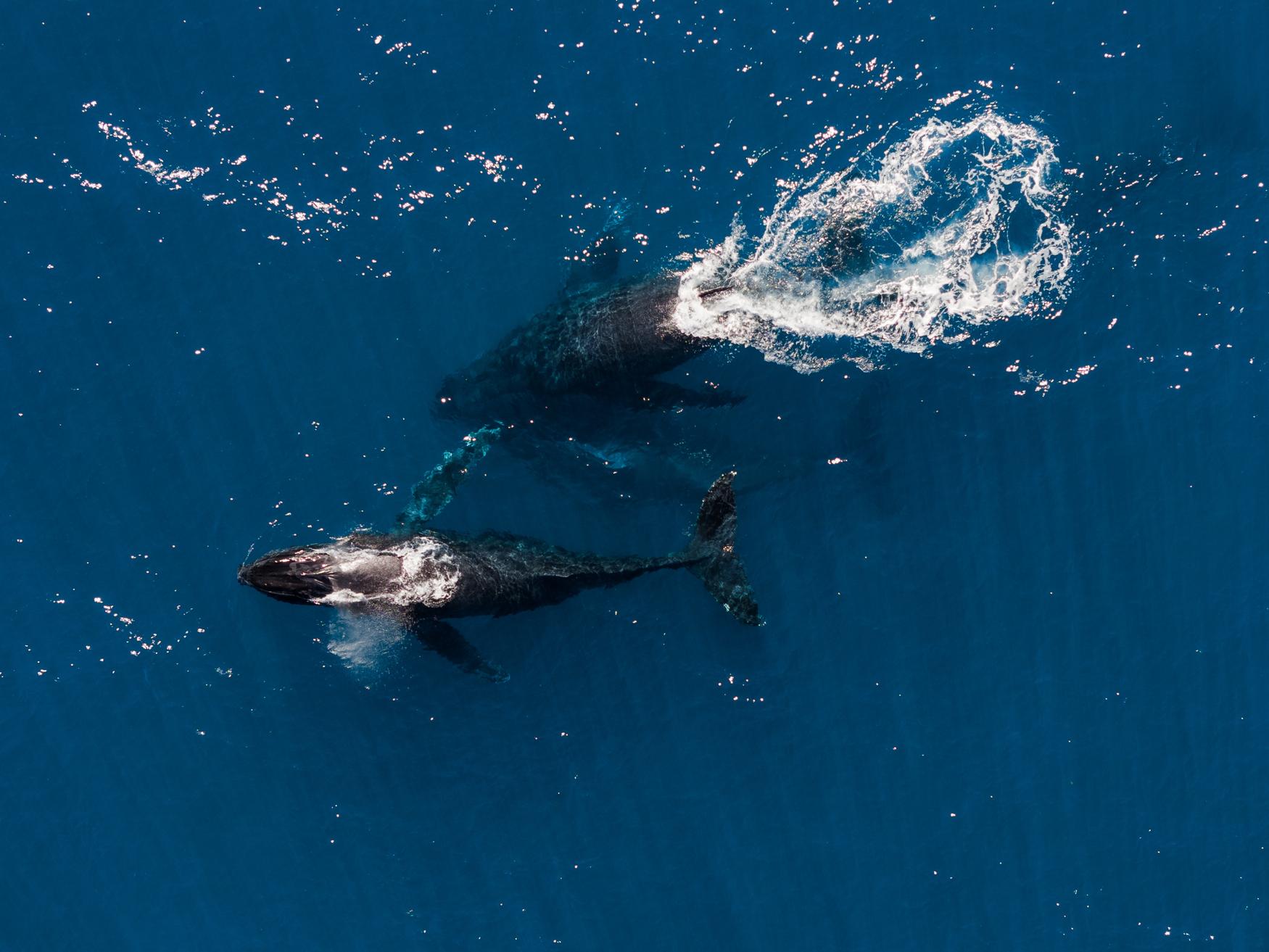
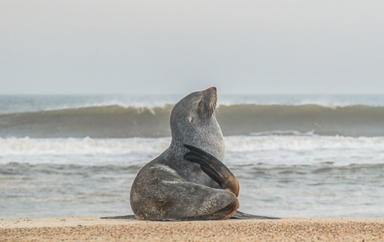
Walk along the sand dunes, she says, and you’ll see nothing but miles of seabirds and sea lions, basking in the sun. But offshore, beneath choppy, wild waves, life truly explodes — sea turtles, humpback whales and southern right whales that migrate through nutrient-rich waters, pushed to the surface by converging currents.
At least 24 threatened species inhabit these waters, including the endangered Franciscana — a small, nearly blind dolphin that navigates by echolocation through murky estuaries and shallow coastal bays. Perfectly adapted to turbid, nearshore water, it is also exposed to fishing gillnets strung across it.
The toll of overfishing and bycatch is staggering, Piccolo said. Each year, roughly 2,000 Franciscanas and 1,000 sea turtles die after becoming entangled in fishing nets.
That devastating figure is part of what drove two decades of negotiations to protect this stretch of coast. The park is structured in rings: a core reserve where fishing is banned outright, surrounded by a 558,000-hectare (1.4 million acre) buffer zone that allows some artisanal fishing — designed to allow local fishing communities to retain their traditional livelihoods.
Currently, only 3 percent of Brazil’s waters are fully protected. The new park didn’t come easily, Piccolo said. Pressures from the fishing and offshore wind industries repeatedly stalled the effort.
Conservation International-Brazil and the Blue Nature Alliance published 11 scientific studies in just six months to help make the case for protections and sustainable management — documenting rare species and addressing concerns about economics, showing that protections can provide alternative, sustainable livelihood opportunities.
“You can exploit natural resources for a quick profit, or you can protect them and benefit for generations,” Piccolo said. “Conservation can open up entirely new ways to make a living — ecotourism, wildlife monitoring, hospitality. When done right, we all benefit.”
For Piccolo, the park is personal. Her first job out of university was testing whether innovations in gillnets could help marine animals like franciscanas and sea turtles in Albardão detect — and escape — entanglement.
“In the conservation field, we know the work never truly ends; new threats emerge and we must be ready,” she said. “But I’m hopeful — these protections give this extraordinary place a fighting chance.”