Editor’s note: In April 2025, after this story was published, the project described in this story won Environmental Finance’s 2025 award for Sustainability-Linked Loan of the Year, in recognition of the project’s innovative financing model and its environmental outcomes. Conservation International was one of three implementing organizations honored. More details about the award can be found here.
Brazil is home to a vast, but overlooked, tropical savanna called the Cerrado.
This sprawling patchwork of open grassland and scattered woodlands covers almost a quarter of the country — an area about the size of Greenland — providing habitat for 1,200 mammals, birds and reptiles and about 12,000 plant species. Among its remarkable wildlife are giant anteaters, maned wolves, armadillos and brilliantly colored macaws.
But today, more than half of the original Cerrado has been cleared for cattle ranching and soy farming, making it one of the fastest disappearing ecosystems on Earth. And only a fraction of the remaining Cerrado is protected by the Brazilian government — around 8 percent.
In one corner of southwestern Brazil, a project designed by a sustainable timber operator, BTG Pactual Timberland Investment Group (TIG), and supported by Conservation International, is breathing new life into the savanna.
What was once a vast stretch of degraded pastureland just a year ago is being rapidly transformed into tree farms and 2,500 hectares (6,000 acres) of newly restored natural forest. While the project’s primary purpose is to store climate-warming carbon, it is also designed to protect biodiversity.
As the natural woodland has returned, so has the wildlife.
© BTG Pactual Timberland Investment Group (TIG)
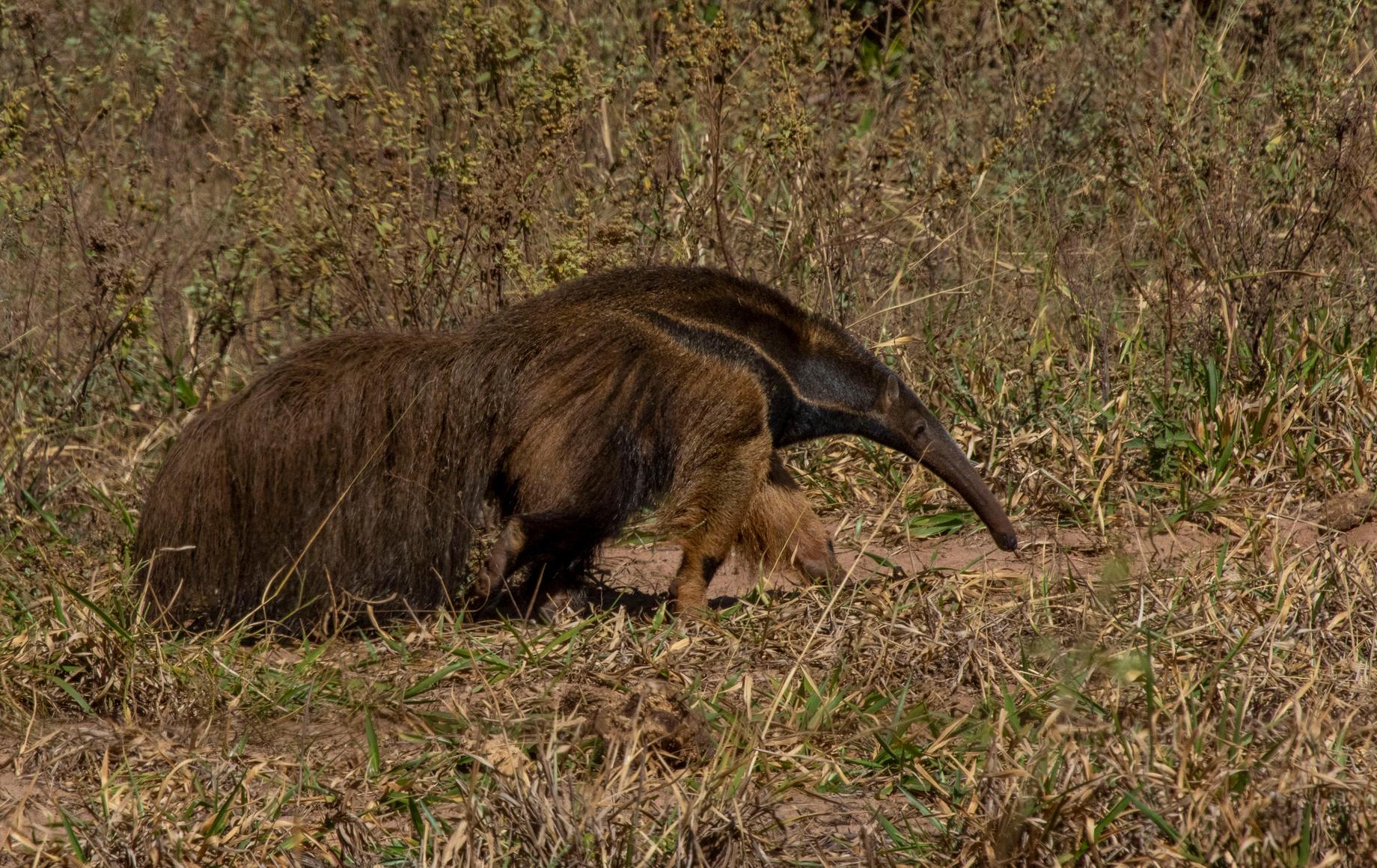
A giant anteater strolls along the forest edge.
“Our goal was always to have the restoration area follow the watershed,” said Mark Wishnie, chief sustainability officer at TIG. “We envisioned it as a wildlife corridor connecting existing patches of protected Cerrado forest.”
But even Wishnie, who had high hopes for the corridor, was astonished by the wide array of species returning to the property in droves. Through careful monitoring and camera traps, TIG has documented a total of 319 animal species and 65 plant species on the property — 17 of those species are listed as endangered, threatened or near-threatened by the IUCN Red List.
“When we first started this partnership, many of the species we’re seeing lived in a small patch of remaining forest on the property,” said Miguel Calmon, a scientist at Conservation International. “Now they’re starting to move into the restored areas, too. That’s a big win.”
Giant anteaters can be seen shuffling along between the rows of towering eucalyptus, and rheas — giant ostrich-like birds — often graze on the fringes of the forest.
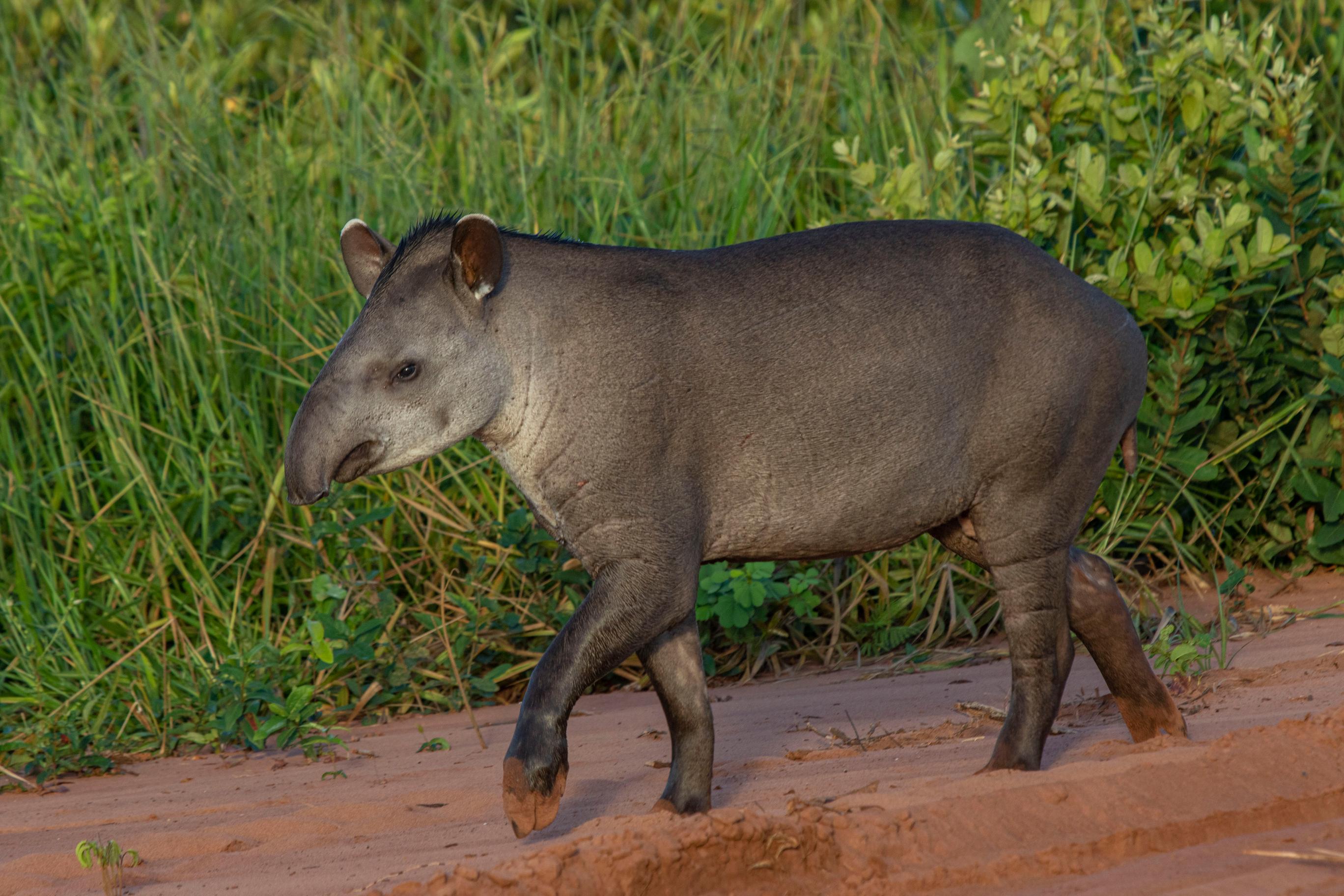
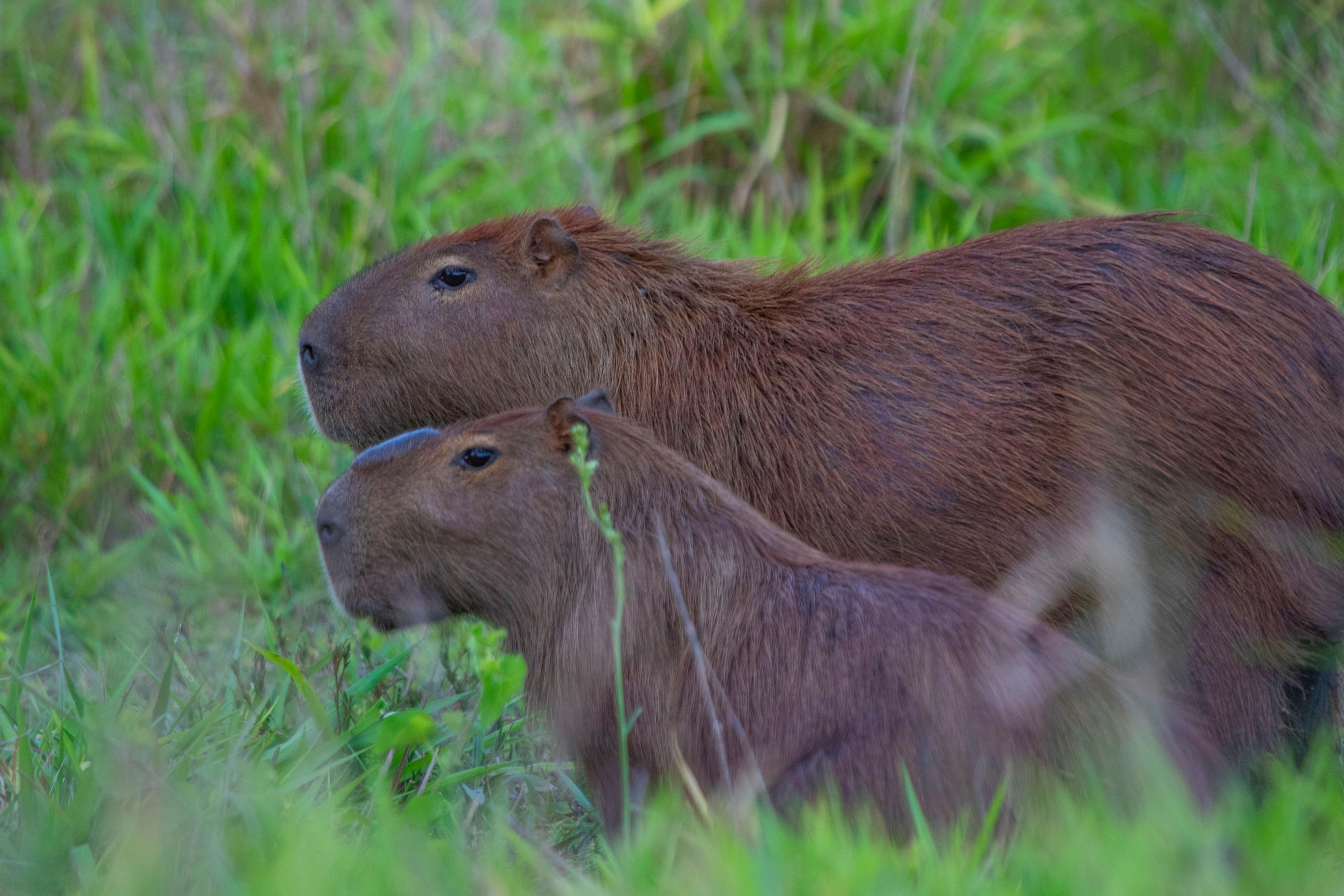
But more elusive species dwell in the underbrush, where native plants are slowly reclaiming the land. Tapirs, with their long, trunk-like snouts, carve trails through the dense vegetation as they forage for fruit and leaves. By the water, capybaras, the world’s largest rodents, gather in herds, their watchful eyes scanning the surroundings as they wade through streams or rest on riverbanks. Closer to the ground, armadillos scurry through leaf litter, digging for insects.
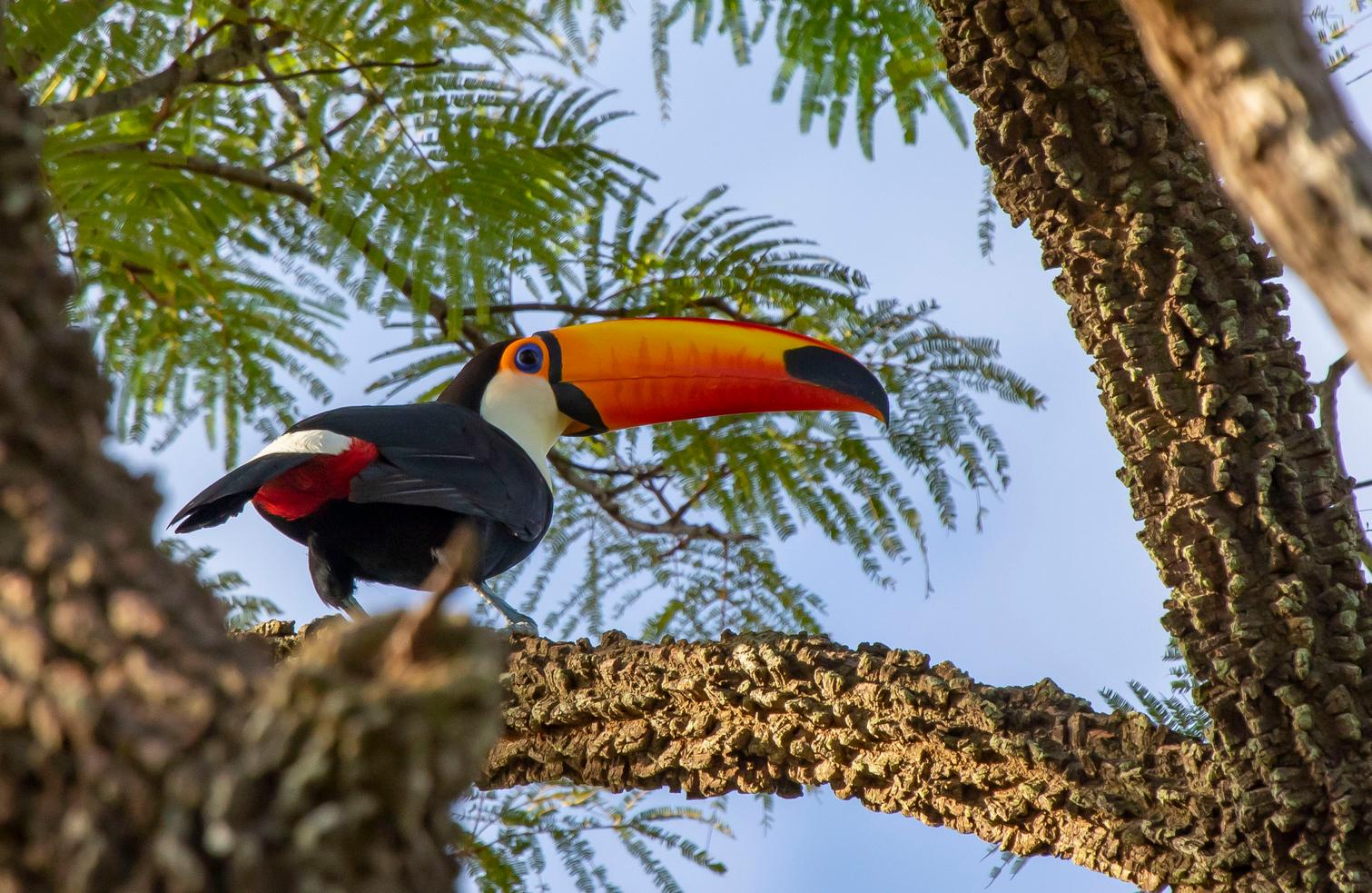
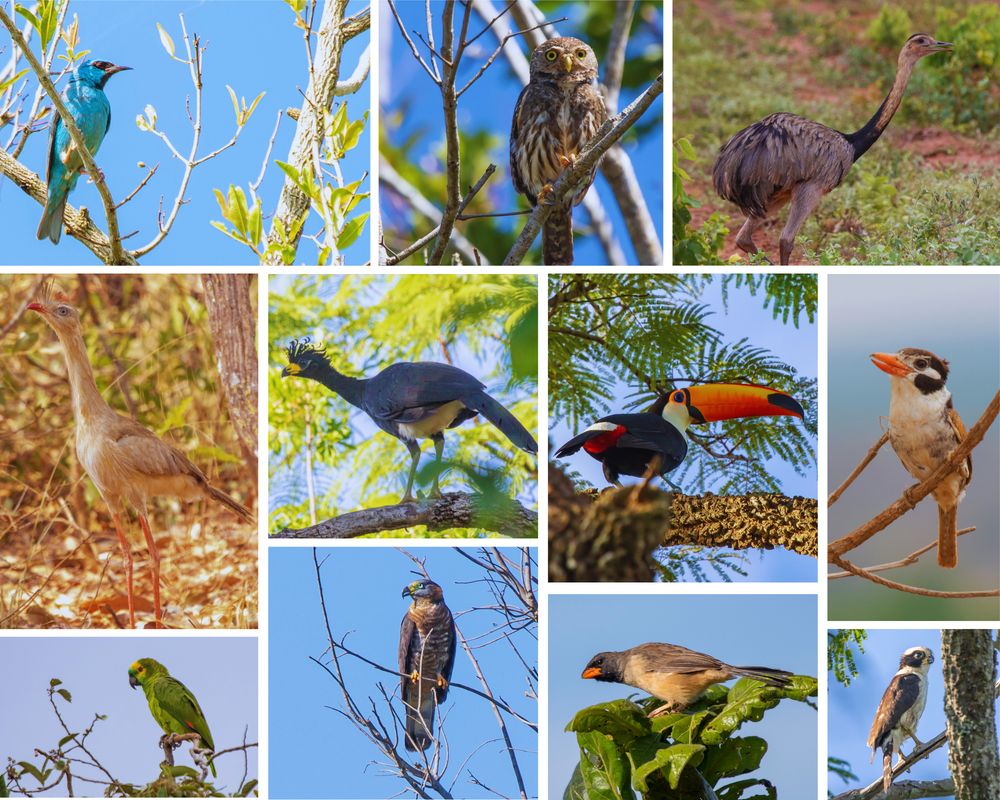
And from treetops to understory, birds of all shapes and sizes are flocking back to the property. TIG has documented 188 bird species, from colorful parrots and darting hummingbirds to powerful hawks, falcons, and the flightless, spindle-legged seriema.
© BTG Pactual Timberland Investment Group (TIG)
Birds of all shapes and sizes are finding habitat in the newly restored forest.
Protection and production
The presence of so many species stems from an unlikely partnership between conservationists and timber operators.
TIG came up with an innovative approach — using their business model not just for timber, but to restore the land and fund conservation. Half the project area is dedicated to conserving and restoring native species, while the other half is planted with Forest Stewardship Council-certified eucalyptus trees for sustainable timber production.
This innovative approach has attracted significant investors to the project, allowing TIG to move quickly and on a grand scale. So far, Conservation International and TIG have protected and begun restoring an area nearly twice the size of Manhattan, putting it on track to be the largest Cerrado restoration ever.
But Calmon stressed that restoration is an ongoing process — one that will require operating across an entire landscape and over decades: establishing native plants in the right place, working with local communities, carefully monitoring conditions and removing aggressive invasive grasses that have overrun and degraded the land.
“The good news is that as more wildlife returns, they can help accelerate restoration,” he said.
© BTG Pactual Timberland Investment Group (TIG)
Species like tapirs are using the newly restored wildlife corridor.
Birds and herbivores like tapirs spread seeds, encouraging plant growth and diversity, while animals such as armadillos and wild pigs disturb the soil as they forage, creating microhabitats for plants to take root. This natural turnover helps diversify plant life, building a more resilient ecosystem.
With prey plentiful, predators are making a comeback as well. Ocelots — sleek, spotted wildcats about double the size of a house cat — now prowl silently through the trees, hunting small mammals. In a thrilling development, one of the project’s camera traps captured a rare image of a lone jaguar stalking through the forest, signaling a new chapter for the restoration team.
"Spotting jaguars and other big predators like pumas in the area is a powerful indicator that the ecosystem is on the mend. Their presence means the food chain is recovering, and the landscape is becoming balanced enough to support these apex predators once again,” said Calmon.
The wildlife is also helping to enhance the forest’s ability to absorb and store climate-warming carbon — a critical part of TIG’s goals for the property. In June 2024, TIG announced a milestone for the project: they will provide Microsoft with 8 million nature-based carbon credits — the largest carbon dioxide removal deal of all time. In September, Meta announced that they will purchase 1.3 million credits from the project.
“Living things make carbon storage possible,” Calmon said. “Of course, plants do the heavy lifting — soaking up carbon dioxide from the atmosphere and locking it away in their roots so that it can’t contribute to climate change. But for plants to keep doing their job effectively, they need a healthy ecosystem.”
This project is just the beginning of TIG’s ambition. Over the next five years, they plan to set aside half of their restoration strategy’s investments in Brazil, Uruguay and Chile for conservation — protecting and restoring 135,000 hectares (300,000 acres) of degraded pastureland back into natural vegetation.
Along with other Cerrado restoration efforts supported by Conservation International, TIG is making a dent in restoring large swaths of savanna that have become overgrazed, barren and overrun with invasive grasses.
“This is only the beginning,” Wishnie said. “Our goal is not just to restore the land, but to set a new standard for what’s possible in sustainable forestry — proving that nature and economic production can thrive together, for the benefit of people, climate and wildlife.”
© BTG Pactual Timberland Investment Group (TIG)
Capybaras are known as "ecosystem engineers," shaping habitats by grazing and clearing channels along riverbanks.
Further reading:
Will McCarry is the content director at Conservation International. Want to read more stories like this? Sign up for email updates. Also, please consider supporting our critical work.