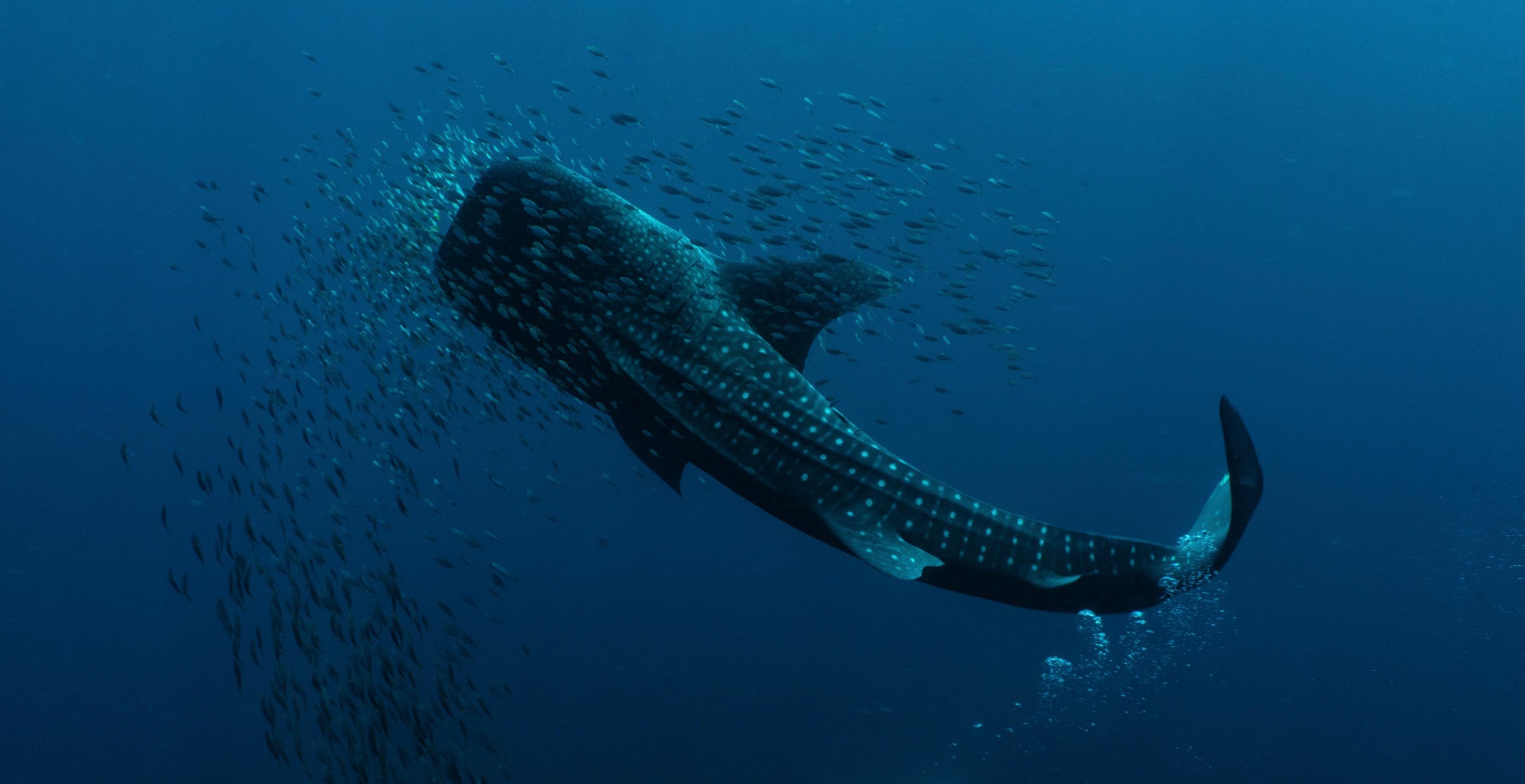
Warmer oceans are putting two giants of the sea on a collision course. Even at the size of a school bus, whale sharks — the world’s largest fish — are no match for cargo ships in busy shipping lanes: When the two collide, the sharks always lose.
And unfortunately, climate change will make deadly encounters more common, according to a new study.
“Whale sharks' risk of being struck by these massive ships could increase dramatically if fossil fuel use continues to run wild — driving climate change and making our oceans hotter than ever,” said Conservation International marine biologist Mark Erdmann, a co-author of the study. “We already know these collisions are likely behind many whale shark deaths — these new findings are outright alarming for the future of the species.”
Researchers used satellite data to track 348 whale sharks over 15 years. They then overlaid the sharks’ movements with global climate models and shipping routes to predict whether the gentle giants’ search for cooler waters would lead to more or fewer collisions.
The study, published in Nature Climate Change, found that in every future climate scenario, the risk of fatal collisions rises: If greenhouse gas emissions surge unabated, that risk could increase by up to 43 percent by 2100.
© Mark Erdmann
The reasons behind whale sharks' dramatic decline stumped researchers for years.
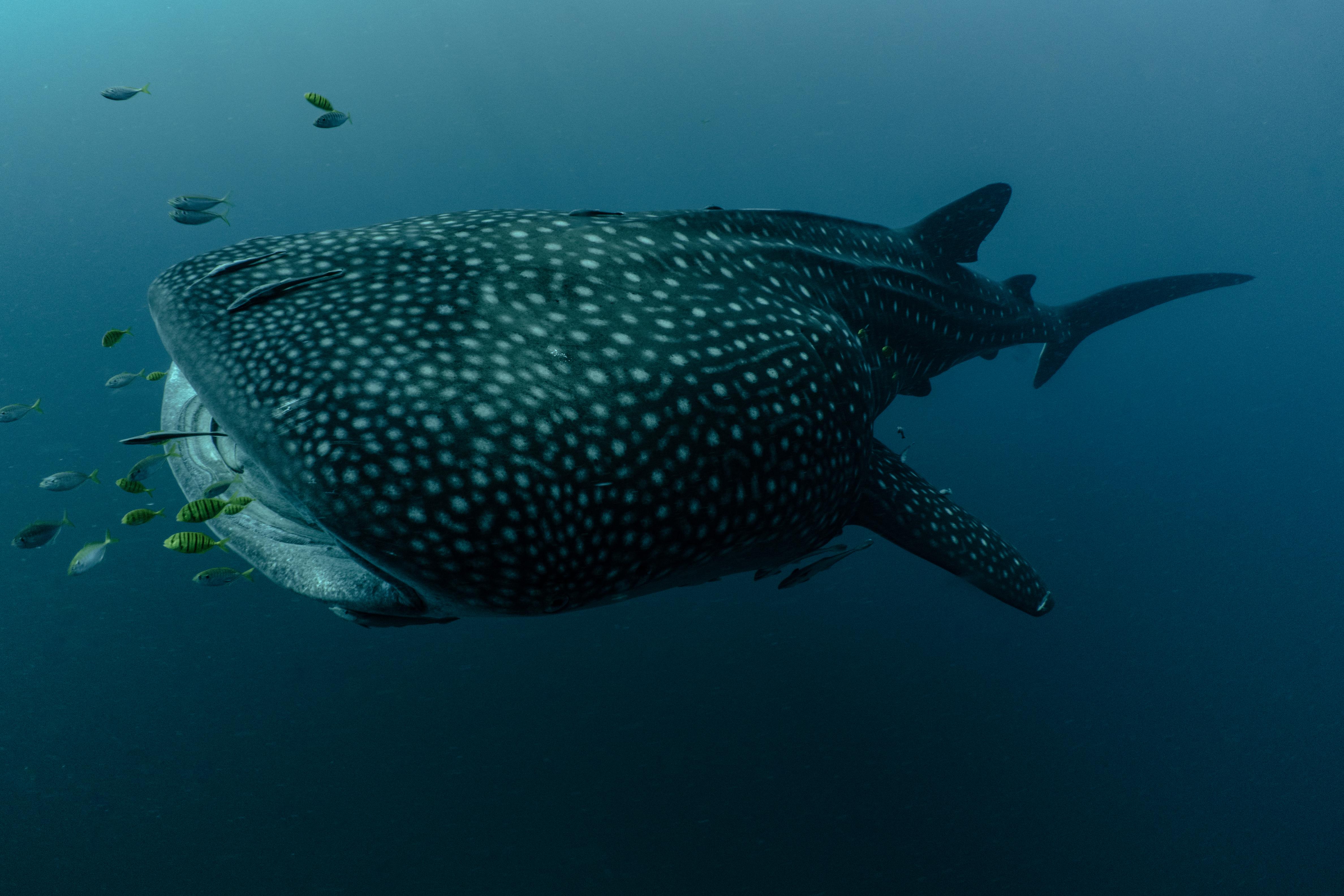
Whale sharks are among the marine species most vulnerable to climate change. They are currently found in tropical to temperate waters, but their range is expected to shift up to 1,000 kilometers (621 miles) toward the North and South Poles as they seek cooler waters. The study identified coastal areas near the western United States, Sierra Leone and the eastern China Sea as future collision hotspots, as whale sharks are likely to migrate to those waters — which are also some of the world’s busiest shipping routes.
The study’s results offer other insights into whale sharks, whose populations have struggled in recent decades. Erdmann said the findings are helping scientists piece together what’s behind their decline — and what the future may hold for this endangered species.
Where did all the whale sharks go?
Over the past 75 years, whale shark populations have declined by more than 50 percent. Overfishing, particularly in the 1980s and 1990s, is largely to blame. Whale sharks were prized for their meat in some Asian countries, even nicknamed “tofu shark” because of their spongy white flesh.
Yet by the early 2000s, many countries recognized whale sharks’ economic value in generating ecotourism, prompting many places to crack down on unsustainable fishing and create explicit protections for whale sharks. One study found that whale shark tourism in Ningaloo, Western Australia, was worth US$ 19 million per year, while another study valued whale shark tourism to Isla Mujeres, Mexico, at US$ 14 million annually.
Today, whale sharks are protected in nearly every country within their range. Yet despite decades of protection, their populations continue to decline.
“Scientists were scratching their heads wondering what the heck was going on,” Erdmann said. “That’s when we began to suspect that something more insidious was going on that we weren’t seeing.”
A breakthrough came in 2022, when a study from Erdmann and his colleagues confirmed what other scientists had begun to suspect: Whale sharks were regularly crossing paths with ships — with deadly results. That study found a 92 percent overlap between whale shark routes and shipping lanes. It revealed that a quarter of the whale sharks tracked by satellites stopped transmitting signals when they entered the busiest shipping areas.
“Satellite tags would be happily pinging on whale sharks — then they would swim into a shipping lane and suddenly they’re gone,” Erdmann said. “Those ships move at high speeds and can be the size of a football field. It’s likely they’re mowing over whale sharks without even knowing it.”
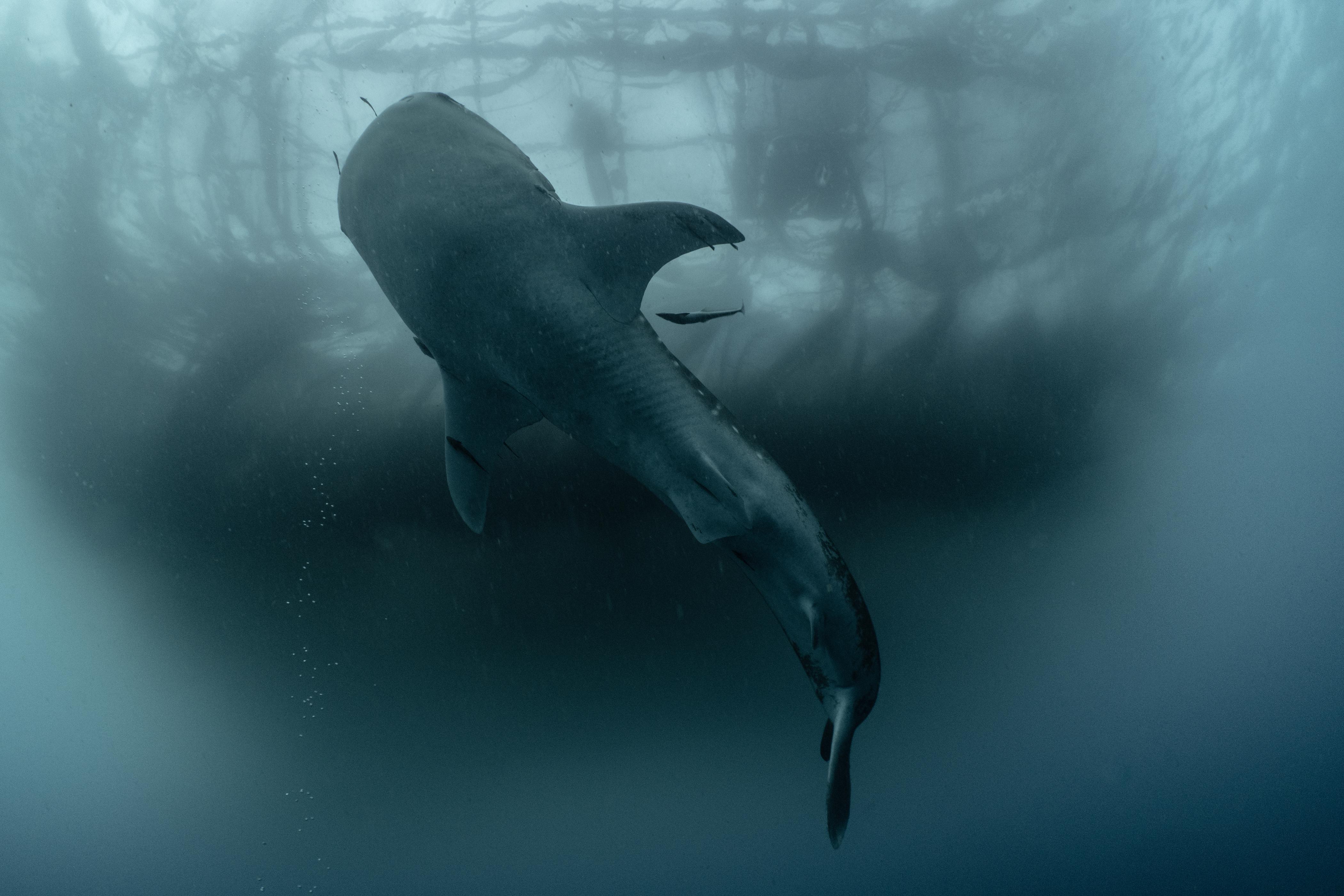
Though collisions happen with other species, such as whales and dolphins, whale sharks are uniquely vulnerable, he said: They’re slow and they like to linger near the surface to feed on plankton.
© Mark Erdmann
Slow moving and surface feeders, whale sharks are uniquely vulnerable to collisions with large ships.
A clear solution
Thankfully, Erdmann said, there is a clear solution to the problem — and it’s already helping protect endangered whale species: Slow down.
“If we can get industrial ships to slow down in areas with a high risk for collisions, we can make a big difference,” he said. “And we already have a template. It’s been done to protect whales for many years.”
For example, in the United States, all vessels 65 feet or longer are required to slow down in some locations along the East Coast during certain times of year to lower the risk of collisions with the endangered North Atlantic right whale.
The 2022 study found that restricting speeds to less than 10 knots (19 kilometers per hour) reduced the likelihood of whale shark fatalities by more than 50 percent. Researchers hope the findings from both studies will help enact similar policies to protect whale sharks, Erdmann said.
Countries have the power to enforce speed limits in designated areas of their waters, Erdmann said. And in some cases, adjusting the location of the shipping lane by 10-15 kilometers (6-9 miles) could significantly reduce collisions.
“This study is further proof that climate change can make human-caused problems even worse for wildlife,” he said. “We have the data and the tools to change the outcome. Now, we must act."
Further reading
- New study dives into what's killing the world's largest fish
- Deep dive: New findings from our whale shark watchers
Mary Kate McCoy is a staff writer at Conservation International. Want to read more stories like this? Sign up for email updates. Also, please consider supporting our critical work.