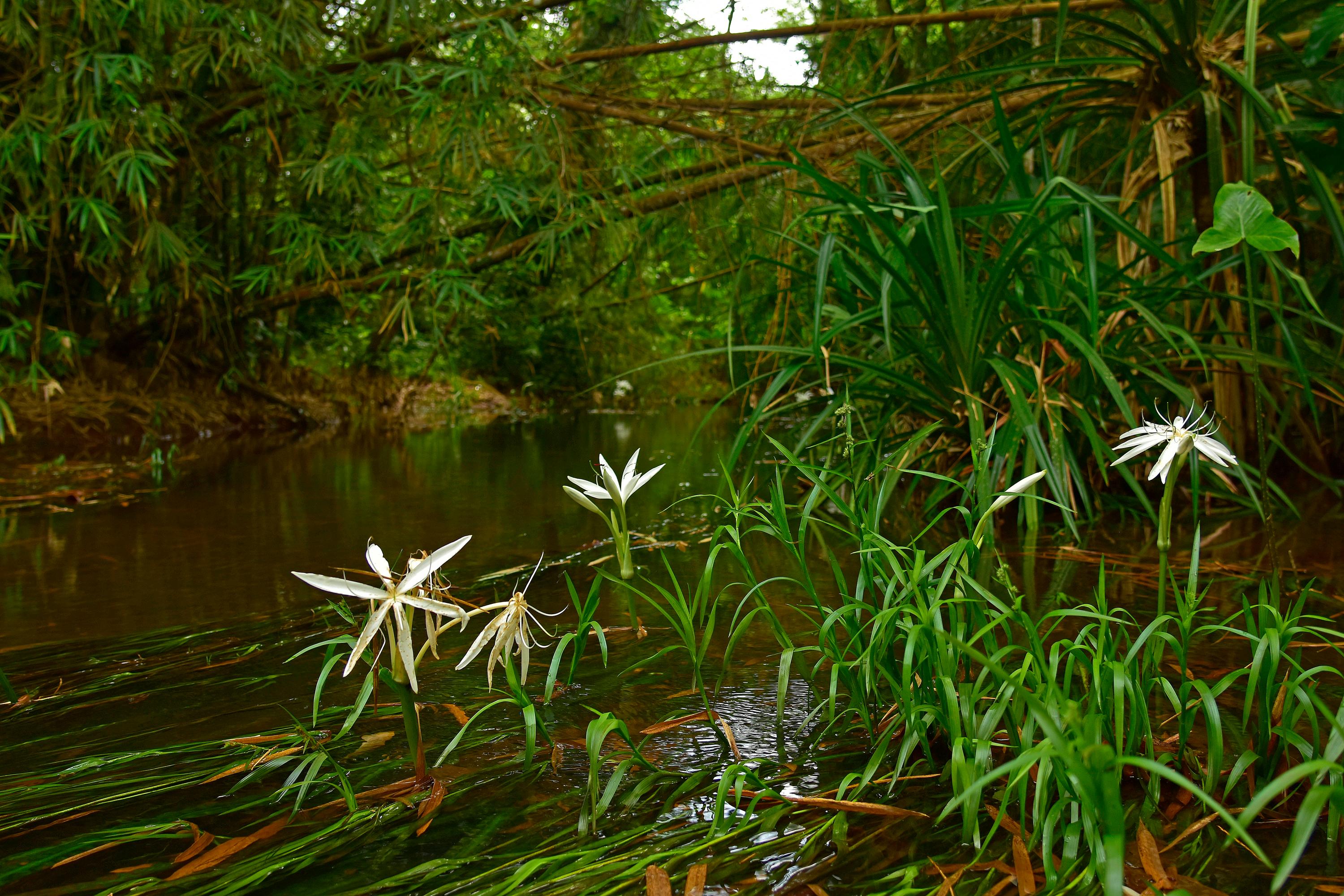
Targeted investment in nature’s most important places
What are biodiversity hotspots?
Biodiversity hotspots are critical habitats for unique species that are at severe risk of disappearing.
Today, 36 regions around the world have been designated as biodiversity hotspots, together covering just 2.5 percent of Earth's land surface — from rainforests and coastal forests to island archipelagos and semi-arid shrublands spanning nearly every continent.
To earn that designation, a region must meet two strict criteria, first proposed by ecologist Norman Myers and later formalized by Conservation International.
First, it must hold at least 1,500 endemic plant species — meaning at least that many species are found nowhere else on Earth. Plants serve as the baseline because they form the foundation of terrestrial ecosystems, supporting the animal life that depends on them.
Second, it must have already lost at least 70 percent of its original natural vegetation, leaving 30 percent or less intact. Together, those two conditions describe a place that is both biologically irreplaceable and under serious threat.
Conservation International and biodiversity hotspots
Conservation International has been the driving force behind the biodiversity hotspots concept since its earliest days. For years, the organization was the primary institution mapping and analyzing hotspots — work that eventually identified the 36 hotspots recognized worldwide.
The term was first coined in 1998 by British ecologist Norman Myers when he pinpointed 10 rapidly disappearing tropical forests that were packed with unique species. He refined and expanded the hotspot framework into what it is today in collaboration with Conservation International's Russell A. Mittermeier and Cristina Goettsch Mittermeier.
Their seminal book “Hotspots: Earth's Biologically Richest and Most Endangered Terrestrial Ecoregions,” and a paper in the journal Nature, “Biodiversity hotspots for conservation priorities” set the thresholds that define hotspots today.
In 2000, Conservation International joined the World Bank and the Global Environment Facility to launch the Critical Ecosystem Partnership Fund, to fund hotspot protection. Conservation International now runs the fund as Secretariat and Administrator. So far, the fund has supported over $300 million in grants to protect roughly 1,300 IUCN Red List species and strengthen the protections of more than 60 million hectares of key biodiversity areas.
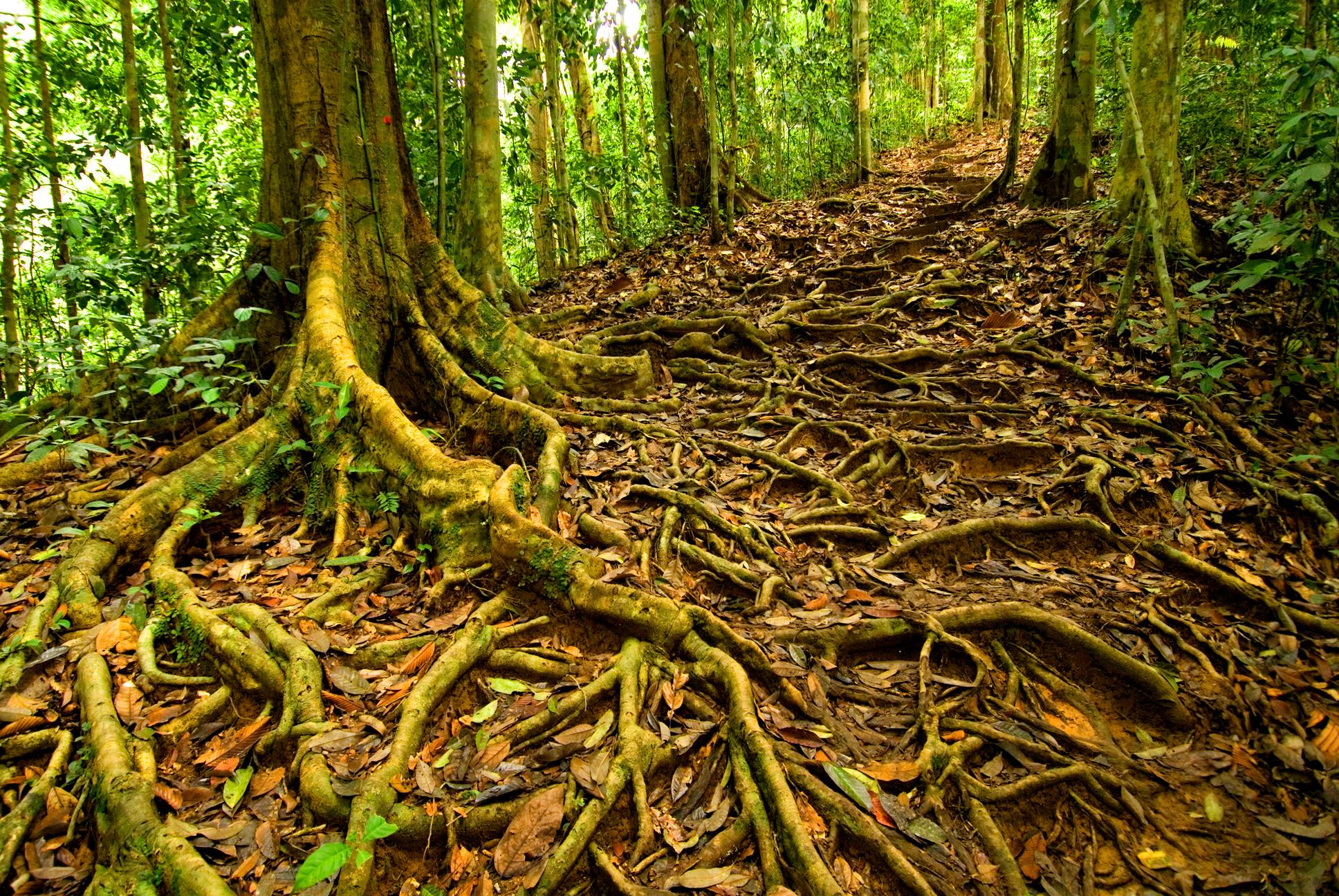
Why are biodiversity hotspots important?
Wildlife isn’t spread evenly across the planet. A small number of ecosystems hold a disproportionate share of the world's endemic species — plants and animals found nowhere else. Those same regions tend to be where habitat loss has already gone furthest. That overlap is what defines a hotspot: not simply where life is richest, but where richness and loss collide.
The distinction plays out in practice in ways that aren't always intuitive. The Amazon, despite holding more species than any other rainforest on Earth, isn't a designated hotspot because it still retains more than 30 percent of its original vegetation. But its neighboring biome, Brazil's Cerrado savanna, is a biodiversity Hotspot. Decades of agricultural expansion have stripped away most of its natural vegetation, concentrating an extraordinary range of endemic species into a shrinking footprint. The same pattern repeats across all 36 hotspots — each one is a place where biodiversity is running out of room.
That's why conservation in these places is essential.
Do biodiversity hotspots impact people?
Protecting all of nature, not just hotspots, is now seen as foundational to humanity. But hotspots remain central to that mission, for two reasons.
The first is existential. Biodiversity underpins every function that sustains life — the air we breath, the food we eat, the water we drink. Hotspots mark the places where the largest concentrations of that biodiversity face the greatest threat, making them a front line for human survival.
Second, hotspots are where nature and people intersect most directly. Hotspots tend to overlap with the ecosystems that deliver the most immediate benefits to people, and many are home to populations that depend on those ecosystems to survive. Hotspots cover just 2.5 percent of Earth's land surface, yet their forests, wetlands and other ecosystems supply an estimated 35 percent of the ecosystem services, like clean water, crop pollination and flood control, humanity relies on.
Frequently Asked Questions
Our plan
From Indonesia to Madagascar, from Brazil to Southeast Asia, a majority of Conservation International’s global field offices are in or near biodiversity hotspots. We continue to work to protect these places for the benefit of people around the world.
What’s more, Conservation International is an investor in the Critical Ecosystem Partnership Fund. CEPF is an alliance of leading conservation donors that provides grants to nonprofit and private-sector organizations that are working to protect biodiversity hotspots and improve human well-being.
To explore the world’s 36 hotspots, access GIS data and learn more about what CEPF and partners are doing to protect these vital places, visit CEPF’s website at the link below.
Multiply Your Impact

Your support reaches further than you think.
Every private donation helps unlock additional funding from governments, foundations, and institutional partners — multiplying impact by up to 300%