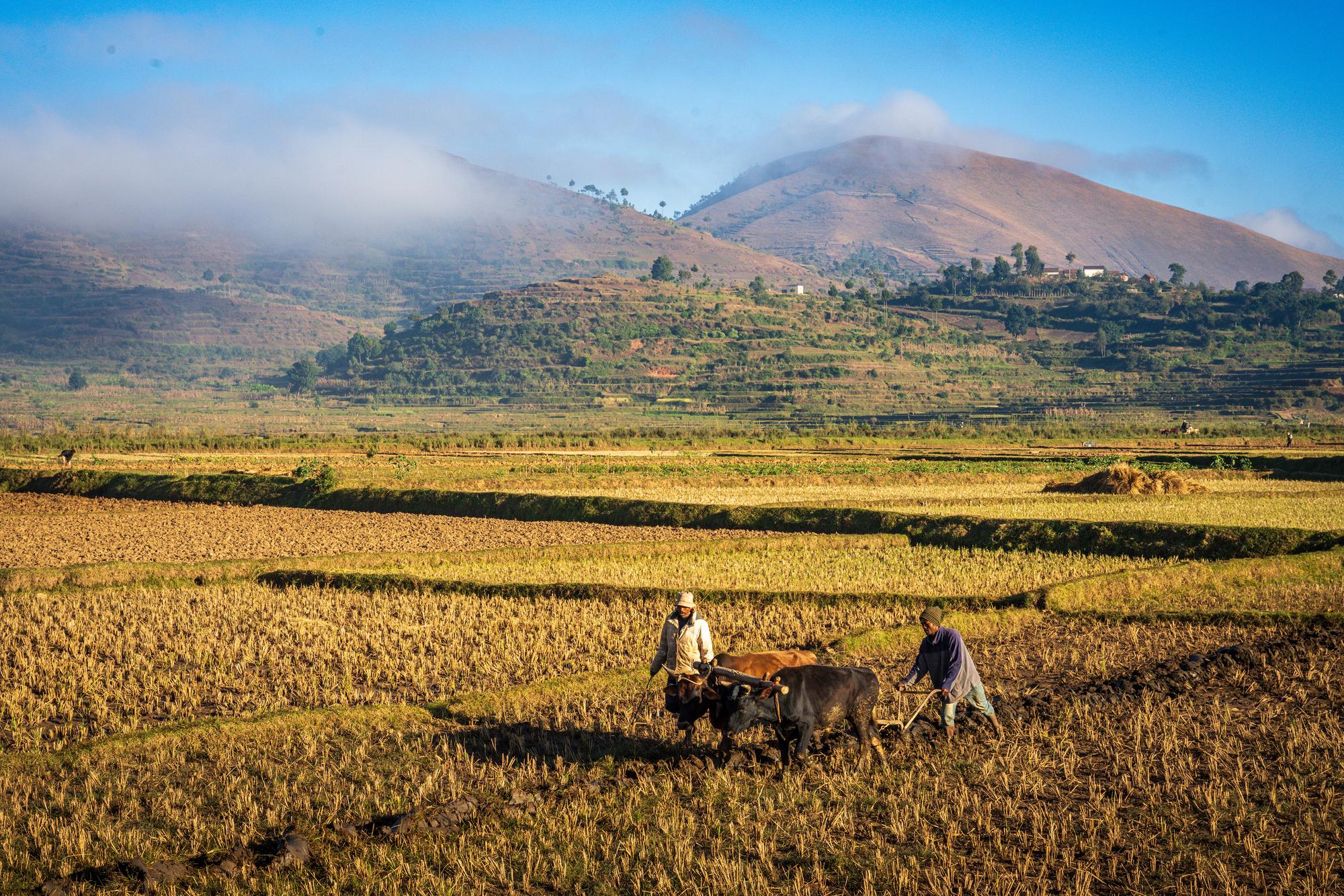
In Madagascar, many farmers are caught in a dangerous cycle. With climate change threatening crops and livelihoods, farms expand by cutting down trees — making droughts, floods and erosion worse.
Five years ago, Conservation International and the United Nations’ Green Climate Fund partnered to break the cycle by helping farmers shift to more sustainable practices: using drought-resistant seeds; planting “cover crops” to prevent soil erosion; and planting native fruit trees that provide shade — and income. Those efforts paid off. Researchers surveyed 1,600 participating farmers, asking questions about the quantity and types of food they consume and their ability to pay for essential needs. The farmers said they produce more crops and have greater food security — a relief for communities that historically struggle to produce enough food to eat. Meanwhile, deforestation in the project areas has slowed.