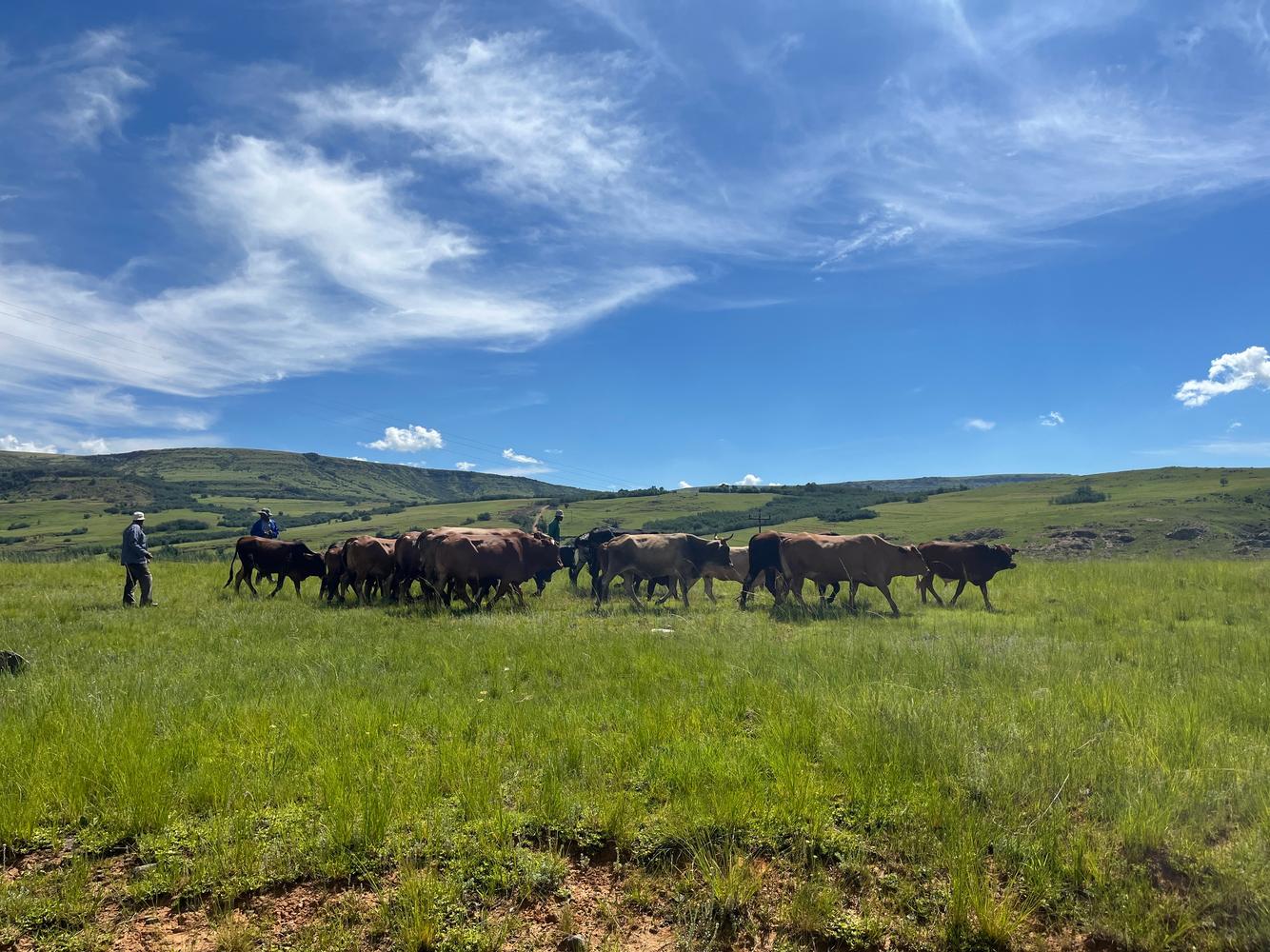
This is a way of doing things that honors the whole system — people, livestock, wildlife and plants all thriving together. But it’s important to remember that no one invented this model — this is simply what African pastoralism looks like in its most innate form.
An agreement that works for herders
Through the project, communal herders agree to move livestock periodically between different pastures, allowing grazed lands to recover. In exchange, farmers receive incentives such as vaccinations for their cattle and opportunities to sell their cattle to prime buyers. This “conservation agreement” model — developed by Conservation International 20 years ago — is reaping benefits for herders: As a result of the project, livestock have more to eat and arrive at market healthier, fatter and much more likely to command a premium price.