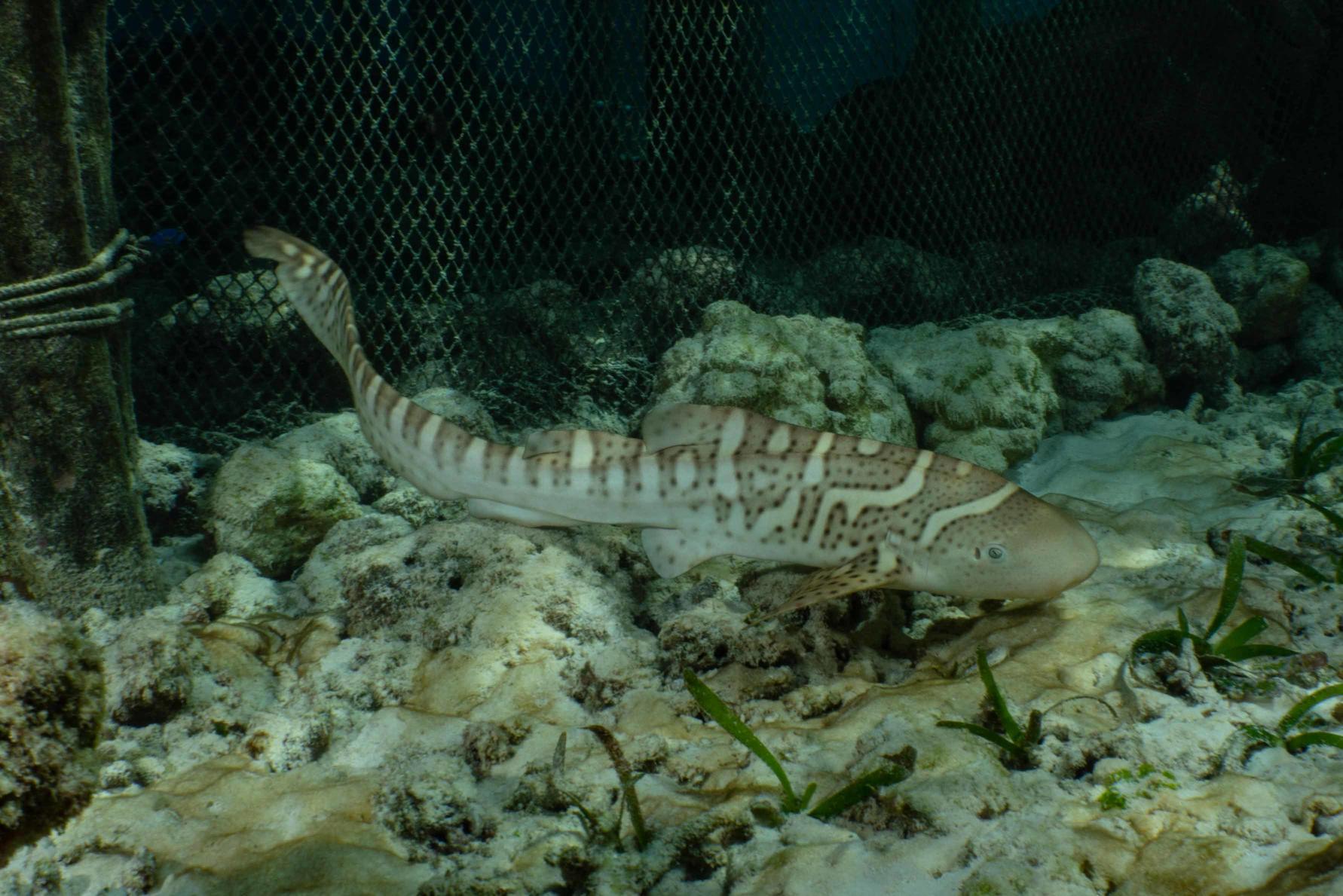
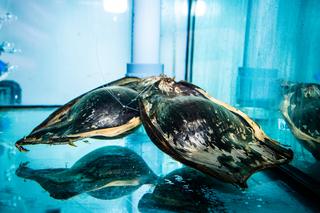
A pair of zebra shark eggs in a shark hatchery in Raja Ampat, Indonesia.
500
ZEBRA SHARKS
Over the next decade, ReShark plans to release some 500 zebra shark pups.
Sharks are some of the most misunderstood, and threatened, species on the planet. We have an opportunity to give them a fighting chance.
A wild idea
Once common in Raja Ampat, zebra sharks nearly vanished thanks to overfishing — yet their populations were thriving in public aquariums. Conservation International marine expert Mark Erdmann had an idea: If these sharks were released back into the wild to places where they wouldn’t be caught, they just might be able to avoid extinction.
So far, the effort is working, and over the next decade, ReShark plans to release some 500 zebra shark pups into Raja Ampat’s waters. The team has begun to explore new locations and is building hatcheries that should work for other shark species, and even rays.
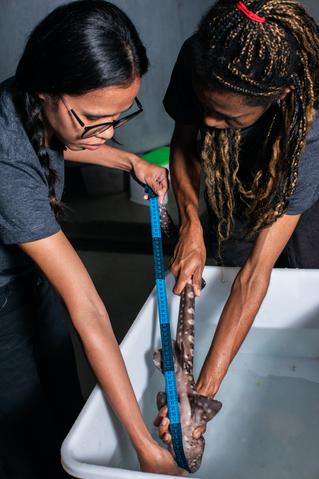
Community members from Raja Ampat spent time at the Jakarta Aquarium training in shark handling and husbandry.