Active

Elevating women’s leadership in coastal fishing communities

OCEANSCLIMATE

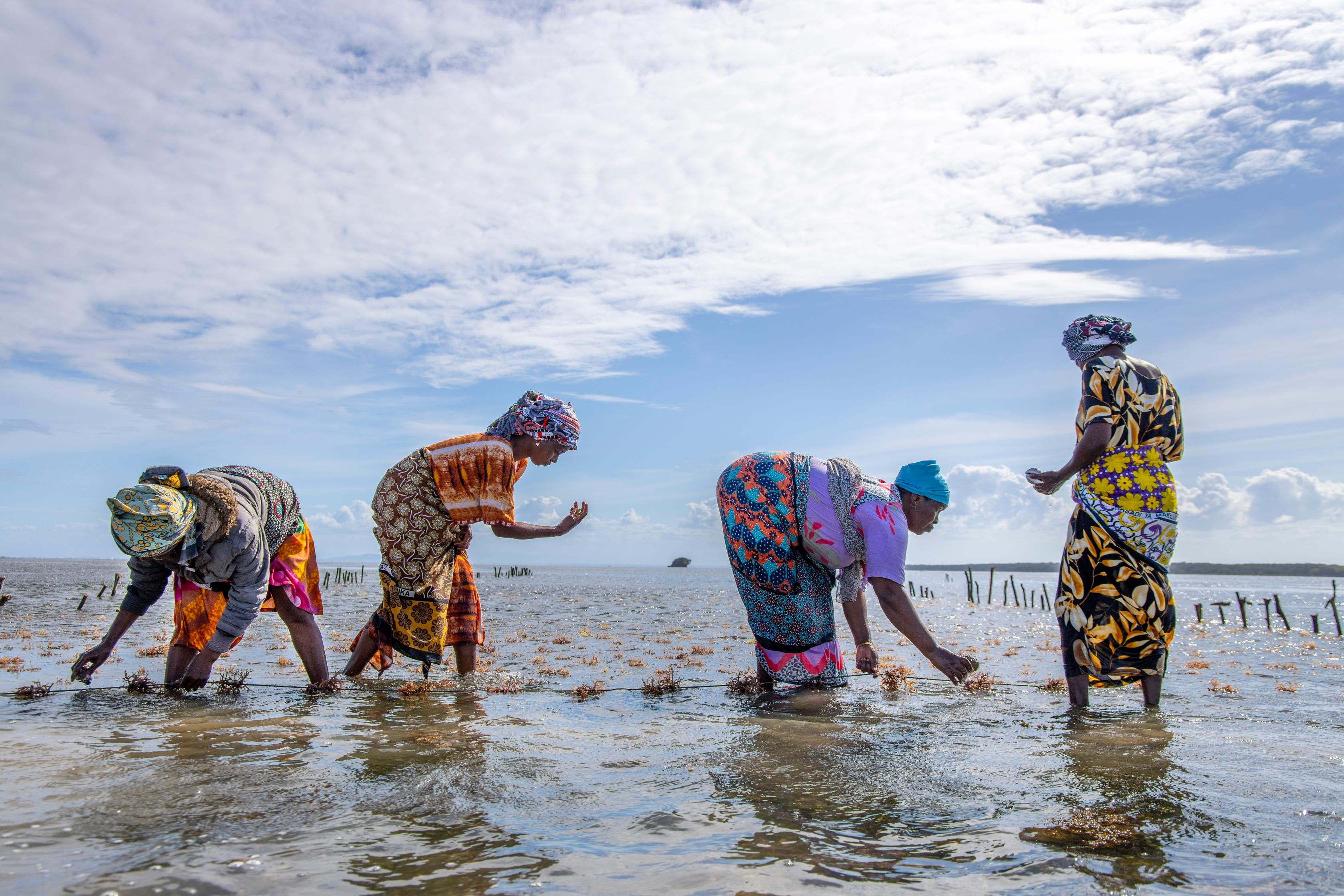
Women are the hidden backbone of the fishing industry. Globally, they represent 40 percent of fish workers and up to 90 percent of the post-harvest seafood sector. Nevertheless, women rarely occupy leadership or managerial positions in seafood supply chains and are often excluded from the decision-making that affects their livelihoods, rights and safety — and overall ocean health.

Conservation International works to expand women’s roles and rights in seafood value chains, environmental decision-making and coastal management, which research has shown leads to more sustainable fishing practices and improved ocean protection.

Recently, we worked with partners to bring together 26 women coastal leaders from 11 Latin American and Caribbean countries for a week of learning, leadership training and knowledge sharing. After discussing their work, achievements and challenges, the women leaders released a call to action with recommendations for including women’s priorities for coastal marine conservation in national policies. Among other requests, the women called for concrete actions by governments to end gender-based violence, recognize the benefits and burdens of caregiving, enhance fairness of labor practices, guarantee health care, and foster leadership opportunities for women.

26

WOMEN

established a new generation of coastal leadership

Local leader spotlight

After years of purchasing fish on credit and selling at a marginal profit to support her household, Beatrice Kpeh of Cestos, Liberia, knew she needed to expand her business for her family to prosper. This dream became a reality when Beatrice received a microloan from Conservation International. She leveraged this capital to expand her sustainable fishing business by buying much-needed supplies, including a canoe and improved fishing gear, as well as hiring employees. In addition, she diversified her income from fishing by starting a brick molding business — one that also supplies bricks for the construction of her new four-room house.

To date, Conservation International — via the Blue Oceans Program, funded by the Swedish Embassy in Liberia — has disbursed US$ 125,000 through microloans to more than 550 women fish traders. With just a small boost in capital, Beatrice, and many other women business owners, are now more financially secure while contributing to ocean conservation, as increased income reduces the need to overharvest, resulting in more sustainable fishing practices and improved protection of coastal ecosystems.