December 16, 2025
JAKARTA (December 16, 2025) – Konservasi Indonesia researchers have confirmed Indonesia’s first neonatal whale shark, one of the smallest free-swimming individuals ever documented globally. The findings, published this week in the peer-reviewed journal Diversity, provide the strongest evidence to date that Saleh Bay in West Nusa Tenggara may function as a rare pupping and nursery ground for the endangered species.
Although whale sharks (Rhincodon typus) are the world’s largest fish, their early life stages remain almost entirely unknown. No whale shark pupping ground has ever been confirmed, and neonatal sightings – defined as individuals under 1.5 metres – have been documented only 33 times in scientific literature worldwide.
In August and September 2024, local fishers in Saleh Bay – reported five sightings of whale sharks measuring 1.2-1.5 metres, followed by an accidental capture of a neonate estimated at 135–145 cm, roughly four months old.
“These observations strongly suggest that Saleh Bay may serve as a pupping and nursery habitat for whale sharks,” said Mochamad Iqbal Herwata Putra, Focal Species Conservation Senior Manager at Konservasi Indonesia. “If confirmed, this would be the first identified whale shark pupping ground in the world, elevating Indonesia’s already significant role in global whale shark conservation.”
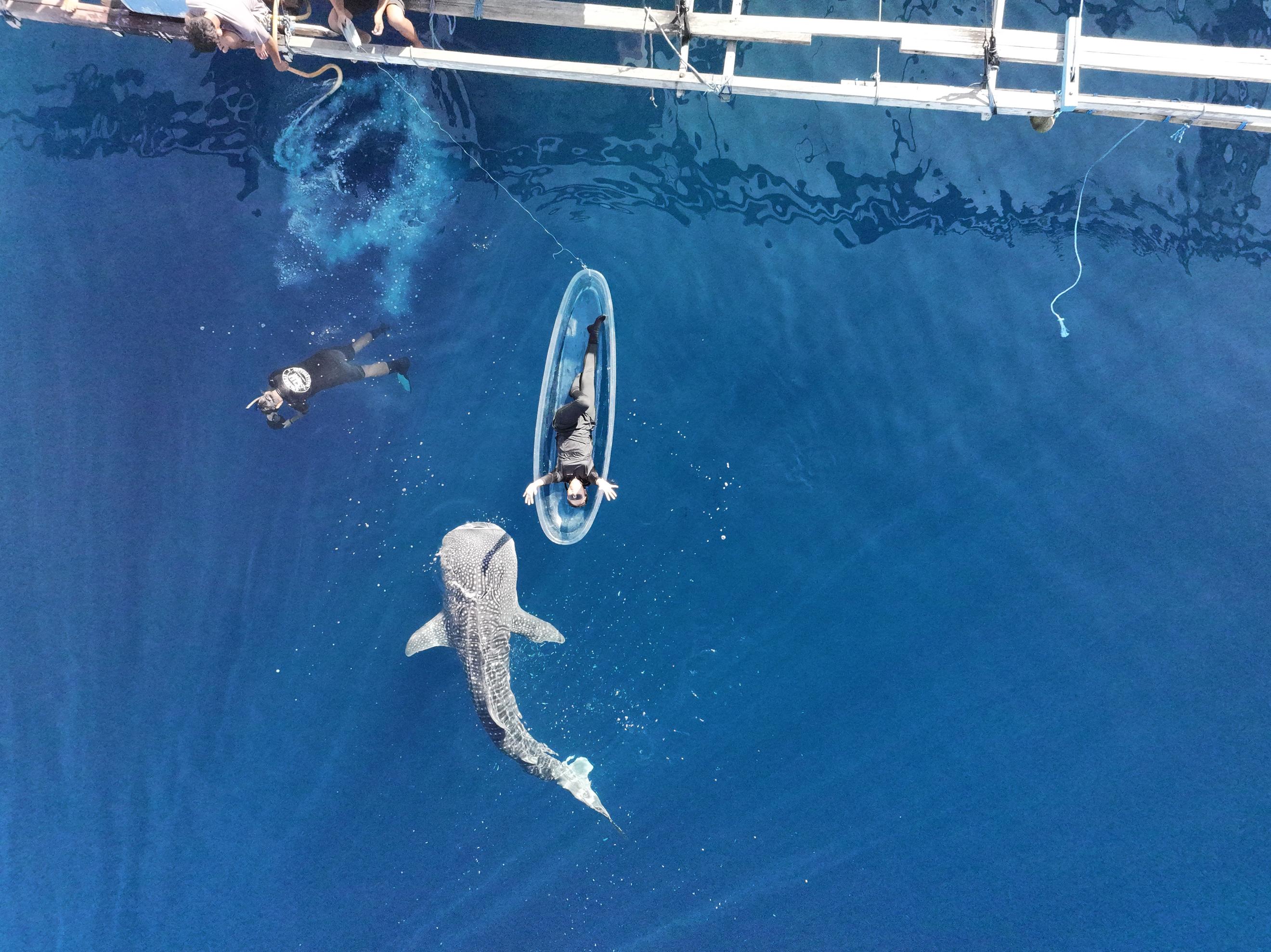
Konservasi Indonesia, Conservation International’s main partner in Indonesia, and partners are currently working with government authorities to establish Indonesia’s first whale shark–based marine protected area (MPA) in Saleh Bay. With its productive semi-enclosed waters, abundant plankton, and thriving ecology, Saleh Bay is recognized as an important habitat for whale sharks. The presence of multiple neonates takes the bay’s importance to a new level and greater scientific justification for formal protection.
“This discovery marks a significant advancement in global whale shark research,” said Dr. Edy Setyawan, Lead Conservation Scientist at the Elasmobranch Institute Indonesia. “Neonatal records are exceptionally rare worldwide, and each new observation strengthens the global dataset. These findings provide critical insight into where and how whale sharks begin their lives.”
The study showcases the effectiveness of Indonesia’s citizen science model, where traditional fishers share observations of charismatic species, which is being used by Konservasi Indonesia to collate into long-term data, track individual sharks, and respond rapidly to unusual events – such as the sudden appearance of neonates.
“This discovery was only possible because of our long-standing partnership with local fishers,” said Ismail Syakurachman Universitas Indonesia. “With their role as our extra eyes on the water, their observations helped us capture an extremely rare window into the earliest life stage of whale sharks – something scientists around the world have been searching for over decades.”
Konservasi Indonesia are coordinating with national authorities, including the Provincial officials from West Nusa Tenggara, along with academic institutions, and global conservation networks to use this research to inform conservation management efforts.
Next, Konservasi Indonesia plan to conduct further monitoring to confirm pupping activity, expand community-driven reporting systems, and advance plans for a whale shark–based MPA that protects the species and advances community-based conservation.
###
About Conservation International: Conservation International protects nature for the benefit of humanity. Through science, policy, fieldwork and finance, we spotlight and secure the most important places in nature for the climate, for biodiversity and for people. With offices in 30 countries and projects in more than 100 countries, Conservation International partners with governments, companies, civil society, Indigenous Peoples and local communities to help people and nature thrive together. Go to Conservation.org for more, and follow our work on From the Field, Facebook, Twitter, TikTok, Instagram and YouTube.
About Konservasi Indonesia: Konservasi Indonesia is a national foundation that aims to support the sustainable development and protection of critical ecosystems in Indonesia. We believe in the importance of multi-stakeholder partnerships across sectors and jurisdictions. Working in partnership with the government and others, we design and delivery innovative nature-based solutions to climate change, using a sustainable landscapes-seascapes approach to create lasting impacts for people and nature. For further information, visit: www.konservasi-id.org