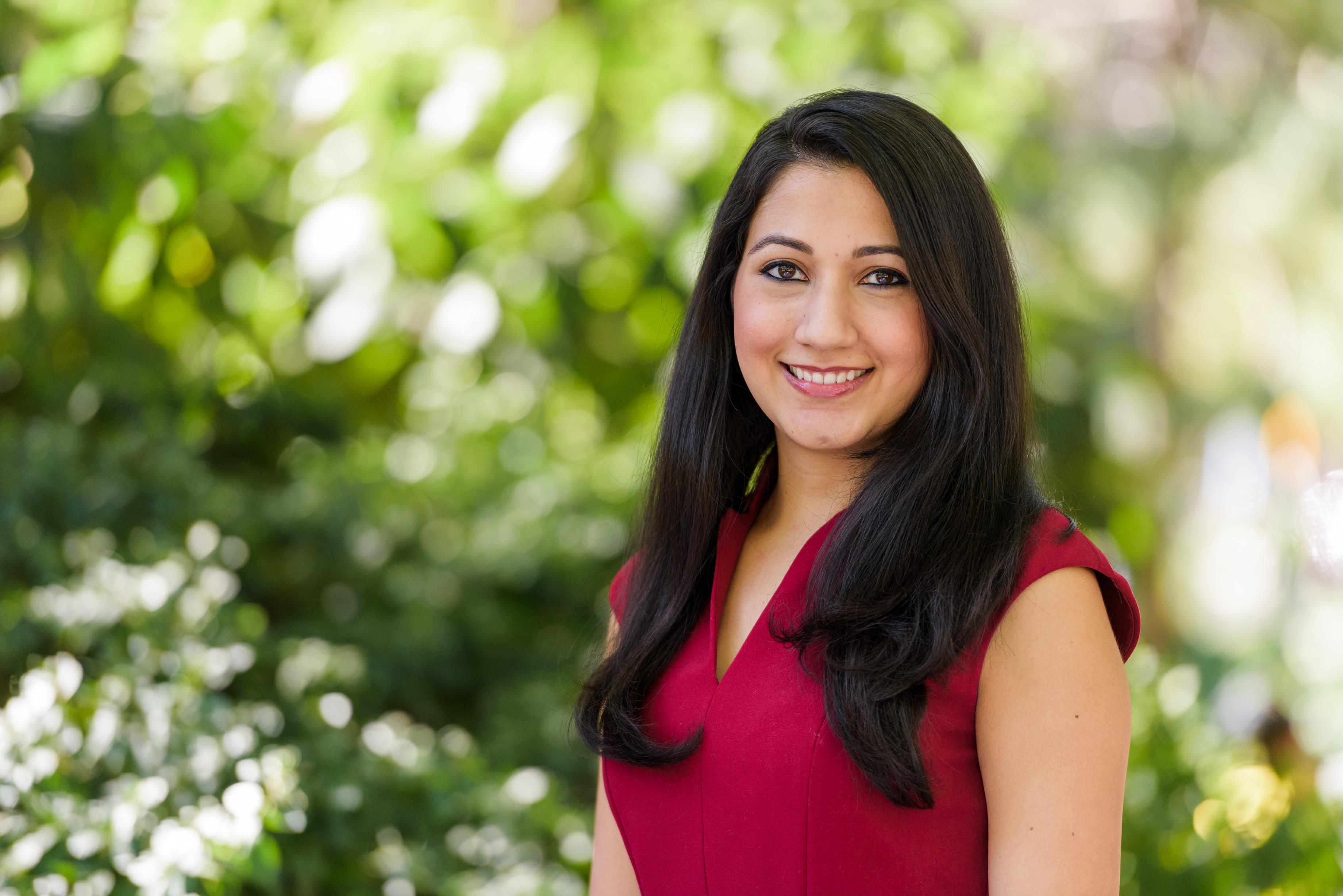
Editor’s note: After a decade at Conservation International, Shyla Raghav will be leaving the organization this month to join the founding team of CO2 — a climate-focused unit at TIME.
History is full of women who changed the world through science, technology, engineering and math — from the chemist who helped discover the double helix structure of DNA to the computer scientist who snapped the first picture of a black hole.
Trouble is, we often don’t know their names (by the way, that was Rosalind Franklin and Katie Bouman, respectively).
But a movement is building to make women in STEM more visible — literally. Last week, the Smithsonian Institution in Washington, DC, kicked off their #IfThenSheCan exhibit, displaying more than 120 bright orange, life-sized sculptures of prominent women in STEM throughout the city’s National Mall. And Conservation International’s climate lead Shyla Raghav was among them.
Conservation News spoke to Raghav about her passion for protecting the planet, how she stays optimistic about Earth’s future and her advice for the next generation of women scientists.
Question: How did you get your start in science?
Answer:There was a very distinct moment when I decided there was nothing I would rather do than protect the environment. I remember watching nature shows as a child while living in Australia. Images of the rainforest being destroyed as animals scurried away brought tears to my eyes. It seemed such a gross injustice to harm nature in that way. I couldn’t imagine dedicating my life to anything other than trying to confront this issue.
Eventually, I decided to pursue a dual degree in ecology and international relations at the University of California-Irvine. During my time there, I found ways to apply what I was learning to real world problems by engaging in campus advocacy. With help from the Green Campus program, we convinced the university to create a fully sustainable dorm with energy saving appliance and use sustainable biogas for university buses. These experiences showed me that you don’t need to wait to start making a difference for the environment.
Q: Clearly you managed to stay busy in college — what did you do after graduating?
A: After college, I got my master’s degree in environmental management at Yale’s School of Forestry. That sparked my interest in taking a global approach to conservation by understanding the different ways countries are trying to address climate change. After graduating, I moved to the Caribbean to manage a World Bank project aimed at helping small island nations adapt to climate impacts.
Living in Belize and Dominica changed my life; I was no longer just reading about the devastating impacts of climate change — from wildfires to hurricanes — I was witnessing them firsthand. Under threat from rising sea levels and increasingly frequent storms, Caribbean coastal communities are forced to consider that many ways climate change will affect their futures. For example, how can fishers make a living if the fish they depend on migrate to warmer waters? Where will island residents live if the sea reaches their homes? How will they honor their ancestors if their burial grounds are submerged? Growing up in the United States, I had never felt these issues so viscerally.
Q: How do you stay hopeful when you’re surrounded by this type of devastation on a regular basis?
A: It can be tough, but I ground myself in meditation. Being mindful is what allows me to work on climate change by balancing acceptance for that which I cannot control, with persistence to create a better and more just future. It’s how I draw strength to continue to show up for the planet.
I also find it invigorating to surround myself with other women who are working to change the field of science. In 2019, I was chosen as an ambassador for the If/Then program — a group of 125 women in STEM who aim to serve as role models for young girls, helping them imagine the ways they can change the world. Currently, women are underrepresented in science, though we’ve made gains — from 8 percent of women STEM workers in 1970 to 27 percent in 2019 in the U.S.
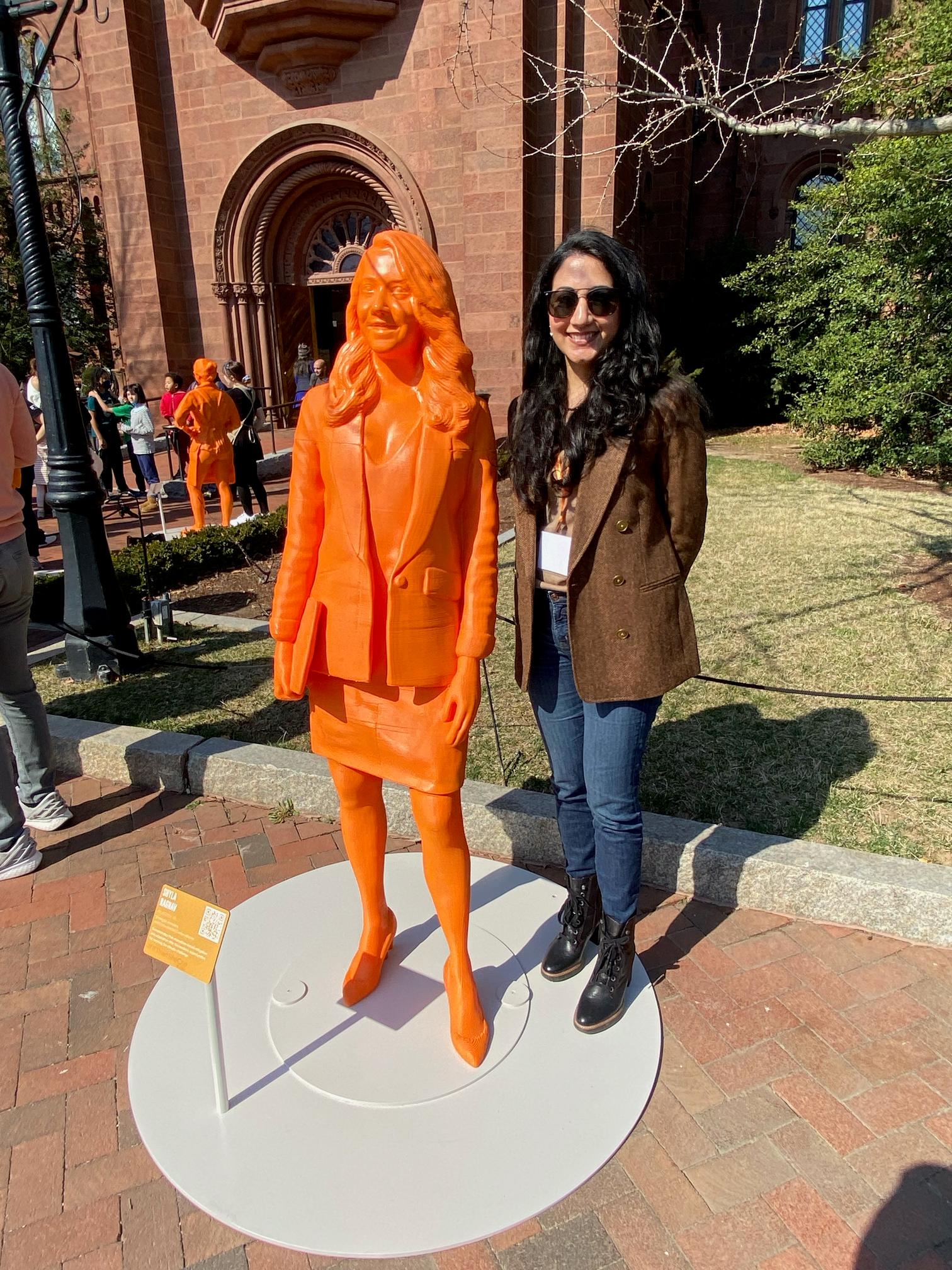
© Conservation International/photo byJessica Brown
Shyla Raghav standing with a 3D-printed statue of her at the #IfThenSheCan exhibit, Washington, DC
It can be really helpful to have representation in all sorts of industries — from astronauts to geologists to computer scientists. For me, it was Christiana Figueres, the Costa Rican diplomat who has led national and international climate negotiations, including efforts that culminated in the landmark 2015 Paris agreement.
Q: What other advice do you have for aspiring women scientists?
A: Find trusted mentors, whether they be teachers or professionals in the field you’re interested in. Many women in the sciences — including myself — suffer from imposter syndrome, which means we doubt our own abilities or feel like frauds despite our accomplishments. Fortunately, my mentors saw potential where I didn’t see it myself. However, mentors rarely fall into your lap. My advice is don’t be afraid to ask for help and always approach your work with curiosity and an open mindset.
For anyone pursuing a career in the climate world, I would highly recommend living abroad. It gave me a much deeper understanding of the injustices inherent in the climate crisis and a greater confidence to speak with authority — as well as the commitment to raise my voice for communities that are on the frontlines of climate change. And lastly, don’t be afraid to fail — in fact, failure is a gateway to growth.
Further reading:
Kiley Price is the staff writer and news editor at Conservation International. Want to read more stories like this? Sign up for email updates. Also, please consider supporting our critical work.