August 4, 2026
An experiential note on the IW:LEARN Twinning Exchange
by Pearl Caroline Valeros
Participating in the Blue Nature Alliance (BNA) and Coral Reef Rescue (CRR) Twinning Exchange at the University of Queensland’s St. Lucia Campus, Brisbane Australia was a truly enriching and memorable experience for me. As someone relatively new to project implementation, this was also my first time joining a structured learning exchange of this scale and nature. Going into the exchange, I felt both excited and curious. I had read about the complexity of multi-country GEF projects, but I was eager to understand how these projects actually operate on the ground, how teams navigate challenges, and what practical solutions have emerged from real implementation experience.
Over the course of the exchange, what stood out most to me was how honest and open the discussions were. Rather than focusing only on successes, participants shared very candid reflections on the realities of implementation, whether it was navigating complex GEF requirements, managing relationships with multiple partners, or dealing with delays and operational constraints. Hearing directly from practitioners who are managing projects across different countries and contexts helped me better appreciate the day-to-day complexities behind what we often see summarized in reports or results frameworks. It made the learning feel grounded, relatable, and immediately applicable.
From a professional perspective, this exchange was particularly valuable for me because I am currently supporting International Waters projects in the Asia-Pacific region, specifically SEACONNECT and EM4IUU. Throughout the sessions, I found myself constantly making connections between what was being discussed and the contexts we are working in. Many of the challenges raised, such as working within government systems, ensuring partner capacity, and aligning global frameworks with local realities, are highly relevant to the Asia-Pacific. The exchange gave me practical insights into how other projects have approached these issues, including the importance of early stakeholder engagement, continuous capacity building, and maintaining flexibility in implementation wherever possible.
One aspect that I found especially meaningful was the opportunity to also contribute to the discussions by sharing experiences from the Philippines. During conversations on challenges in working with government partners, I was able to reflect on and share some of the complexities we encounter in the Philippine context, particularly around administrative processes, coordination across agencies, and how these can affect timelines and project execution. It was encouraging to see that these reflections resonated with colleagues from the CRR project, who are experiencing similar challenges in their work in the Philippines. I felt that this exchange of perspectives helped ground the discussions in real-world contexts and reinforced that many of the challenges we face are shared across projects. It was also a reminder that peer learning is not only about receiving knowledge, but also about contributing experiences that can help others navigate similar situations.
Beyond the technical and operational insights, the exchange also highlighted the importance of relationships in project implementation. Participants emphasized that strong partnerships, built on trust, communication, and mutual understanding, are at the core of successful projects. This really resonated with me, as it reinforced that implementation is not just about systems, processes, and compliance, but also about people and how we work together across different institutions, cultures, and contexts. I also appreciated the discussions around adapting approaches to different countries, recognizing that there is no single approach that fits all contexts, and that flexibility and cultural sensitivity are essential.
On a more personal level, this experience gave me greater confidence in my role and in my ability to contribute to project implementation. Being able to sit in the same room with experienced practitioners, listen to their insights, and actively participate in discussions made me feel more connected to the broader GEF International Waters community. It also helped me better understand where my work fits within the larger picture and how the lessons from other projects can inform what we do moving forward.
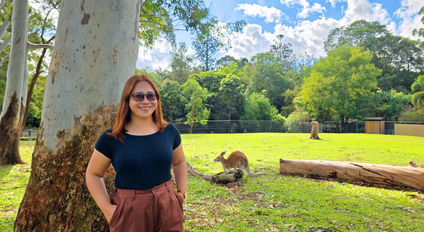
On the final day of the exchange, we had the opportunity to visit the Lone Pine Koala Sanctuary, which offered a refreshing and meaningful way to conclude the program. Beyond being a break from the sessions, the visit reinforced the importance of conservation in practice and created space for more informal conversations among participants. These interactions helped strengthen relationships and trust, which are just as critical as the technical discussions in building effective and lasting collaboration.
As I reflect on the exchange, I see it as a starting point rather than a one-time event. The learning, connections, and ideas that emerged from these few days have clear relevance for our ongoing and future work in the Asia-Pacific. I am particularly interested in exploring how we can apply some of the approaches discussed, such as strengthening partner capacity, creating more flexible funding mechanisms, and improving communication with stakeholders, in the context of SEACONNECT and EM4IUU.
At the same time, I am hopeful that this will not be the end of the learning journey. The exchange highlighted the value of continuous engagement, peer learning, and creating spaces where practitioners can come together to share experiences openly. I would strongly welcome more opportunities like this in the future, whether through similar exchanges, communities of practice, or other collaborative platforms. There is so much value in learning from each other, especially when working in complex and evolving environments.
Overall, I am very grateful to have been part of this experience. It not only deepened my understanding of project implementation but also reinforced my motivation to keep learning, improving, and contributing to meaningful conservation work in the region.