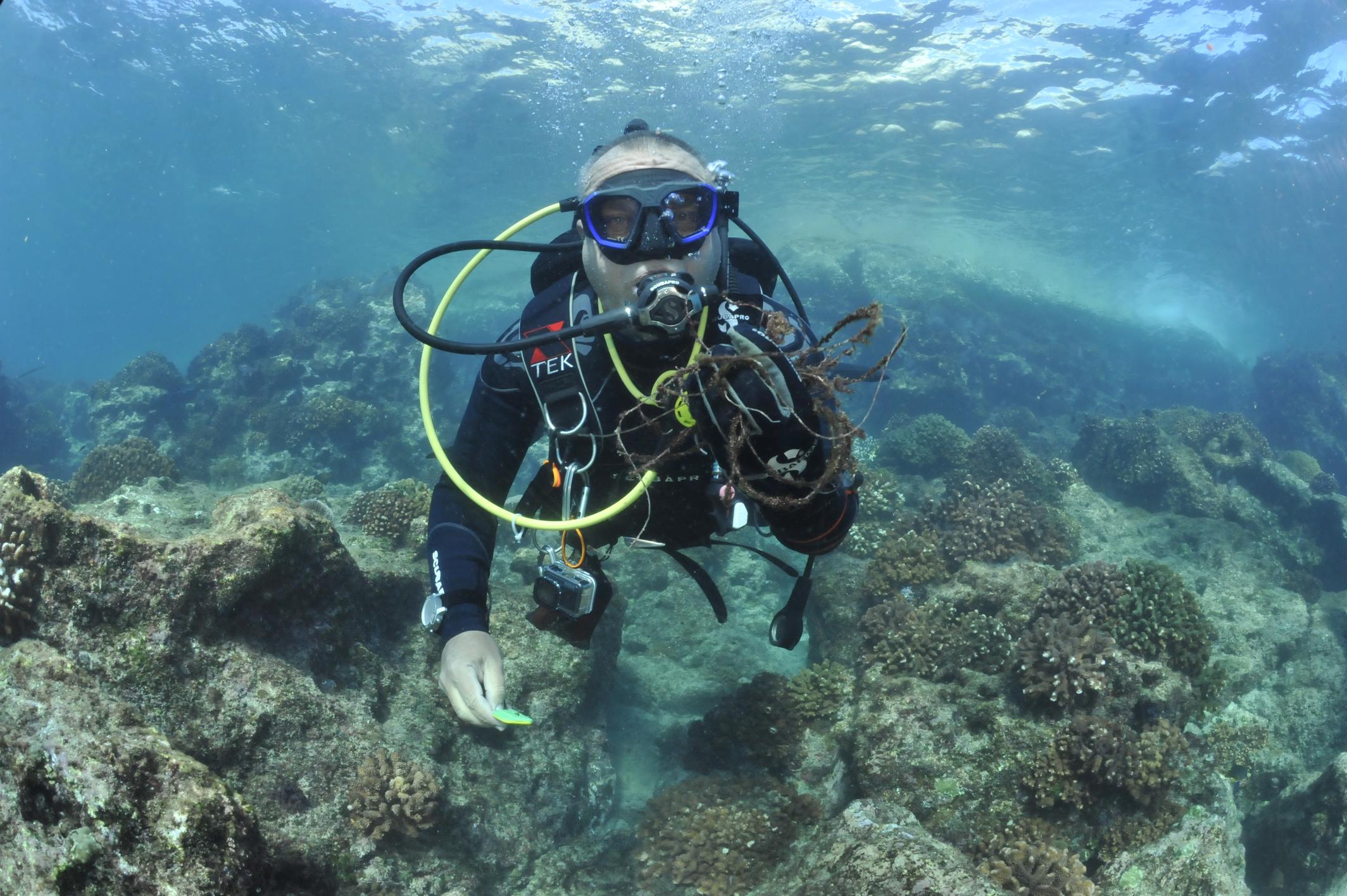
For nearly two decades, Edgardo Ochoa has picked away at a problem.
A net here, some fishing line there — Conservation International’s marine and diving safety officer has single-handedly scooped up thousands of pounds of abandoned fishing gear from the bottom of the sea.
It’s impressive, but it’s not nearly enough to make a dent: According to one estimate, nearly a third of fishing lines are lost or discarded at sea. This so-called “ghost gear” — along with lost nets and traps — is deadly for marine animals. Experts estimate that more than 300,000 whales and dolphins die each year after getting tangled in them. Once, Ochoa saw a whale caught in a fishing net that ended up severing its tail.
With far more “ghost” nets than any one person can possibly handle, Ochoa created a course to teach recreational divers how to safely remove ghost gear from the sea. Over the past five years, that course has certified nearly 100 divers in Panama, Colombia, Mexico, Peru, Indonesia and Timor-Leste.
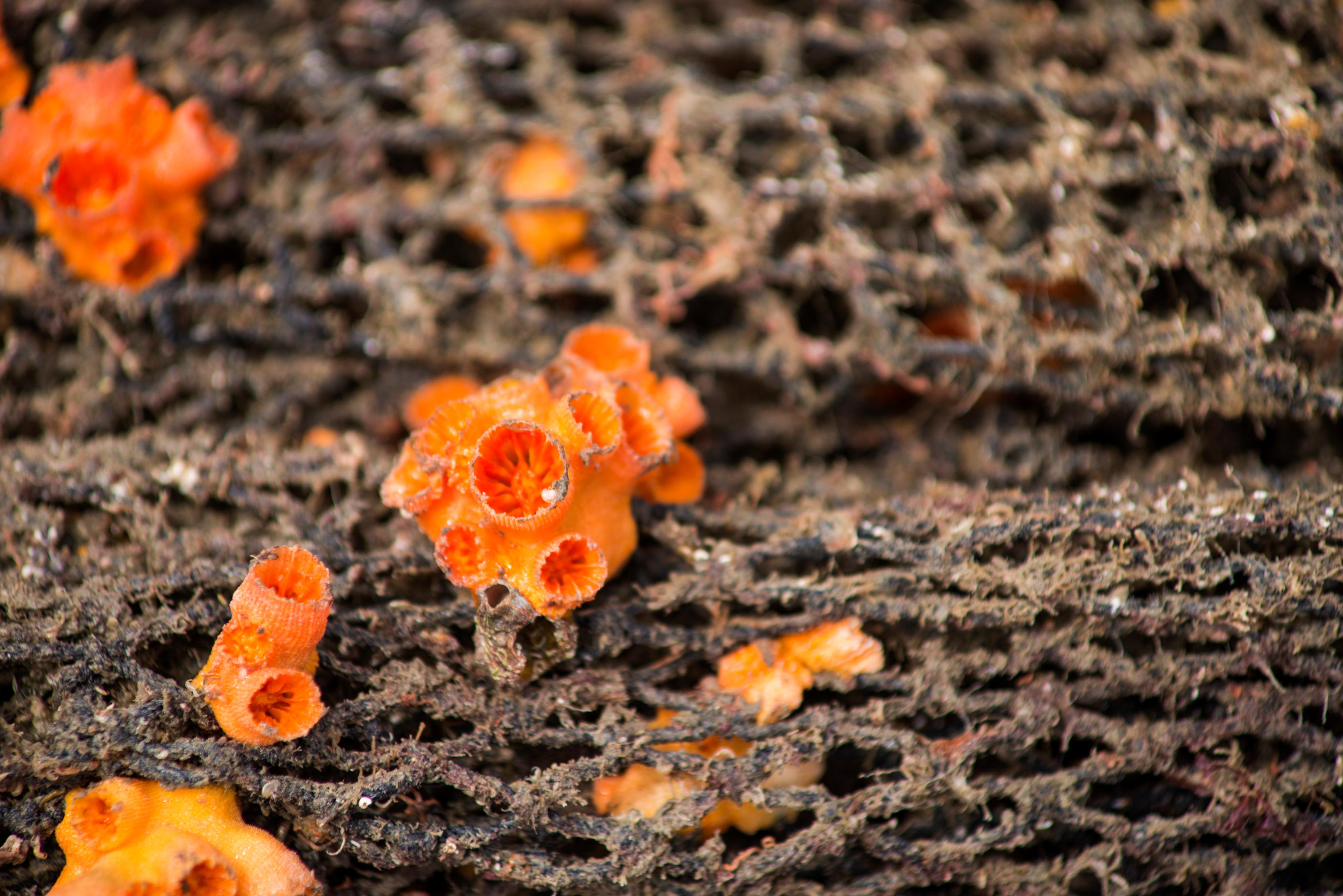
©Ramon Lepage
A third of fishing lines and 6% of nets are lost to the sea, where they smother coral and entangle wildlife.
Last year, Conservation International partnered with the fashion brand H&M to expand the effort, training an additional 50 divers so far. He says he doesn’t measure success by the amount of trash picked up, but rather by the number of divers who join his ranks.
“It’s a pay-it-forward kind of approach,” he said. “The more people we certify, the more people that can use these skills to remove any trash they encounter — whenever and wherever they’re diving.”
During the course, Ochoa leads pairs of trainees through dive safety sessions, covering underwater signals and how to safely cut, lift and remove ghost gear at depths of up to 18 meters (60 feet). He likens the experience to a choreographed dance — each diver moves in unison and has a role.
Ochoa said he’s seen a demand for this type of training — people are aware of the problem, and they want to help.
“There are more than 6 million active recreational divers worldwide,” he said. “If even a fraction of them did something when they went diving, it would be the biggest underwater cleanup that has existed in history.”
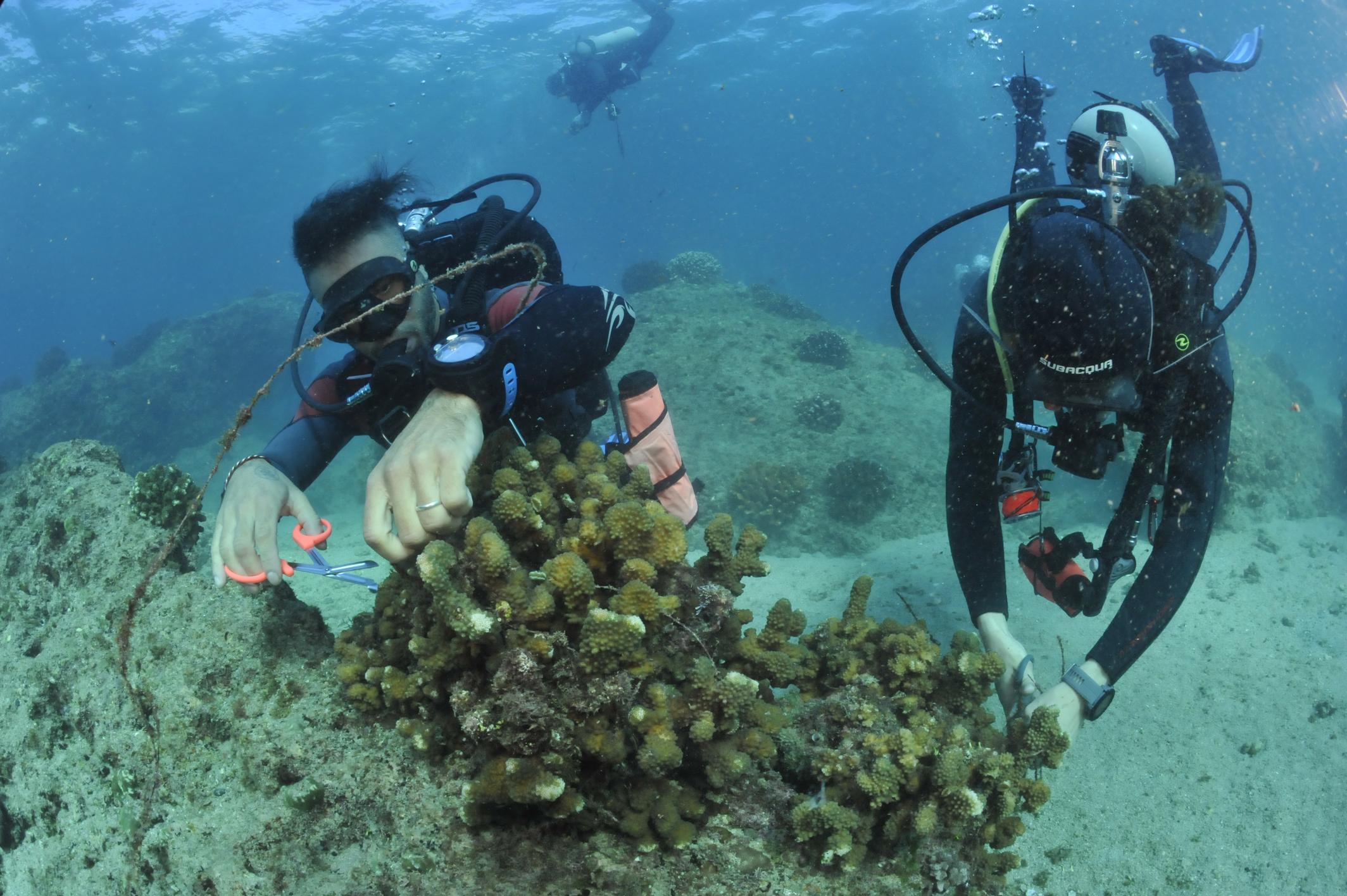
© Arturo Hernández
Volunteers learn to safely remove ghost gear in what Ochoa calls a "choreographed dance."
‘A spider web’ of fishing lines
Ochoa dives all over the world, for work and for fun. He averages at least 150 dives a year. Every dive, like every dive site, is different.
But the unsettling constant is trash.
“I’ve been diving in some of the most beautiful places on the planet — they are almost otherworldly. Then you see the garbage, and reality rushes back,” he said. “Once you see something like that, it takes hold. You don’t forget it.”
A couple of years ago, Ochoa traveled to a beach in San Andrés, Colombia — where dozens of fishermen cast their lines from the shore — with a plan. He packed up his gear — a scuba tank, medical scissors, line cutters and mesh bags — and headed for the shoreline.
“I found a literal spider web of fishing lines,” he said. “Thousands of fishing lines were all tangled together.”
Ochoa asked 10 divers to help him clean up for one hour to see how much they could accomplish. Unsurprisingly, picking up trash is trickier and more time consuming underwater than on land. In one hour, the group didn’t move more than 15 meters (50 feet) — and barely scratched the surface of the problem, he said.
One thing that’s not tricky? Finding discarded fishing gear.
“Ask where people fish, and you know where the trash will be,” he said.
And of course, this trash knows no borders. Ghost gear spreads on tides and currents, ending up in nearly every ocean on Earth — even polar coastlines.
The main culprit is commercial fishing. While estimates suggest ghost gear accounts for 10 percent of the waste floating in the ocean, Ochoa said it’s almost impossible to know the true impacts, because abandoned nets and gear typically come from illegal or unregulated fishing vessels and are therefore unreported.
And as fish consumption has skyrocketed in recent decades, so too has the ghost gear problem, Ochoa said. Not only are more fishermen at sea, they use nylon fishing lines and nets that last virtually forever compared with the nets of the past, which were made with silk or cotton.
While marine species bear the brunt of the problem, it extends far beyond. Ships can get stuck in nets, causing costly shipping delays. Microplastics ingested by fish can hurt coastal communities’ livelihoods. Unsightly plastic waste can decrease local tourism.
Ochoa is undaunted. Optimistically, he notes that divers aren’t the only ones who can help.
“My hope is that more people understand that they don't have to be underwater removing gear,” he said. “The root of the ghost gear crisis comes from the overexploitation of fish. If, as consumers, we respect seasonal fish and support sustainable sources, we can make a difference.”
Mary Kate McCoy is a staff writer at Conservation International. Want to read more stories like this? Sign up for email updates. Also, please consider supporting our critical work.