Plant more trees, cool the climate: It’s a message that readers of this website know well.
But new research confirms that this “rule” doesn’t apply everywhere.
Take southern Africa: In some places, grasses are far more effective climate allies than trees.
Why? Grasses better reflect the sun’s radiation than darker, woody vegetation. This effect, calledalbedo, is at work in a number of climate-related processes, particularly in polar regions, where sea ice and snow reflect much of the sun’s energy back into space, providing a cooling effect. (An ice-free Arctic Ocean, on the other hand, absorbs more of the sun’s energy, hastening global warming.)
More or less the same principle applies with grasslands, said study co-author Heidi-Jayne Hawkins, a climate scientist at Conservation International’s affiliate in South Africa.
“There’s a lot of emphasis on planting trees to mitigate climate change,” she said, “and that makes sense for areas that were forested and should be reforested. But this seemingly simple solution of planting trees isn’t applicable for all areas. This paper shows why grasslands are so valuable by looking at another aspect of climate mitigation through cooling.”
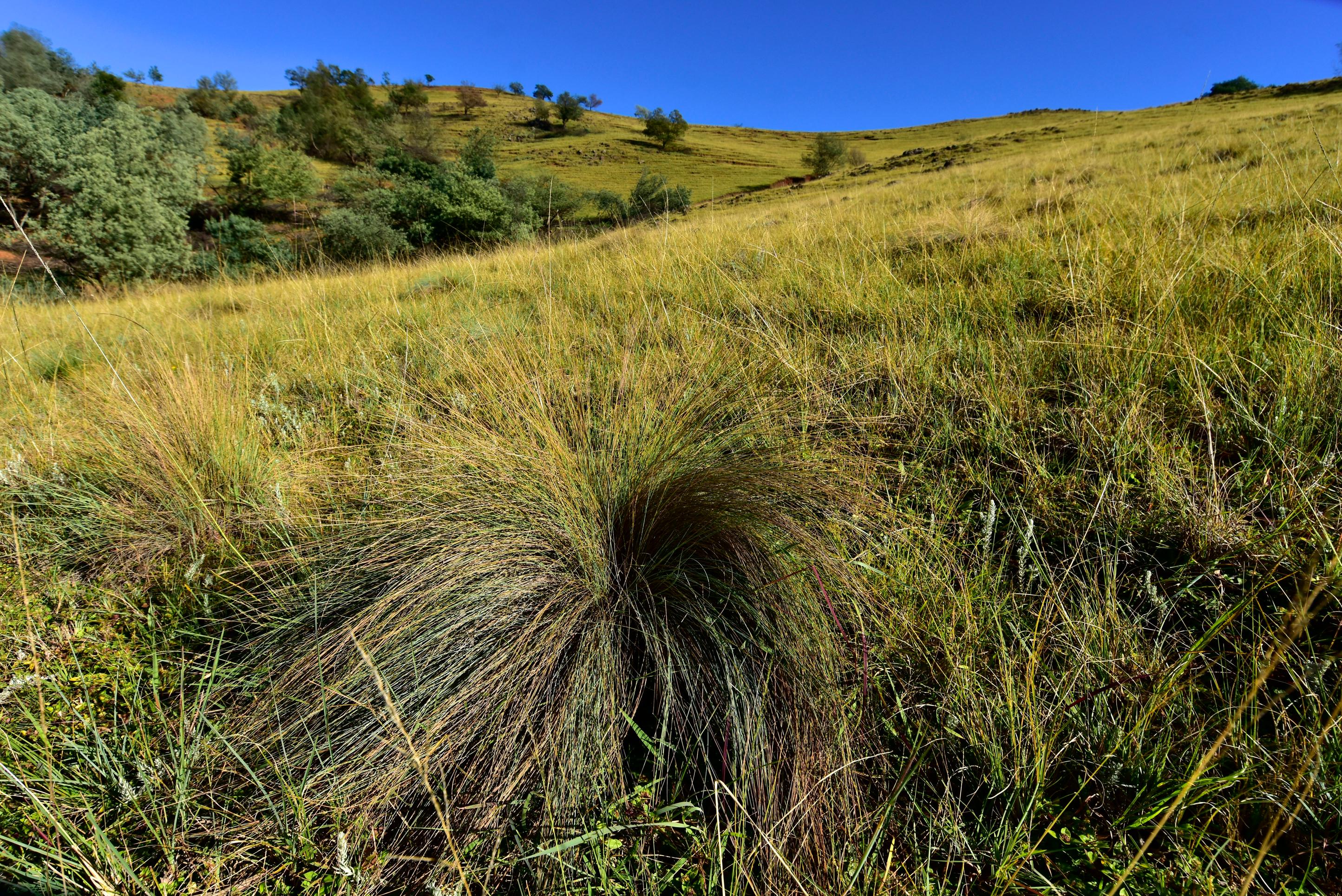
© Trond Larsen
Grasses better reflect the sun's radiation than darker, woody vegetation like trees.
The study compared albedo for different types of grasses and shrub vegetation in South Africa. Compared with shrubbery, the naturally lighter color of grasses — combined with their dormant periods of faded color — resulted in higher reflectivity. Whether this translates directly to a cooler local environment requires further study. However, the value of this study is that it differentiates between grass types, shrubs and land use at the patch scale.
The researchers also examined albedo for grasses and woody vegetation throughout the early, late and growing seasons to determine the effects of growth versus dormancy on albedo. Three different grasses — grazing lawn, red and white — were analyzed and had different albedo values.
As expected, albedo was lower for grasses during their growing season due to the green color compared to their more bleached color when dormant.
The woody vegetation and trees analyzed were perennial and do not go into dormancy, so the albedo was not as affected by changing seasons. Hawkins noted that while the woody shrubbery analyzed in this study grows year-round, deciduous trees like those in tropical savannas would likely have a bigger range in albedo due to their dormant stage and resulting leaf loss.
Taking the misguided effort of planting trees in grasslands out of the equation, even native trees may encroach. One reason for this is the loss of wild animals.
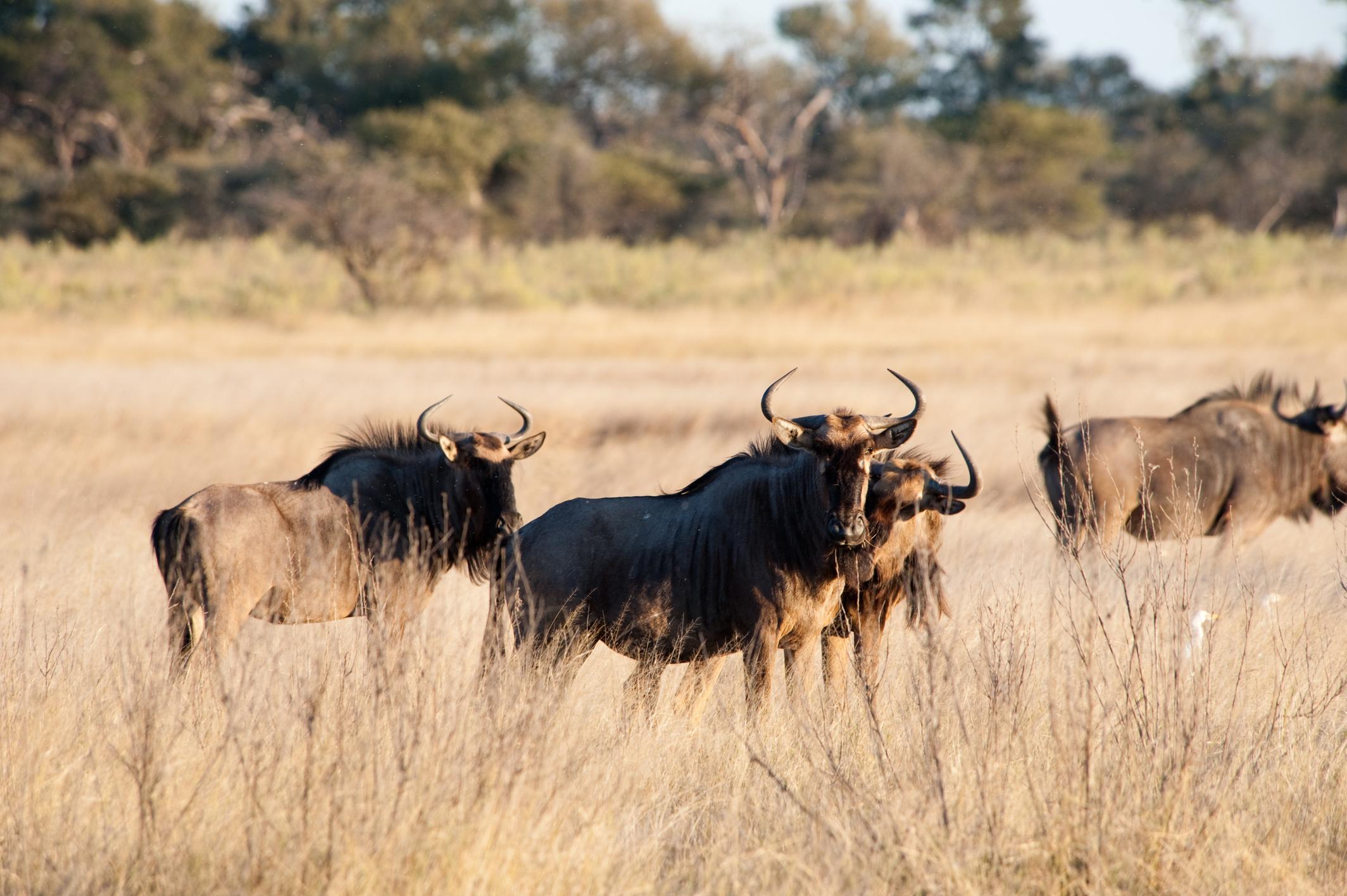
“Part of the story is that we’ve lost a lot of wild animals that used to control or remove woody vegetation — and which would have kept lands open for grasses,” Hawkins said.
Livestock, like cattle, have replaced wildlife such as elephants, which push down trees, browse on shrubs and, as a result, keep lands more open for light-loving grasses to grow.
Increased efforts to conserve wildlife could prevent woody shrubs from encroaching in grasslands. In grazing areas, Hawkins suggests, farmers can choose domestic animals that mimic wildlife feeding behaviors like cattle or goats.
Trees and woody shrubs in grasslands can contribute to the severity of wildfires as well.
“Fire is a natural part of these ecosystems, but trees planted where they shouldn’t be makes it harder to control wildfires,” Hawkins said.
Grasslands’ albedo effect is only one of their climate benefits. Stretching across 40 percent of the planet, grasslands hold more than a third of the world’s land-based carbon in their vast underground root and soil systems.
Hawkins said she’s hopeful that the research will help boost understanding of grasslands as a climate ally.
“People seem to be getting the message that natural grasslands are as valuable as forests, and culturally important, not only for raising livestock but also for tourism and the wildlife that live there,” she said. “This study adds to that value.”
Further reading:
Olivia DeSmit is a freelance writer. Want to read more stories like this? Sign up for email updates. Also, please consider supporting our critical work.