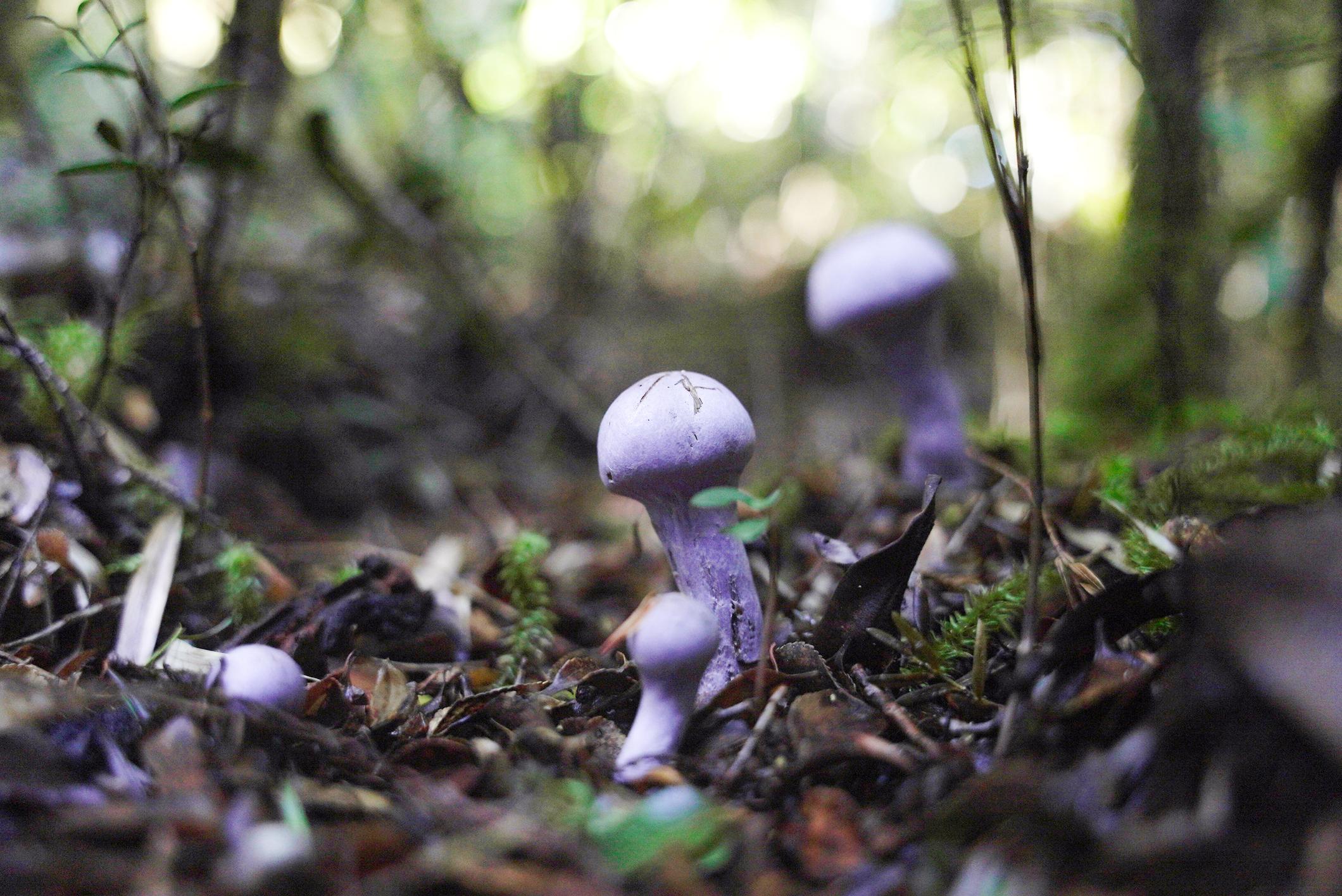
Underneath the ground, intricate fungal networks are working together with plants to absorb massive amounts of carbon — equivalent to more than a third of the world's annual fossil fuel emissions, according to a new study.
Until now, fungi have been a blind spot in carbon modeling and conservation efforts. This study is the first to quantify the amount of carbon that plants pull out of the atmosphere and subsequently send to certain types of fungi known as mycorrhizal fungi.
“The potential for these fungi to keep climate-warming carbon out of the atmosphere and in the soil is huge — and may play a bigger role in the carbon cycle than we anticipated,” said Heidi Hawkins, the study’s lead author and a scientist with Conservation South Africa, an affiliate of Conservation International.
Mycorrhizal fungi form vast underground networks found in soils on every continent of Earth, from forests to grasslands to croplands. These fungi, both living and after they die, form a part of soil organic matter and play an essential role in the soil’s ability to retain carbon — roughly 75 percent of Earth’s terrestrial carbon is stored in soil.

© Dr. Loreto Oyarte Galvez
Mycorrhizal fungi form extensive networks, exchanging soil nutrients for carbon from the plant.
These fungi and plants have a mutually beneficial relationship — one that dates back more than 400 million years. The fungi colonize plant roots and extend far beyond their hosts to provide nutrients that are critical to plants’ growth. Plants return the favor with sugars made from carbon dioxide absorbed from the atmosphere during photosynthesis.
Through this process, plants send mycorrhizal fungi nearly 4 gigatons of carbon each year, at least temporarily. That equates to nearly the annual emissions of the United States and China combined.
Hawkins said these findings, published in the journal Current Biology, could spur conservation efforts to pay closer attention to what's happening underground.
“In conservation, fungi have, understandably, received a fraction of the attention of forest restoration,” she said. “But these fungi could be part of the crucial fight to curb climate change.”
While these findings are encouraging, Hawkins noted that much about fungi’s ability to store carbon remains unclear — including how long that carbon remains buried below ground. Both living and dead fungal matter in the soil is made up of carbon. However, like plants and animals, fungi respire, resulting in the loss of carbon back to the atmosphere as carbon dioxide.
What these findings do make clear is how essential soil is to carbon sequestration — and the role mycorrhizal fungi play in keeping it healthy, acting as a well-known defense against soil loss and certain plant diseases.
Conservation and restoration activities that protect soil are becoming increasingly urgent. Recently, the United Nations warned that 90 percent of the Earth’s topsoil — where crops, forests and more grow — could be degraded by 2050, in part due to intensive farming practices.
“Land degradation cripples our ability to fight climate change and biodiversity collapse,” Hawkins said. “If we lose the fungal networks in our soil, we also lose whatever carbon they store and the critical nutrient source that supports the ecosystems we depend on.”
Strategies to protect these vital fungal networks lie in the protection and restoration of natural habitats, as well as the sustainable management of working lands through practices like no-till farming and sustainable grazing where the soil is left relatively undisturbed, Hawkins said.
Further reading
Mary Kate McCoy is a staff writer at Conservation International. Want to read more stories like this? Sign up for email updates. Also, please consider supporting our critical work.