Edgardo Ochoa is the marine and diving safety officer at Conservation International.
Throughout my career, I have been on more than 5,000 dives, logging countless hours underwater and marveling at the wealth of biodiversity at each site that I visit.
Whether I am visiting Cocos Island in Costa Rica or the island of Ouvéa in New Caledonia, for me, nothing compares to the feeling of plunging into crystal-clear waters on a dive and witnessing mosaics of colorful coral, spotting small crabs poking their heads out from the sand and even catching a rare glimpse of a tiger shark.
Unfortunately, there is only one thing I can expect to see on every expedition: plastic.
Recent studies show that plastic has invaded every corner of the Earth, from glaciers in the Arctic to the sands of the Sahara. It’s not surprising to find plastic bottles, snack packages, abandoned fishing gear and many other pieces of waste floating alongside beautiful corals and schools of fish.
But you can help prevent an even more plastic-filled future for our oceans. Here are 5 tips to get you started.
1. Don’t buy it in the first place (but if you do, reuse it)
This is my No. 1 recommendation for anyone who wants to help protect the sea. Nearly 8 million metric tons of plastic and waste are dumped into the ocean every year, along with massive amounts of pollution from other sources such as oil and gas. Based on current trends, plastic is expected to triple within the next 20 years, adding up to 50 kg (110 pounds) of plastic waste along every meter of the world’s coastlines.
While recycling is crucial, reducing your plastic use is the most effective way to prevent new plastic from entering the ocean. Wherever you can, try to buy products that can be reused many times, such as food storage containers, bags and even face masks. A recent study revealed that roughly 129 billion face masks and 65 billion gloves have been used each month since the pandemic began — and most of that single-use medical waste ends up in the ocean, where it can be ingested by species such as seabirds and sea turtles that confuse it for food. To prevent this, make sure that you are properly disposing of COVID-19 waste and, whenever it is safe, try to use reusable face masks and ask restaurants not to give you plastic utensils when you are ordering take-out food.
2. Do a mental checklist every time you shop
On a dive to the Lau Islands in Fiji, nearly 300 km (186.4 miles) from the nearest city, I was shocked to find bottle caps washing up on the shore of an uninhabited beach — which left me wondering: How is it possible to find this much waste in the middle of the ocean?
The explanation is that almost all of the waste created by the products you purchase or throw away leads back to the ocean. But you can help change that.
Whether you are going to the grocery store or picking up a new piece of furniture, every time you go shopping, you should run through a series of questions in your head: Is this item reusable? Where was it produced? Is it made with recycled materials? Is it sustainable?
At first, this process added a few minutes to my trip, but now I know exactly what to look for to ensure that an item is having as little impact on the ocean as possible. For products such as spices, jellies, pasta sauce and salsa, glass jars offer a more sustainable alternative to plastic containers. Each year, I also try to avoid buying new seasonal or holiday-related items such as Halloween costumes, which generate around 2,000 metric tons of plastic waste annually in the United Kingdom alone.
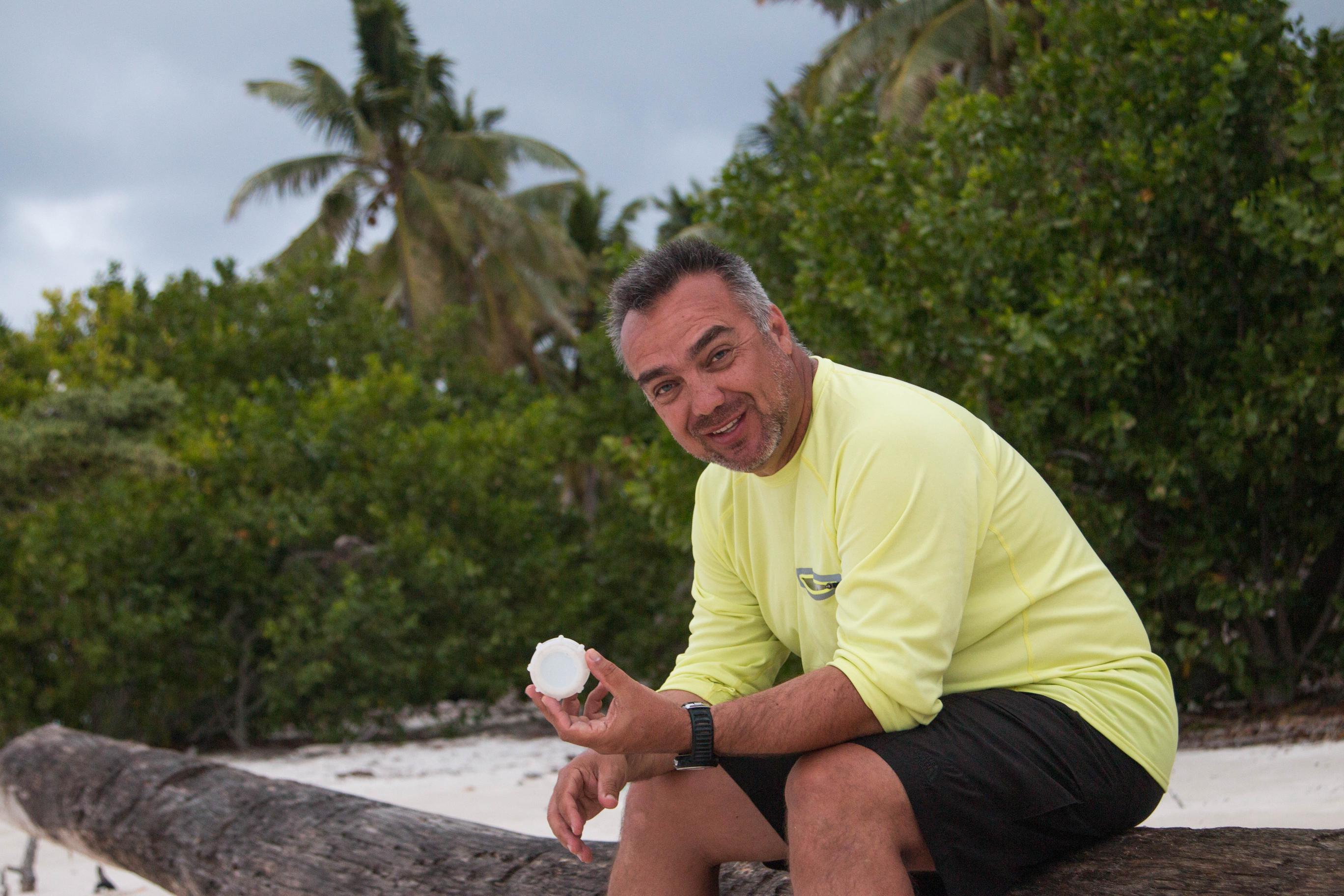
Edgardo Ochoa with a plastic bottle cap found in the waters surrounding the Lau Islands in Fiji (© CONSERVATION INTERNATIONAL/KATIE BRYDEN)
3. Shop for food locally — and sustainably
Along with supporting small businesses, shopping locally can help minimize your diet’s impact on the ocean. Locally sourced food typically does not require as many packaging materials as many of the options you may find in the grocery store and it does not have to travel as far, meaning that its carbon footprint is much lower than foods that are transported in gas-guzzling planes, trains and trucks.
When you are ordering or purchasing seafood, ask the waiter or fish monger how your fish was imported or caught to ensure that it was produced using environmentally sustainable methods and is socially responsible, which means that the workers involved in its production were protected from human rights violations. Simply by asking these questions, you have the power to hold seafood distributors accountable for their practices and can show them that consumers care about where their sushi is coming from. Some chains such as and Whole Foods already label their seafood to ensure its sustainability, but there are also phone apps that can help you trace your seafood from the ocean to your plate.
4. Shrink your carbon footprint
A 2019 UN report revealed that climate change is pushing the world’s oceans to the brink — and that they could become hot, stratified and acidic if humans do not drastically reduce their carbon emissions. To cut your own carbon footprint, a few good places to start are switching to renewable energy in your home or choosing to walk and cycle instead of drive. Motor vehicles release small amount of oil and gas each day that can run off into the ocean — so swapping your car for a bike a few times each week can also help prevent pollution. If driving is absolutely necessary, try to avoid extra trips by planning your route to run all of your errands at once.
You can also neutralize your carbon footprint altogether by purchasing carbon offsets, which are reductions in greenhouse gas emissions to compensate for emissions made somewhere else. These offsets support conservation activities such as forest restoration or reforestation that naturally store or remove carbon from the atmosphere.
- How many emissions are you releasing each year? Use Conservation International’s carbon footprint calculator to find out — then offset your emissions.
5. Clean up
Part of my job as Conservation International’s marine and diving safety officer is to share techniques with divers and our partners to help them give back to the ocean every time they dive. I recently co-authored and developed a new course with the Professional Association of Diving Instructors to teach divers how to safely remove waste from the ocean while they are underwater. There are more than 6 million active recreational divers worldwide. If everyone picked up just one piece of abandoned fishing gear or trash each time they went diving, it would be a monumental benefit to the global initiative to clean up the ocean. But you don’t have to be a diver to help clean up trash. Nearly 80 percent of the waste that pollutes the sea comes from land, so even if you don’t live anywhere near the ocean, your trash if probably still finding its way there. Whether you are on strolling through the streets or walking along the beach, try to pick up and dispose of waste wherever you spot it.
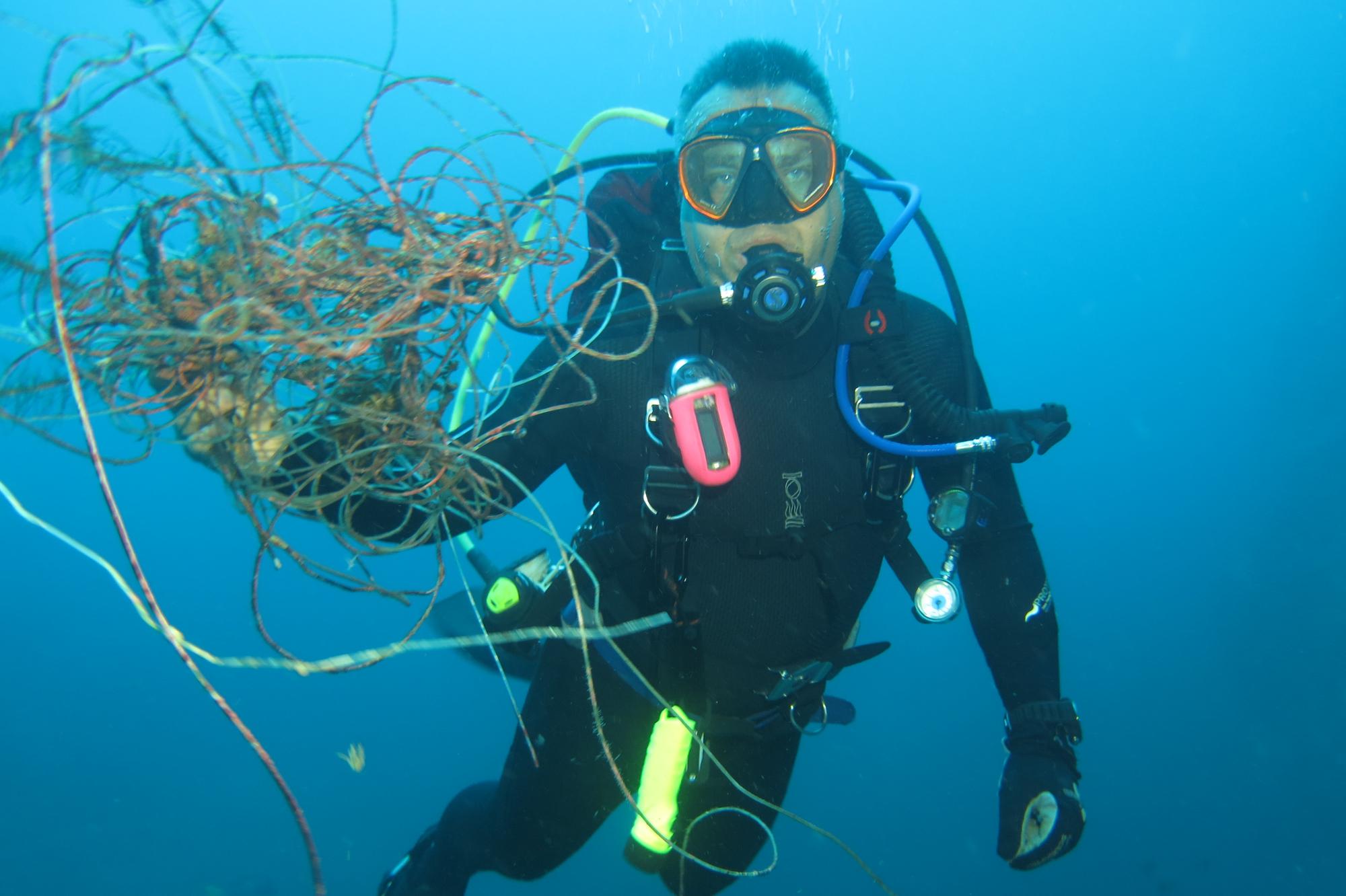
Edgardo Ochoa retrieving discarded fishing equipment on a dive in Malpelo island, Colombia ((© Conservation International/Edgardo Ochoa)
Further reading
Want to read more stories like this? Sign up for email updates. Also, please consider supporting our critical work.
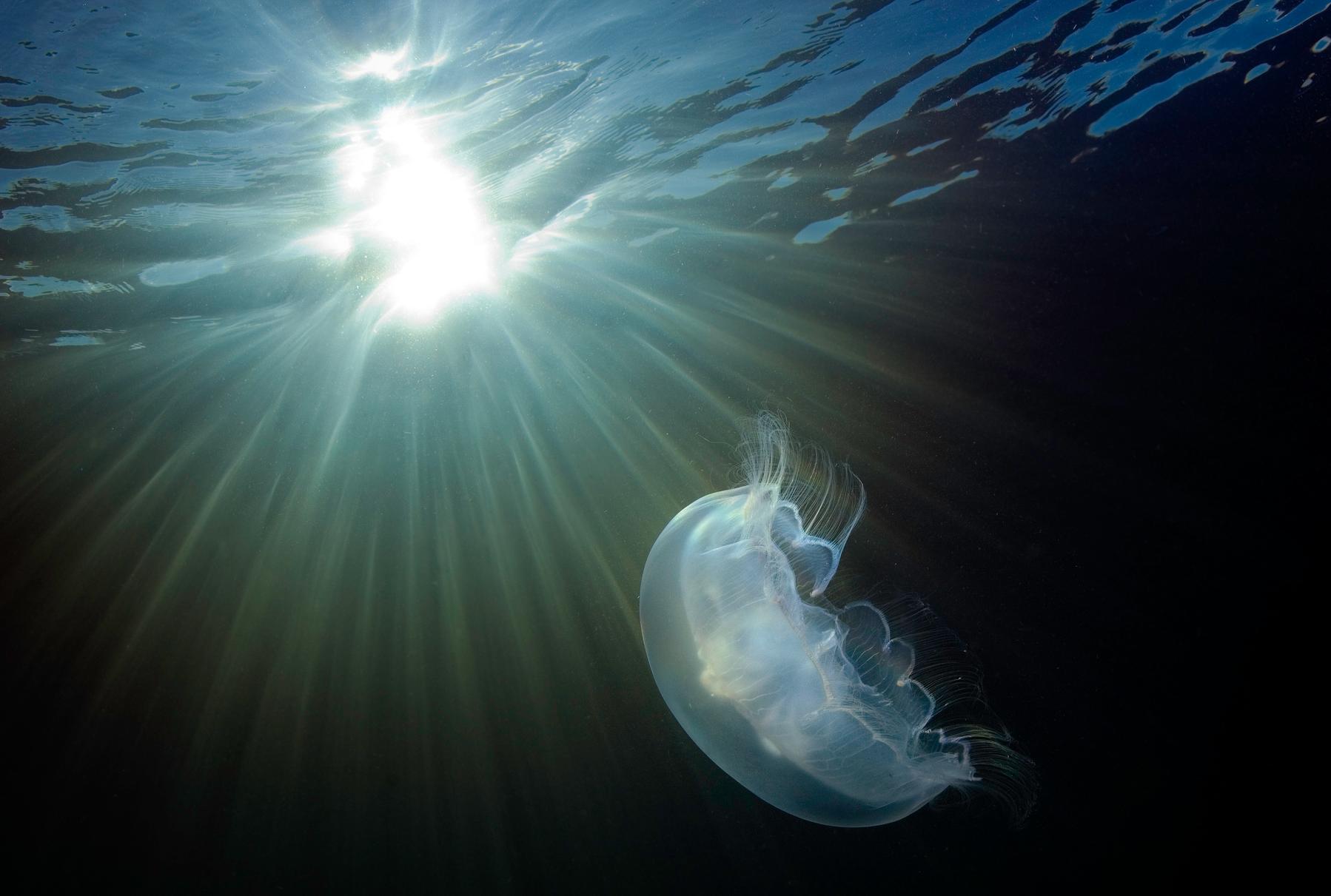
Cover image: A moon jellyfish in Raja Ampat, Indonesia (© Conservation International/Photo by Sterling Zumbrunn)