What
A rapid assessment of the diversity of wildlife in Southern Guyana Region and the impact of human activity on the ecosystems there.
When
October 6-28, 2006
Who
An international team of research scientists from Guyana, Brazil, Venezuela, and the United States assisted by six Wai-Wai parabiologists. The expedition was organized by Conservation International in collaboration with the Smithsonian Institution with funding support from the Leon and Toby Cooperman Family Foundation and the Gordon and Betty Moore Foundation. Meet the Team >>
Where
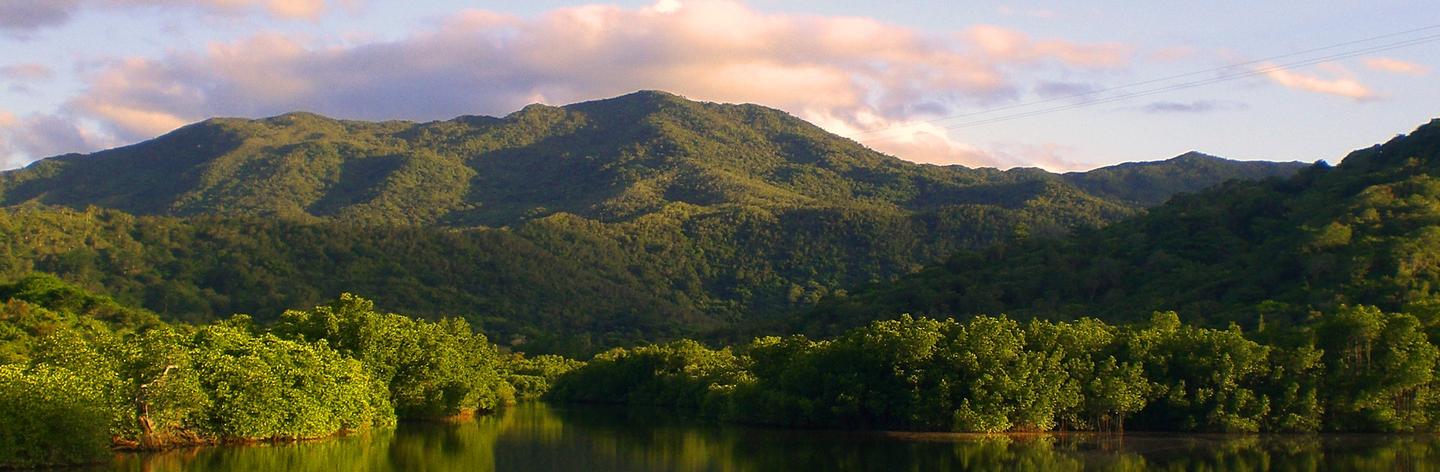
The Konashen Community Owned Conservation Area (COCA) in the Konashen Indigenous District of Southern Guyana. The area consists of 625,000 hectares (an area about the size of Delaware) of undisturbed forest, located in a tropical wilderness area.
It is one of the last large and intact pristine forest areas remaining in Guyana and includes the watershed of the Essequibo River. There were two study sites: one at the base of the Acarai mountains, the other along the north bank of the Kamoa river.
How it all came about
In February 2004, the Government of Guyana issued the residents of the Konashen Indigenous District an Absolute Title to their land making them the legal guardians of the area. They have minimal contact with the outside world and rely upon the forest for all of their needs.
The major form of economic activity is international wildlife trade, though they also harvest other materials from the forest for crafts. The Wai-Wai of the COCA recognize that their demands on the forest for natural resources are increasing, and must be managed sustainably.
In order to mitigate potential threats to their culture and resources and to determine the most efficient and sustainable method of continuing their traditional lifestyle, the Wai-Wai sought and gained the support of the government of Guyana and Conservation International – Guyana.
IN DEPTH: Learn more about the Wai Wai.
The survey information collected will be used to establish baseline data on the biodiversity of the COCA for potential small scale ecotourism use to be managed by the Wai-Wai community . They will also establish user-thresholds and will develop a management plan for sustainable use and conservation of their land and its resources.
In addition, the team also assessed the stream and river water quality in the vicinity of the community and the populations of animals hunted and fished by the Wai-Wai.
Conservation International - Guyana’s support and participation in the survey demonstrated the organization’s commitment to a tri-partite Memorandum of Understanding (MOU) signed between the community of Masakenari, CI and the government of Guyana for collaboration to assist the Wai-Wai in developing a management plan for sustainable utilization of the resources.
Why
Within the Konashen COCA one community (Masakenari), is made up of approximately 300 residents mainly of Wai-Wai ancestry who rely solely on the area for their sustenance and have recognized the need for sustainable utilization in light of their increasing demand for resources of the area.
Therefore in addition to the assessment of the biodiversity of the area the survey also aimed to determine the sustainability of species and ecosystems utilized by the Wai-Wai, provided recommendations on the feasibility for conservation to policy makers and key stakeholders, provided data to guide management planning and highlighted species of concern such as those that are listed on the IUCN Red List.
LEARN MORE: Read reports from each of the field teams.