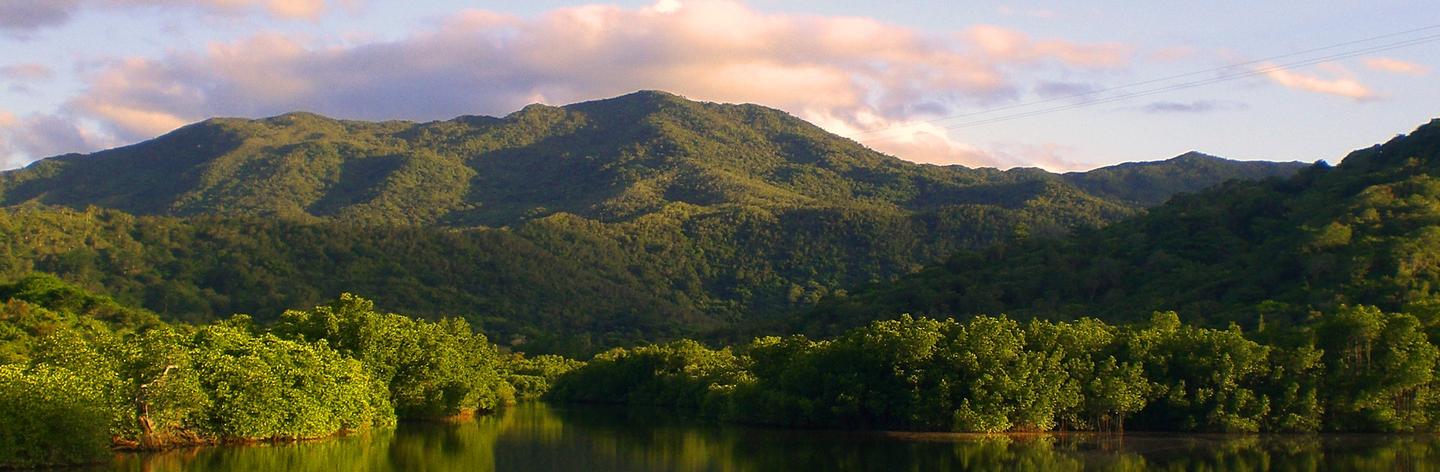
The mammal team studied only non-volant mammals in this survey. "Volant" mammals are those that fly, like bats. The two study sites were located on a tributary of the Sipu River and on the main Kamoa River. These sites serve as hunting areas for the local
 |
Entomologist Christopher Marshall and assistants collecting symbiotic moths from the fur of a pale-throated three-toed sloth (Bradypus tridactylus). |
people for two weeks out of the year, but are otherwise undisturbed. Results from camera trapping at various other locations within the Konashen COCA are also included.
Methods
To survey for the presence of large non-volant mammals the team used three methodologies:
- Tracks, scats, sounds and visual observations supplemented with hand-held photographs where possible
- Interviews with local people
- Camera phototraps at both sites.
Visual observations included seeing the animal directly, track and sound identification, nests, and dung observations made each day during excursions from camp. Records were also collected by colleagues on the expedition if the opportunity presented itself, and this information was used only to document species presence.
Interviews of local people were conducted using Neotropical Rainforest Mammals (Emmons 1999) as a guide. During interviews, individuals were asked to page through the book and identify the photos of mammals they had observed in the recent past in their forest. The team avoided making comments that might influence their decisions, and no time pressure was used to coerce responses.
PUBLICATIONS: See CI's selection of
field guides.
For shy mammals, especially those that
are hunted, camera trapping is often
more effective than looking for species
while walking in the forest. Camera trap
photographs also provide direct evidence
of a species’ presence because the
photos are available for anyone to review.
The camera traps are triggered by heat-
in-motion and operate continuously with
approximately 10 seconds between photographs. Cameras were placed at den sites, trails, drinking stations, and other areas suspected of being frequented by mammals.
Results
Twenty two species of large mammals were observed total at the two sites. Interviews indicate that there is a possible presence of 42 total large mammal species, including the crab-eating fox (Cerdocyon thous) and white-tailed deer (Odocoileus virginianus).
What it Means
These results indicate that the full biologically rich assortment of large mammals which characterize the Guayana Shield remain intact within the Konashen COCA. Because the human population is very low, hunting pressure is unlikely to have any significant impact on large mammals. According to the IUCN Red List the majority of large mammals we documented to occur
were not threatened. However, there were a few exceptions.
Critically Endangered (CR)
- Brown-bearded saki monkey (Chiropotes satanas)
 |
A pet capybara (Hydrochoerus hydrochaeris) from Masakenari village. |
Endangered (EN)
- Giant otter (Pteronura brasiliensis)
Vulnerable (VU)
- Giant armadillo (Priodontes maximus)
- Brazilian tapir (Tapirus terrestris)
Even these species are relatively secure given the low human population density. The greatest threat to biodiversity is likely to come from external sources far beyond the Wai-Wai community.
| Ant Team | Dung Beetle Team | Katydid Team | Fish Team |
| Reptile and Amphibian Team | Bird Team | Mammal Team |