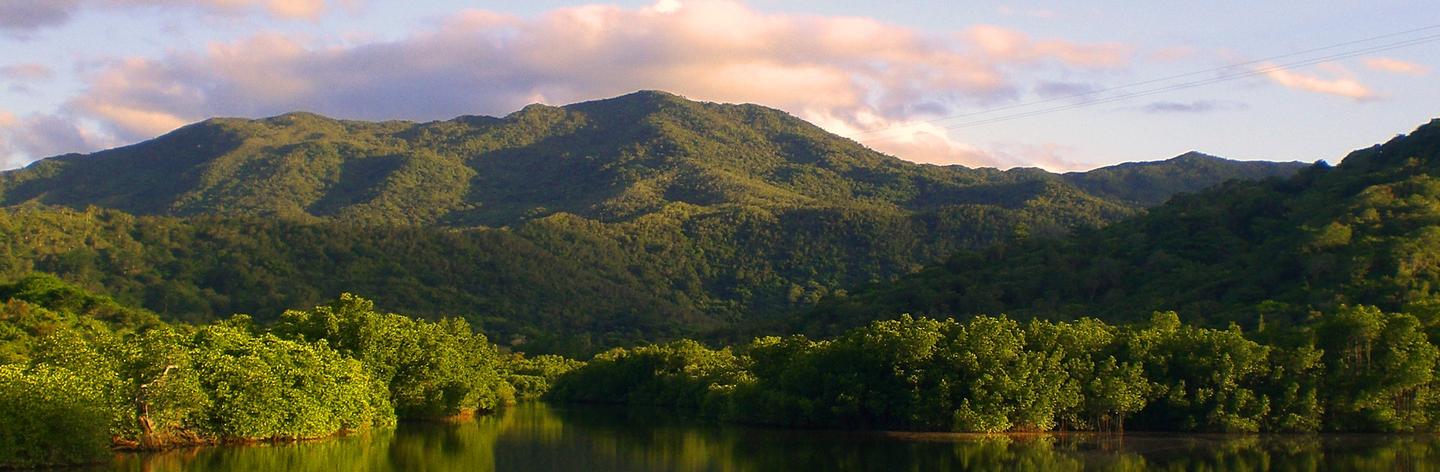
Unlike many animal groups, the bird life of Guyana is well known. Many inventories have been conducted all over the country, and an understanding of bird distribution across Guyana is beginning to become clear. Most of the interior of Guyana is covered by unbroken tropical forest which supports healthy populations that are of global conservation concern such as large raptors, cracids, and parrots.
Although human pressure on the forest is currently low, the need to identify exceptional biodiversity and establish a baseline of avian species richness is important as Guyana’s infrastructure develops. Few formally protected areas exist in the country.
Methods
Birds were observed during daylight hours by walking along trails to locate and identify birds. Typically one observer would leave 30-60 minutes before first light, and continue
 |
| Photo taken by a camera trap in the Konashen. |
until about three hours after sunrise when they would be joined by the Wai Wai Parabiologists.
During the middle of the day, birds are considerably less active. They were also observed opportunistically throughout the day and were surveyed by boats floating down the river with their motors turned off.
Recordings were made using cassette recorders, shotgun and omni-directional microphones and a parabolic reflector.
Results
A total of 319 species were encountered during the survey. This remarkable diversity of species is likely a result of the diversity of habitats in the area – six distinct types were identified. Overall, the species richness at Konashen COCA is high and is likely that over 400 species, more than half of all those known to occur in Guyana, occur in the area.
At elevations above 800 m the team encountered many highland species, such as:
- Megascops guatemalae (vermiculated screech-owl)
- Aeronautes montivagus (white-tipped swift)
- Colibri delphinae (brown violet-ear)
- Aulacorhynchus derbianus (chestnut-tipped toucanet)
- Hylophilus sclateri (tepui greenlet).
Several more widespread species were found restricted to forest above 800 m, such as:
- Dysithamnus mentalis (plain antvireo)
- Herpsilochmus rufomarginatus (rufous-winged antwren)
- Cyclarhis gujanensis (rufous-browed peppershrike)
- Setophaga ruticilla (American redstart)
Many of the lowland forest species that were expected were rare and/or inconspicuous, and would likely only be revealed with a more extended survey effort.
Interesting Species
The large-headed flatbill (Ramphotrigon megacephalum) was seen and recorded on tape – at least two pairs of the species. This species is never found except in areas of dense Guadua sp. bamboo, as it specializes on this plant. This recording extends the known range of this species by 900 km and is the first record of the large-headed flatbill for the Guinanas. The fact that this bird was found for the first time in this area, despite previous fieldwork, suggests that there is greater biodiversity in this area than could be assessed briefly.
Fourteen species of parrots were encountered, including the scarlet macaw (Ara macao) and the blue-cheeked parrot (Amazona dufresniana).
Guans and curassows were encountered frequently along the Kamoa River. They showed very little fear of humans, which suggests that they are not hunted in this area. In general, guans and curassows move sluggishly and have a low reproductive rate, which makes them very vulnerable to hunting both individually and as species. They are also very vulnerable to habitat fragmentation and tend to be the first to go when humans move into an area.
While these species are hunted intensely in the areas near the Wai-Wai village, the overall populations are healthy and seem to be able to withstand the pressure. Guans and curassows are important for global conservation, but the current rates of harvesting by the Wai-Wai do not conflict with a conservation strategy.
In the deep forest areas, the ovenbirds (family Furnariidae), antbirds (family Thamnophilidae), and tyrant flycatchers (family Tyrannidae) formed mixed-species foraging flocks for the understory and canopy. Mixed-species flocks were much less common near rivers.
IN DEPTH: Learn more about the birds of the Konashen region, Guyana.
Many species that are uncommon in the Guianas generally were more common in the Konashen COCA than expected, including:
- Touit purpuratus (sapphire-rumped parrotlet)
- Xenops milleri (rufous-tailed xenops)
- Myrmotherula guttata (rufous-bellied antwren)
- Tangara chilensis (paradise tanager
- Heliornis fulica (sungrebe)
- Florisuga mellivora (white-necked jacobin)
- Hypocnemoides melanopogon (black-chinned antbird)
- Ramphotrigon ruficauda (rufous-tailed flatbill)
- Lathrotriccus euleri (euler’s flycatcher)
- Phoenicercus carnifex (Guianan red-cotinga)
A few species that were expected were not found, including the Piaya cayana (squirrel cuckoo) and Pachyramphus minor (pink-throated becard). The Piculus flavigula (yellow-throated woodpecker), usually a common member of canopy mixed-species flocks in the Guianas, was oddly scarce in the Konashen during the survey.
What it Means
The remarkable avian diversity of the Konashen COCA is under little threat at the present time. However, its global significance as a large intact region of tropical forest should be recognized, and care taken to prevent declines in species that currently maintain healthier populations here than elsewhere in their ranges.
| Ant Team | Dung Beetle Team | Katydid Team | Fish Team |
| Reptile and Amphibian Team | Bird Team | Mammal Team |