Page Content
Among the exciting preliminary discoveries made by our team of RAP scientists on the eastern edge of the Eastern Kanuku Mountains along the Kwitaro River:
- 198 species of plants (57 families)
- 73 species of large to medium fish
- 193 bird species
- 31 bats species
- 4 rodent species
- 3 opossum species
 |
| The round-eared bat, Tonatia silvicola. |
As a result of this RAP expedition, the Kanukus Mountains now have the highest bat diversity recorded for a single area in the world!
Some of these species numbers are new records for the Kanuku Mountains. In science-speak, a "new record" means a species that has never been recorded in that area until now but is already known to science.
Finding a species in this location may mean that the range of where these animals are known to live is extended. Assumptions we make about the climate and environment they exist in may change. Other species usually associated with these plants or animals may also be present but as yet unseen because the RAP team ran out of sampling time to find them. Usually new records for an area indicate that further studies are needed.
When I was transmitting these dispatches from a remote place in the Rewa, I spotted a heron that is not supposed to be in Guyana according to the bird books. But I saw it, and it lives there. Books represent what science has recorded, not what really exists in the world. So if we saw animals and plants never recorded in an area that means that we expanded our scientific and practical knowledge.
 |
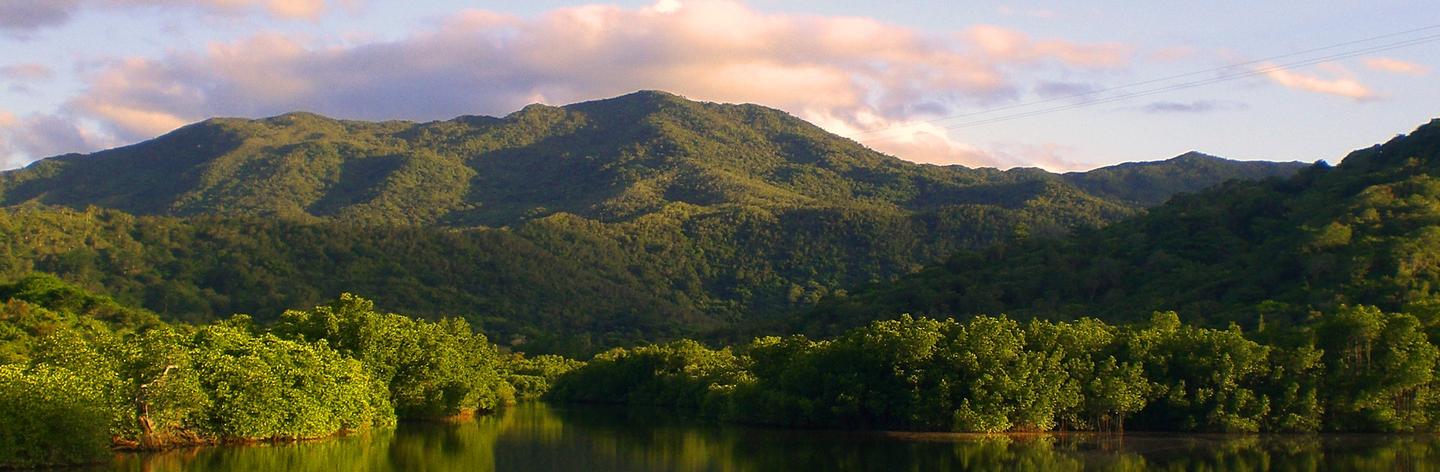
Last hill on expedition in the Kanuku Mountains. |
Books represent what science has recorded, and sometimes this is an incomplete picture. While transmitting these dispatches from a remote place in the Rewa, I spotted a heron that was not supposed to be in Guyana according to the bird books. But I saw it, and it lives there. The RAP team expands the world’s scientific and practical knowledge when they see animals and plants never recorded in an area.eam and I also added a new camera trap in those mountains that photographs ocelot, margay, and red brocket deer, among other animals in the hope of catching glimpses of new and unrecorded species in the area.
LEARN MORE: Download the Full Preliminary Report
EXPLORE: More expeditions