What's a RAP Expedition?
RAP is all taxa. RAP stands for "Rapid Assessment Program" and basically represents a scientific study of all taxa (the major groups of plants and animals) found in a set area over a short period of time. RAP participants work with environmental conservationists in order to not only make species lists but also to write reports about the special ways that these species coexist in this particular environment. If we can't preserve the entire area in which they live, it is important to identify what is unique or irreplaceable. For example, we might find an unusual area with a combination of mountains and rivers that forms a special home for the animals and plants that like to live in both dry and wet conditions with cool and warm temperatures.
RAP is rapid. With your everyday field study, a scientist would usually make a list of all the, say, butterflies, for example. She or he would identify as much as possible in the field and gather voucher specimens to send off to an expert scientist to identify when they get a chance. This process could take years. In order to be both rapid and equally effective, RAP relies on getting together a group of the world's top scientists who possess specialized knowledge of the area we are surveying. This means that almost everything can be identified on sight, and we leave the expedition with a good idea of what species live there and what can be done to best preserve the area. It also means that we take as few species as possible out of the wild – especially important when the population is endangered.
RAP is applied. You won't find RAP results molding away in library archives. RAP reports are written for policy makers and community members, as well as for the scientific community. RAPs are solicited through Conservation International's country programs, and so they are immediately applied to on-the-ground conservation initiatives.
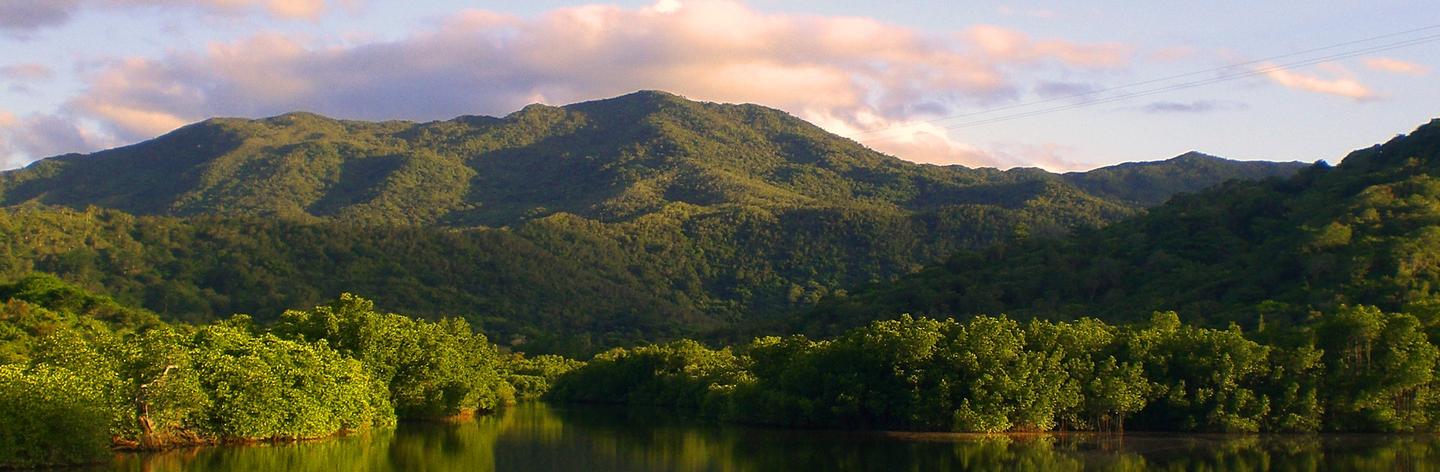
Why are scientists focusing on the Eastern Kanuku Mountains?
Even though rainforests are disappearing at alarming rates, there are still some vast expanses of unexplored wilderness throughout the world that we know little or nothing about. Species, which only one or two people on Earth may have seen before, need to be identified.
Gathering a group of more than 20 scientists from all over the world and getting them in and out of a pristine tropical forest safely is not easy. There has to be a compelling reason to choose one unknown hinterland over another. At RAP, we do actual conservation and not simply an academic exercise. We focus our science on the places where conservation is likely to occur – such as in Guyana, South America where Conservation International (CI) has a strong program in community-based environmental conservation and supports the development of a protected area in the southern region of the country. CI-Guyana invited RAP scientists to supply the biological data that will help determine boundaries and maximize protection of biodiversity in the area.
This current RAP is drawing from the experience and recommendations of the 1993 RAP in the Western Kanuku Mountains of Guyana whose team discovered that the Western Kanuku Mountains are home to an incredible 75 percent of forest-based bird species in Guyana and 80 percent of the country's mammals. These scientists predicted that the Eastern Kanukus might have an even richer diversity. We'll let you know if this is true with our visit there.
How will the biologists study species?
"RAP surveys all things spiny, scaly, fuzzy, and slimy."
–a RAP ten year anniversary rap song
I want to give you an idea of how we survey biodiversity. Mammals like large cats will be "caught" smiling into a camera trap – a remote photographic device in which an animal crossing an electronic beam triggers an automatic camera. The animal's movement, in turn, produces a snapshot of the cat or whatever crosses the camera's path. Rodents are caught in low-level baited traps usually and bats are caught using fine thread "mist nets" stretched out across their favorite flyways.
"Herps", or amphibians and reptiles, have been media stars lately because their populations appear to be very sensitive to changes in rainfall and pollution levels. For this reason, herpetologists will often take detailed notes on climate and water quality factors. There are almost as many ways of catching herps as there are species! A lot of them seem to involve buckets, screen, nets, pvc tubing, or chicken wire. "Use your imagination" is the name of the herp game.
There is no clean way to sample fish. Or, at least, no clean way that is effective and fun. Ichthyologists love to get into the mud and in creeks and rivers with different kinds of nets to look for fish and aquatic invertebrates. Transparent gill nets are also stretched across creeks, and minnow traps are laid in the shallows to capture a wide variety of fishes.
With birds, listening for their calls and writing down each bird you see is only the beginning. These scientists will also make notes on different seeds and berries in an area that provides food for various bird types. They will also scan the landscape for places like dead trees or caves that might be favorite roosting spots for new kinds of birds.
Terrestrial invertebrates will be collected in the quintessential "nutty scientist" manner – running after them with butterfly nets and setting a series of traps baited with some seriously scary natural substances. This group includes: ants, termites, butterflies, dragonflies, dung-beetles, and possibly spiders.
Botanists also inventory aquatic and terrestrial vegetation, making a lot of the general ecology observations in the process. There many different kinds of plants in the tropics, all adapted to different conditions. Since they can't run away from droughts or marauding gangs of grazing deer, for example, the state of these plants tells us a lot about environmental conditions and pressures.
What will happen with the data they collect?
Collecting is just the first step. What makes RAP results special is that they are rapid. Most academic publications require years of careful analysis, cross-referencing with current literature, and peer-review. Such meticulous publication methods are sometimes appropriate, but how much good can it do the conservation effort if the patch of rainforest you once wrote about has been cut down and burned away?
Since RAPs are implemented specifically in areas of high threat and little available information, it is important to get high quality data out right away. After the Guyana expedition, the whole team will be absorbed in a report writing retreat in the small town of Lethem near the Brazilian border with Guyana. RAP scientists will use this time to produce an integrated analysis of the ecology of the region. Each group will present a preliminary list of species found. Specimens that could not be confidently identified in the field will go out to museums for firm identification and a final report will be published within six months of the expedition, both printed and in electronic format. The data will be integrated into a centralized RAP database on the internet which scientists from all over the world can access for free.
In addition, RAP encourages scientists to publish results from the Guyana expedition in peer-reviewed journals, using the network of scientists and editors working for and affiliated with CI and its Center for Applied Biodiversity Science. Guyana Expedition Team Leader, Olivier Missa, and large mammal expert Jim Sanderson will also be representing Conservation International by presenting RAP findings at the Smithsonian Institution's Biodiversity in Guyana Symposium directly following the RAP.