Page Content
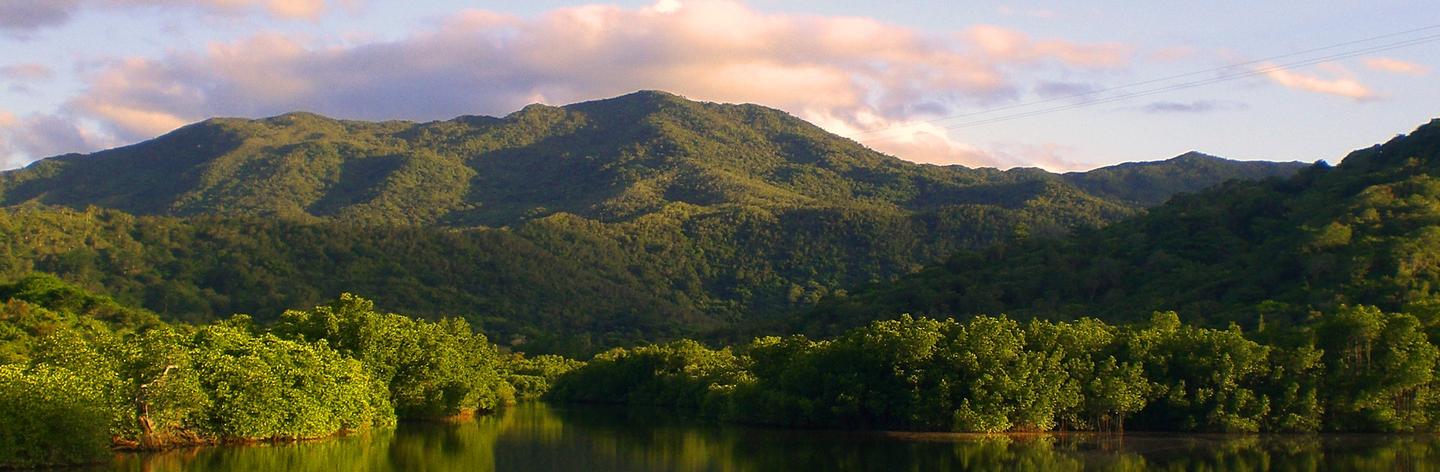
The main vegetation types in the Konashen COCA are tall evergreen highland forest and tall/medium evergreen lower montane forest. There are also small areas of tall evergreen flooded riparian forest and lowland shrub savanna. Species such as Manyokinaballi (Geissospermum spp.) and Kakaralli (Eschweilera spp.) are the most common of the 192 recorded species of plants. Additionally, it is thought that the area holds Guyana’s largest stand of Brazil nuts/titko (Bertholletia spp.) which is a keystone species.
Subsection 01
Manicole palms
Manicole palms (Euterpe oleraceae), also known as Manaka, are usually found in swamps along rivers. A major export crop of Guyana, this palm is valued by local communities for its edible heart. Mammals and birds also feed on the fruits.
Subsection 02
Brazil nut trees
Tall and majestic, Brazil nut trees (Bertholletia spp.), also known as Titko, provide food for both humans and a wide array of animals including macaws and ants. Some Brazil nut trees only grow in intact forest because they depend on native bees for pollination and continued reproduction.
These trees depend on a single seed-disperser, the agouti, whose teeth are strong enough to open mature fruits. Several aquatic creatures, such as damselflies, a poison frog and a toad, can only breed in empty Brazil nut fruits that have filled with rain water.
Subsection 03
Kakaralli trees
Kakaralli trees (Eschweilera spp.), also known as Awyuru, are known for their various medicinal properties. While the bark is used as an antiseptic to treat burns and sores, and to treat dysentery, the seeds are used for treating infections and stomach aches. Kakaralli trees can grow very tall, some reaching over 30 meters.