Page Content
The Konashen Community-Owned Conservation Area (COCA) provides a home to a range of mammal species including 21 species recently recorded in the area by scientists. Of these, a number of species are known to be globally threatened such as Brown-bearded saki monkey, Giant otter, Giant armadillo, Bush dog, and Brazilian tapir.
IN DEPTH: Field teams use camera traps and reported sightings from the Wai Wai community to catalogue mammals. Learn more about their methods and findings.
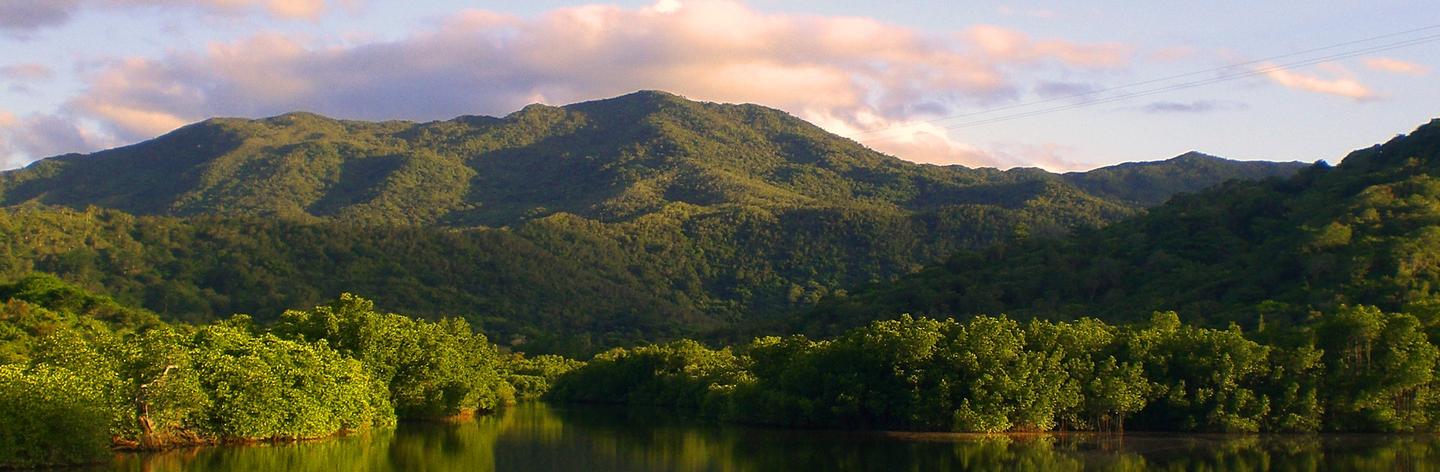
While the Wai Wai hunt within the COCA, hunting pressure is carefully moderated by limiting the hunting season to two weeks of the year. Otherwise, these areas are pristine, undisturbed tropical rain forest and contain the full complement of the large mammal species characteristic of the Guayana Shield.
Because hunting pressure is low and habitats are relatively undisturbed, the COCA remains an important sanctuary for a number of species that face numerous threats in other parts of their ranges.
Subsection 01
White-faced saki
The White-faced saki (Pithecia pithecia), also known as Urwa, is found in Brazil, French Guiana, Guyana, Suriname and Venezuela. These tree-living monkeys are fast moving and shy, mainly travelling in leaps. White-faced sakis live in small family groups consisting of parents and two or three offspring. They make bird-like chirping sounds and show aggression by shaking their bodies, taking an arching posture and uttering loud growls. They feed mostly on fruits, but also eats nuts, seeds, and insects.
Sakis are vulnerable to the destruction of their habitat by humans and are also hunted for food and for the pet trade.
Subsection 02
Common squirrel monkey
The Common squirrel monkey (Saimiri sciureus), also known as Awarku, is a small primate, widely distributed in forests of northern South America. It lives in large groups of sometimes up to 300 individuals, and frequently forages together with other species of monkeys, or with birds. Within their societies, females have the dominant role.
Squirrel monkeys have a high metabolic rate and must constantly feed on insects and other invertebrates. They also eat fruits, seeds, and other plant parts. While foraging, they often descend to lower levels of the forest, but nights are always spent high in the canopy, far from predators prowling the forest floor.
Subsection 03
Capuchins
Capuchins, also known as Meku, such as Brown capuchin monkeys (Cebus apella), are considered the most intelligent New World monkeys, and are known to use rudimentary tools, such as stones, to crush nuts. Young capuchins learn the use of tools by observing older individuals. They are also known to use crushed millipedes which, rubbed on their backs, acts as a natural mosquito repellant!
Capuchins live in groups of 6 to 40 individuals, usually dominated by a single male who has primary rights to mate with the females of the group.
They are relatively long-lived animals and some are known to have lived for 45 years in captivity, although in the wild their lifespan is probably 20 – 25 years.
Subsection 04
Sloth
The Pale-throated three-toed sloth (Bradypus tridactylus), also known as Xohri, is a slow-moving, arboreal mammal, found in forests across most of Central and South America. The sloth has almost no tail or external ears, and at the end of its long arms are three hook-like claws, which it uses to suspend itself from tree branches.
Sloths feed on the leaves of a number of tree species, and rarely descend to the ground. Their sedentary lifestyle allows green algae to grow on their hair, giving some sloths a greenish appearance. Some moths and beetles use sloths’ fur as their habitat. Despite their large size, sloths are virtually defenseless, and rely on their ability to remain concealed for protection.
Subsection 05
Jaguar The Jaguar (
Panthera onca), also known as Kamara, is the largest cat of the Americas and has small black spots with rough edges. Jaguars occasionally roar, day or night, with deep grunts. They eat a variety of animals such as peccaries, tapirs, cattle, and deer. Although most jaguars are scared of man and usually flee quickly, they are potentially dangerous. Jaguars swim well and their habitats range from rainforest to dry forest. Jaguars are rare in many places due to hunting and the fur trade.
Giant anteater
The Giant anteater (Myrmecophaga tridactyla), also known as Amaci, is the world’s largest species of anteater and is found in many habitats including grasslands, deciduous forests, and rainforests. An anteater has no teeth and crushes the insects it eats using hard growths found inside its mouth and in its muscular stomach.
The giant anteater feeds mainly on ants and termites, consuming up to 30,000 insects in a single day. It catches them with its remarkably long tongue, which can meausure up to 60 cm (2 feet). The tongue is very sticky and can extend and withdraw up to 150 times per minute, each time trapping dozens of insects.
|
Tayras
Tayras (Eira barbara), also known as Wennako, are members of the weasel family who live in tropical forest in burrows in the ground, in hollow trees, or in nests made in tall grass. Most tayras have dark brown or black fur with a lighter patch on the chest, and the fur on their heads changes to brown or grey as tayras grow older.
They are expert climbers who can leap from treetop to treetop, run fast and swim well. They eat mainly fruit, but also hunt for rodents and invertebrates, climbing trees to find eggs and honey. Wild tayra populations are slowly shrinking as a result of habitat destruction for agricultural purposes.
|
Giant river otter
The Giant river otter (Pteronura brasiliensis), also known as Wayawaya, is dark brown (black when wet) and has feet with webbed toes.
Giant river otters live in and out of water and usually stay in groups of between 5 and 9. They call to each other with loud, high-pitched hums and squeals and are territorial, fiercely defending their young, even from a jaguar!
They are found in lowland forest rivers and lakes and are threatened because their waterside habitat is limited and accessible to humans. They are overhunted for the fur trade and are wrongly perceived to compete with humans for fish. |
Plants | Invertebrates | Fishes | Amphibians | Reptiles | Birds | Mammals