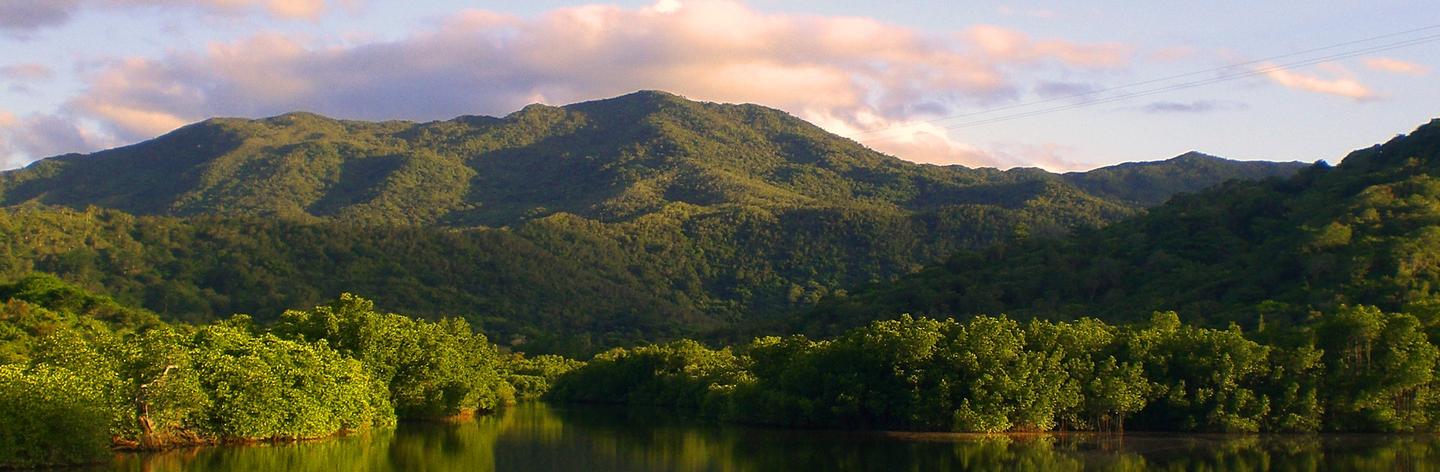
Socio Bosque is a program that directly targets areas that generate benefits for climate, freshwater, species and poverty alleviation. Productive agricultural activities,health and cultural values are also strongly supported.
Ecuador has approximately 10 million hectares of forest cover, which forms an important part of the nation's natural heritage. These forests provide a home to unique and diverse species, conserve the country's soils, and hold important sources of water. In addition, the forests store large amounts of carbon and their continued existence is globally important for climate change stabilization. However, Ecuador's deforestation rate is among the highest in South America, losing 200,000 hectares of forest each year.
The government of Ecuador, with direct support from Conservation International-Ecuador (CI), designed and approved the "Programa Socio Bosque" – Forest Partners Program in English – in 2008 to protect Ecuador's natural heritage by providing incentives for forest conservation. Socio Bosque provides a direct payment per hectare of native forest to landowners who agree to conserve their forest through voluntary conservation agreements that are monitored on a regular basis for compliance.
IN DEPTH: Forests, Climate, People
The goals of Socio Bosque are to:
Protect over 4 million hectares of forest and other native ecosystems, thereby conserving globally important biodiversity and assuring the flow of important ecosystem services
Reduce emissions from deforestation and include Socio Bosque in the National Strategy for Reduced Emissions from Deforestation and Forest Degradation
Improve human well-being of about 1 million people in the poorest areas of the country
Through Socio Bosque, the Ecuadorian government seeks to bridge the gap between conservation and development and promote a mechanism that directly benefits farmers and indigenous communities. The government prioritizes implementation of Socio Bosque in areas where the most benefits can be obtained in terms poverty alleviation, protection of ecosystem services such as carbon storage, water regulation and biodiversity conservation, and reduction of deforestation.
The economic incentives provided by Socio Bosque provide direct and equitable benefits for individual landowners and communities. To ensure transparent use of resources and clear benefits to people, participants of Socio Bosque are required to develop a social investment plan. In 2009, communities used the Socio Bosque incentives for organizational strengthening, housing, community saving funds, conservation, education, health and ecotourism projects.
CI has been heavily involved in providing assistance to the government for the conception, implementation, and monitoring of the program. Since its implementation began in December 2008, the Socio Bosque Program has had the following results:
- 511,486 hectares of forest protected
- 604 conservation agreements signed with communities and individuals
- 55,860 people benefitted from direct payments
The government is seeking to complement its own resources with support from international cooperation and from voluntary and regulated carbon markets. In addition to CI's direct support to Ecuador's Ministry of Environment for the national implementation of the Socio Bosque Program, CI also works with local NGOs and indigenous and farmer organizations to facilitate individuals' and communities' applications to Socio Bosque and to maximize its social and environmental benefits. In alliance with local organizations, we apply conservation strategies at the landscape scale – for example, working together on protection of watersheds and biological corridors. We also support exchange among participants in the Socio Bosque program to share lessons learned and replicate successes. Participants include individual landowners, indigenous populations such as the Chachi communities, and Afro-Ecuadorian groups.
In Ecuador, CI is demonstrating that strong partnerships, innovative ideas and real commitment can have lasting and tangible positive benefits for biodiversity and people.