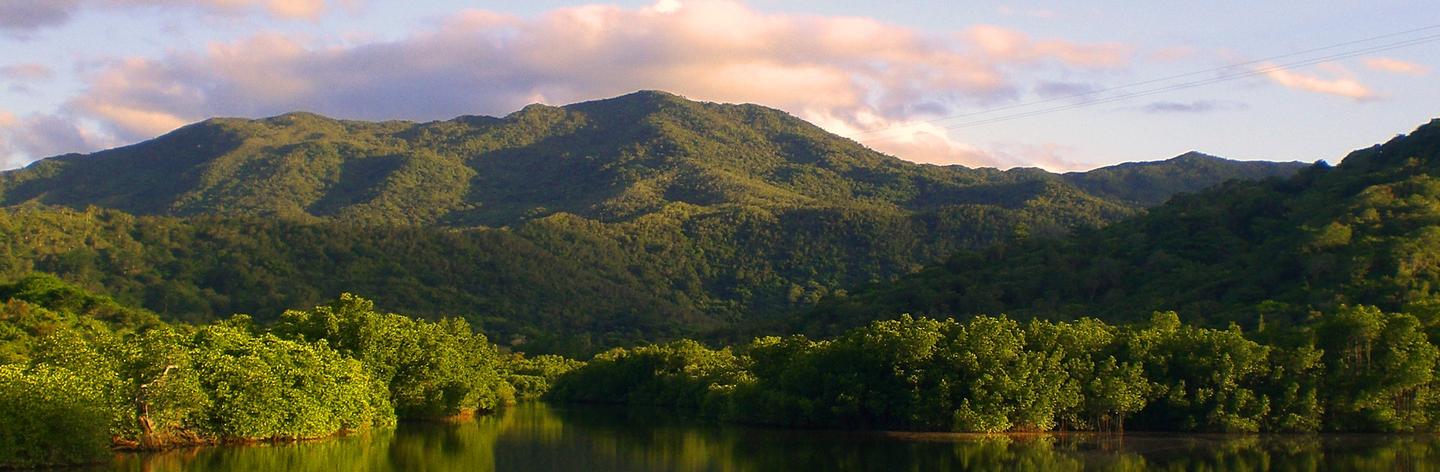
Close your eyes and imagine South Central Africa. Just below the equator, the land is flat, expansive and dry. Woodlands and grasslands consume 370 million hectares of wilderness. These are the Miombo-Mopane woodland and savannas, quite possibly the single largest block of dry woodlands in the world.
From Angola in the west to Mozambique in the east, the Miombo-Mopane forms a vast wooded belt across southern Africa spanning 10 countries. Across this wilderness, threatened species like the black rhinoceros, African elephant, and African wild dog – sometimes referred to as the painted wolf for its striking brown, white, and black patterning – roam freely. There are few places left on Earth where they can.
LEARN MORE: CI works to protect species around the world.
The Miombo-Mopane wilderness holds some of the largest and best-known parks and reserves in the world. Some of these cut across national borders as transboundary parks, creating opportunities for ancient migrations and reaffirming a shared vision for peace and stability among these nations.
In many areas, these natural resources are major components of local livelihoods and national economies through food, fuel, and tourism. Nearly 80 percent of the world’s remaining African elephants live in the Miombo-Mopane wilderness. These populations, along with other magnificent wildlife sights such as sable antelope, lion, and buffalo support a growing tourism industry.
Many people here live outside of formal economies, resulting in an intimate dependence on natural resources for food, water, medicines, shelter, and fuel.
IN DEPTH: Nature provides incredible economic incentives for local communities.
Climate change predictions tell us the region’s rains and droughts may soon become more extreme, making communities more dependent on natural resources as farming becomes unreliable. At the same time, poorly planned development threatens the fabric of this wilderness in some places, meaning the most vulnerable and poorest communities could be in jeopardy as natural resources are degraded just as the need for them becomes most critical.
The Miombo-Mopane wilderness presents an intricate dependence between people and natural systems, where natural wealth is a very real idea in everyday lives. Conservation is not just a good thing to do for the environment – it becomes an economic, political and social necessity. It’s critical that this region remain in good shape for everyone and everything that depends on it.