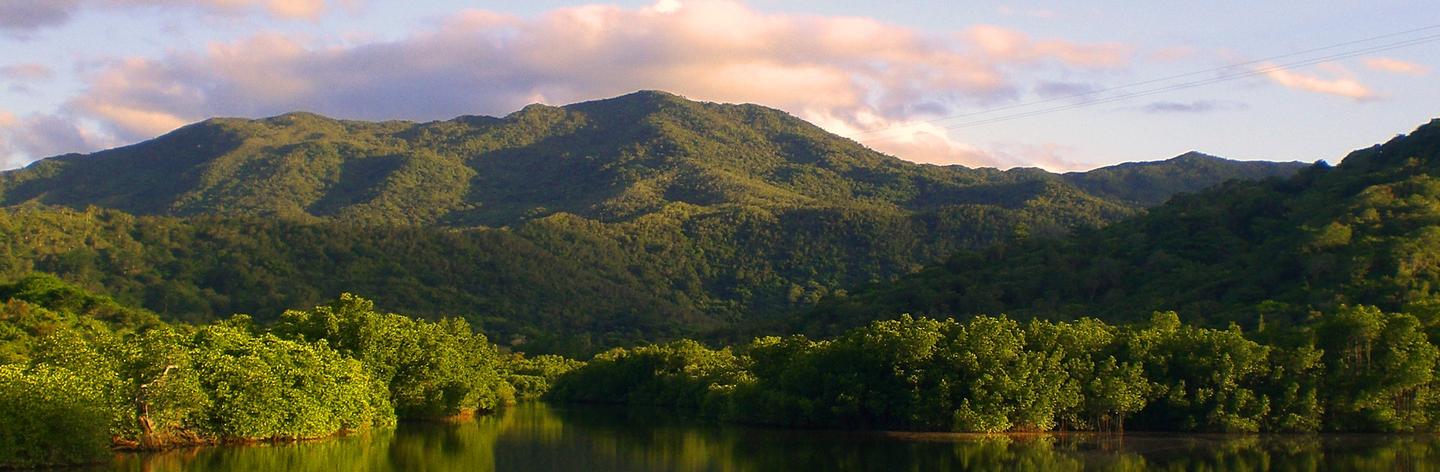
Many of the remaining forest fragments in the Atlantic Forest need to be protected immediately in order to prevent species extinctions. About 23,800 km² of the remaining Atlantic Forest in Brazil is officially under strict protection (including IUCN categories I, II, III), in 224 protected areas – 108 national and state parks, 85 federal and state biological reserves and 31 federal and state ecological stations and reserves. The private reserve system in the Brazilian Atlantic Forest is also quite extensive, totalling 702 and covering almost 1,360 km². In Argentina, 4,598 km² are under protection in 60 protected areas of various categories, representing about 21 percent of the original Atlantic Forest in Misiones province. There are eight protected areas totalling 1,392 km² in the Atlantic Forest portion of eastern Paraguay, covering less than two percent of the original extent.
In all, despite the Atlantic Forest's grim past, the outlook for the future looks bright, thanks to the availability of new conservation instruments, funding mechanisms and a large body of well-trained conservation professionals. The Atlantic Forest region has been the cradle of the Brazilian environmental movement, with the growth of NGO capacity there over the past 30 years being among the most impressive in the tropical world. The most recent survey indicated that there were approximately 700 environmental NGOs active in Brazil; about 30 of these have annual budgets of over $300,000 and about 20 are national in scope.
The Atlantic Forest has experienced a period of renewed interest in environmental issues, particularly in the search for effective mechanisms of protecting biodiversity. This is a consequence of several new initiatives emerging from public policies as well as from an increased involvement of non-governmental organizations.
Data-driven identification of conservation targets at the site level has been implemented by BirdLife International through the Important Bird Areas program for the Atlantic forest, and work is underway to expand this approach to define Key Biodiversity Areas that consider all taxonomic groups. These initiatives build from expert-based priority-setting workshops promoted by the Brazilian Ministry of the Environment that have been conducted in all of Brazil's major biomes and incorporated as government policy through the Brazilian Biodiversity Program. Priority-setting workshops for the Atlantic Forest were held in 1999, coordinated by Conservation International and other institutions, and in April 2000 for the interior Atlantic Forest, involving participants from all three countries. The results of these workshops were the identification ofl 183 biodiversity conservation priorities in the Atlantic Forest.
Because many of the fragments and protected areas in the Atlantic Forest are threatened and too small and isolated to maintain populations of many species over the long term, the establishment of conservation corridors has been an important conservation strategy. These corridors link key sites by means of a matrix of biodiversity-friendly land use and reforestation. Four conservation corridors have been identified in the Atlantic Forest, covering about 20 percent of the total area of the region. The Pilot Program to Conserve Brazilian Rain Forests (PP-G7), administered by the World Bank, will contribute $44 million over the next several years to establish two corridors, one in the Atlantic Forest and one in the Amazon. The Atlantic Forest corridor centers on southern Bahia and Espírito Santo. Other corridors include the Serra do Mar Corridor in Rio de Janeiro, Minas Gerais and São Paulo, the Pernambuco corridor in Northeast Brazil, and the Green Corridor in the interior Atlantic Forest, which was designated through an important tri-national initiative between Brazil, Argentina and Paraguay to link up important forest fragments in the three countries.
There are several major regional conservation initiatives underway in the Atlantic forest. One is the implementation of the Central Biodiversity Corridor, sponsored by the World Bank and G-7 countries in collaboration with the Ministry of Environment, state environmental agencies, and NGOs. Another major initiative is the implementation of the Atlantic Forest Biosphere Reserve. The Biosphere Reserve has been highly successful in its engagement of both government and civil society to promote policies and actions to conserve the last remnants of Atlantic Forest. The Brazilian Natural World Heritage Sites Program is a 10-year initiative, supported by UNESCO and a group of Brazilian agencies. Three of the seven Natural Heritage Sites in Brazil are in the Atlantic Forest, and this program seeks to develop mechanisms, competencies and skills to support key protected areas and enable local communities to pursue development goals that are compatible with biodiversity conservation. The second major initiative related to protected areas is a program promoted by the German Government, through the KfW Bank, in close partnership with some of the southern and southeastern states of Brazil. A large investment was made for the implementation of a number of Atlantic Forest protected areas in the states of Paraná, São Paulo, Minas Gerais, Santa Catarina and Rio Grande do Sul.
Finally, the Critical Ecosystem Partnership Fund (CEPF) was launched in the Atlantic Forest in 2002. CEPF is making grants to civil society organizations along three strategic directions: (1) the "Species Protection Program," which focuses on the conservation threatened and endemic species; (2) "The Program for Supporting Private Natural Heritage Reserves (RPPN)," which assists landowners in sustainable management of private reserves; and (3) "The Institutional Strengthening Program" which provides technical capacity and support for small projects related to biodiversity conservation.