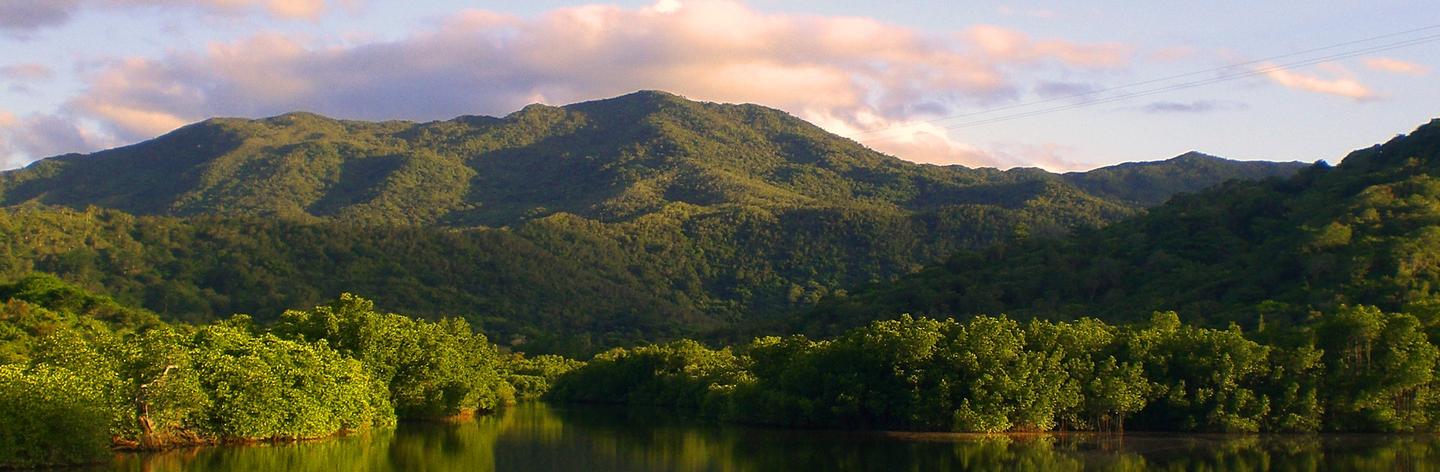
The forest, woodlands, shrublands, and heath of Southwest Australia are characterized by high endemism among plants and reptiles. Its unique vertebrate species include the numbat, honey possum, and the red-capped parrot. The western swamp turtle, which hibernates for nearly eight months of the year in response to dry conditions and hot temperatures, may be the most threatened freshwater turtle species in the world, although a successful conservation program has allowed its numbers to increase.
The primary cause of habitat loss in Southwest Australia has been agricultural expansion, which is accentuated by extensive fertilizer use. A major threat for the native fauna has been the introduction of ivasive alien species like foxes and cats.
VITAL SIGNS
| Hotspot Original Extent (km²) |
356,717 |
| Hotspot Vegetation Remaining (km²) |
107,015 |
| Endemic Plant Species |
2,948 |
| Endemic Threatened Birds |
3 |
| Endemic Threatened Mammals |
6 |
| Endemic Threatened Amphibians |
3 |
| Extinct Species† |
2 |
| Human Population Density (people/km²) |
5 |
| Area Protected (km²) |
38,379 |
| Area Protected (km²) in Categories I-IV* |
38,258 |
†Recorded extinctions since 1500. *Categories I-IV afford higher levels of protection. OVERVIEW
The Southwest Australia Hotspot occupies some 356,717 km² on the southwestern tip of Australia, in the state of Western Australia. As defined, this hotspot comprises the Southwest Botanical Province, but excludes the neighboring Southwestern Interzone. As this hotspot is one of five Mediterranean-type ecosystems in the world, most rain falls during the winter months and the summers are characteristically dry. A broad coastal plain 20-120 kilometers wide grades into gently undulating uplands, with weathered granite, gneiss and lateritic formations. Further inland, rainfall decreases and the length of the dry season increases.
Native plants are well adapted to the nutrient-poor sandy and lateritic soils, which also support broadacre cropping and sheep grazing. Vegetation in the province is mainly woody, comprising forests, woodlands, shrublands, and heaths, but no grasslands. Principal vegetation types in this region are Eucalyptus woodlands, and the Eucalyptus-dominated "mallee" shrubland. Kwongan is a term adapted from the Aboriginal Noongar language to cover the various Western Australian types of shrubland, comparable with the maquis, chaparral, and fynbos of other countries with Mediterranean-type systems. The principal structural types of Kwongan are thicket, scrub-heath, and heath, which together comprise about 30 percent of the original vegetation. A number of vegetation units are endemic, including some types of eucalyptus forests and some forms of kwongan.