Working together in chiapas
The Power of One
CI Connection Orantes' family plantation is independently verified under ethical coffee sourcing guidelines created by Starbucks and CI. It also receives funding from Verde Ventures, CI's investment fund for small- and medium-sized businesses. So far, Verde Ventures has directly benefited more than 53,000 rural residents in 13 countries.
September 30, 2011
Farmers like Ausencio Aguilar have shown that growing coffee responsibly on small farms can have a big impact. But can these sustainable practices work on a larger scale?
In Chiapas, where the majority of coffee producers own only a few hectares of land, the answer to that question lies in a coffee plantation known as Arroyo Negro.
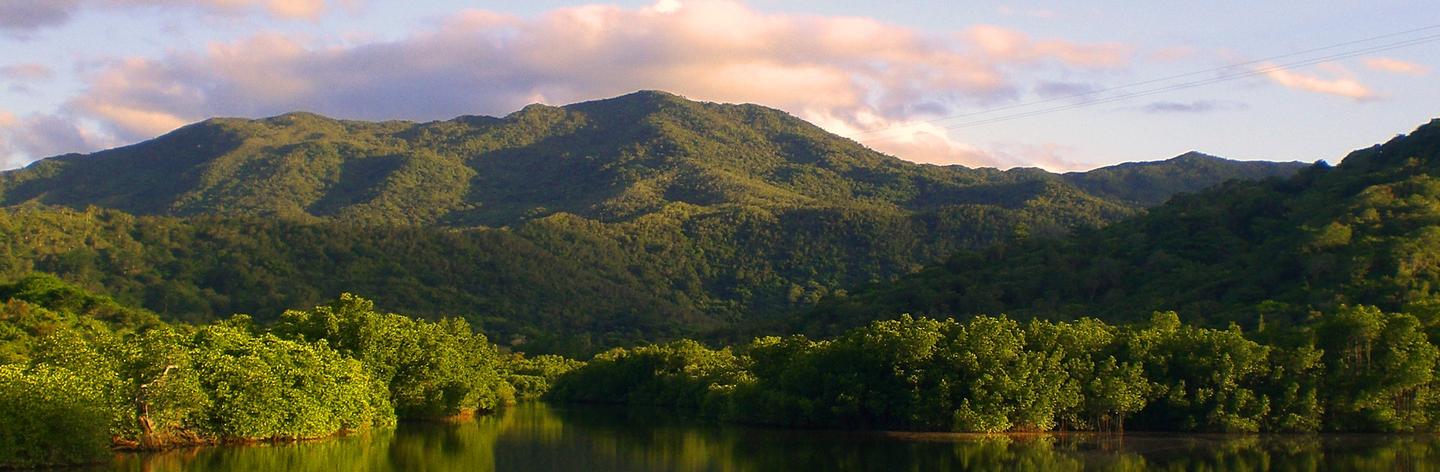
Nestled in the misty buffer zone of El Triunfo Biosphere Reserve, the finca, or coffee plantation, extends over 640 hectares (1,561 acres) of cloud forest. Its owner, Efraín Orantes, could reap short-term profits from such a large tract of land. Instead, he has chosen to take a personal stand for conservation — and in doing so, he produces better coffee, preserves wildlife and creates dozens of jobs.
On his property, Orantes cultivates 100 hectares (247 acres) of shade-grown coffee on the edges of the forest. He leaves the rest of his land in its natural state — housing towering trees, mossy waterfalls and important species like quetzals, jaguars, and tapirs. He sells coffee to Starbucks, as well as other buyers in the U.S., Germany and Japan.
"C.A.F.E. Practices really was the door that opened us up to other certifications," says Orantes; he is also certified under the organic and Rainforest Alliance standards.
photo gallery:
It's a Jungle Out There
As a result of Orantes' decision to set up a private nature reserve, wildlife abounds in his stretch of forest; ornate hawk eagles (Spizaetus ornatus) and king vultures (Sarcoramphus papa) nest in the trees, collared peccaries (Pecari tajacu) rustle among the coffee bushes and pumas (Puma concolor) move through the shadows.
Today, thanks to Orantes' vision, ecologists and small groups of tourists can come to Arroyo Negro for a chance to see these increasingly rare species in the wild.
But life as a coffee farmer is fraught with challenges, one of which is dealing with the impacts from neighboring farms. In the stream that passes in front of Arroyo Negro, the rocks have turned red from the chemicals used by Orantes' upstream neighbor to process the coffee during harvest season. Orantes is able to get water for his property from another source, but he worries about the families downstream who don't have that luxury. As he explains in our video interview, "It's very important to me that I put clean water back in the river. Just downstream there's a small village where 700 families live."
Hunter-turned conservationist Jordán Orantes (Efraín's father) explains how Arroyo Negro looks out for its Guatemalan migrant workers. Watch Video »
video: Like Father, Like Son
The benefits of Orantes' practices extend beyond their environmental impact. He currently employs about 30 workers on his finca — some Mexican, others migrant workers from Guatemala — but during the harvest season, which runs from February to late April, he hires more than 300. Under the social component of C.A.F.E. Practices, Orantes provides fair wages, housing and medical assistance to all his workers. Many migrant workers bring their families, and Arroyo Negro provides education for their children.
As a third-generation coffee farmer, Orantes hopes that his two sons will follow in his footsteps in the conservation coffee business; his eldest, 5-year-old Rodrigo, is already a nature lover with an encyclopedic memory of animal facts. As younger generations take over coffee production from their parents, farmers like Orantes will hopefully serve as role models who are leading the way toward a more profitable and sustainable way of life — proving that, in Orantes' words, "What's good for the environment is good for the people."
Next: learn how cooperatives improve opportunities for families Safety in Numbers »
Coffee and Farmer Equity (C.A.F.E) Practices
Sometimes, doing the right thing pays big dividends.
The conventional wisdom might say that what's good for the planet is not necessarily good for business. But, through Coffee and Farmer Equity (C.A.F.E.) Practices, Starbucks and Conservation International have demonstrated that the ethical sourcing of coffee can have a lasting, positive impact — not only on the environment, but on the lives of coffee growing communities and on the bottom line as well.
Read more
The comprehensive set of social, economic, environmental and quality guidelines for coffee production has been a measurable success, with the participation of more than 140,000 farms employing more than 1 million workers worldwide — most of whom earned higher than minimum wages and received paid sick leave and coverage for their medical expenses.
These farms — the vast majority of which are small farms of less than 12 hectares (roughly 30 acres) — are evaluated and verified by independent, third-party organizations, based on their adherence to more than 200 indicators of social, economic and environmental responsibility. Coffee farmers also enjoy the more equitable prices their superior product and participation in the program command.
And the demand for sustainable coffee continues to grow. In 2010, Starbucks — which now has more than 17,000 stores in over 50 countries — purchased 84 percent of its coffee under C.A.F.E. Practices, with the stated goal of ethically sourcing 100% of its coffee by the year 2015.
From its origins as a pilot program in Chiapas, Mexico, the program has spread far and wide to include coffee producers in 20 countries, from the Americas to Africa to Asia. As those coffee-growing communities benefit, so too does the planet — to date, participating farmers are responsible for the protection of more than 600,000 hectares (nearly 1.5 million acres) of land in and around their coffee plantations.
Verde Ventures
You've probably heard about microloans — low-interest loans as small as a few dollars given to individuals or groups working to pull themselves out of poverty. There are many organizations around the world dedicated to providing microloans; however, less well-serviced are smaller enterprises that are too big to qualify for microfinance but lack the collateral to receive corporate bank loans.
Read more
This is where CI's Verde Ventures program comes in. This investment fund caters to small- and medium-sized businesses that pursue environmentally-friendly practices in agroforestry, alternative energy, ecotourism, fishing and the sustainable harvest of wild products. The prospect of a Verde Ventures loan provides a powerful economic incentive for conservation efforts to businesses that are often unable to take these actions on their own due to limited capital. Loans range from $30,000–$500,000, covering expenses like farm equipment and rural business development. Verde Ventures staff provides technical assistance and monitors the environmental, social and financial impacts.
So far, Verde Ventures has directly benefited more than 53,000 rural residents in 13 countries and influenced more sustainable practices on 2.9 million hectares (7.3 million acres) around the world. Most of the recipients work in the coffee sector; in Chiapas, Verde Ventures and Starbucks have teamed up to provide loans that have benefited more than 5,000 farmers.
El Triunfo Biosphere Reserve
Covering 120,000 hectares (almost 300,000 acres) in the Sierra Madre de Chiapas mountain range, El Triunfo Biosphere Reserve contains the most diverse evergreen cloud forest in Mexico — critical habitat for monkeys, tapirs, wildcats and almost 400 species of birds, including many migratory species. El Triunfo's forests and rivers also sustain the livelihoods of thousands of farmers.
Read more
When the biosphere reserve was first created in 1990, it was rejected by local communities who feared strict protection would limit their activities on the land. However, they soon learned that while the five core zones of the park are off-limits for all resource use, El Triunfo's buffer zones permit sustainably-managed activities like shade-grown coffee cultivation, which thrives in forest environments. There are now more than 28,000 hectares (almost 70,000 acres) of coffee grown in and around the reserve's buffer zones.
Research has shown that shade-grown coffee systems support more biodiversity — particularly bird life — than sun-grown plantations; in fact, some studies indicate that bird species richness in shade-grown coffee areas may be higher than in some natural forests. Taking this into account, Mexico's National Commission of Protected Natural Areas (CONANP) is working to create a biological corridor between El Triunfo and the nearby La Sepultura Biosphere Reserve — an important step to safeguard the survival of these iconic species and the ecosystems they sustain.