Working together in chiapas
Friends in High Places
CI Connection Chiapas' state-level climate action plan was greatly influenced by CI's work with Starbucks in the region. CI also worked with Governor Arnold Schwarzenegger to create a subnational carbon trading partnership that now comprises 15 states, including Chiapas.
September 30, 2011
Like many places blessed with both natural beauty and natural resources, Chiapas has a long history of conflicts over the land and its bounty. Even in recent decades, with the rising of the Zapatista Army of National Liberation's opposition to the government's intercession in land-rights disputes, tensions and feelings of mistrust have run high.
Set against that backdrop, the progress now being made in Chiapas — on both the environmental and economic fronts — is encouraging. Not only is the Chiapas climate action plan proving a model for all of Mexico, but the state is also part of a collaboration with 14 other state and provincial governments — from the U.S. to Brazil to Indonesia — that was launched by Governor Schwarzenegger of California with CI's help.
Arnold Schwarzenegger, Harrison Ford, and others talk about the Forest Task Force and how such programs can reverse the loss of a forest the size of England each year. Watch video »
video: The Forest Connection
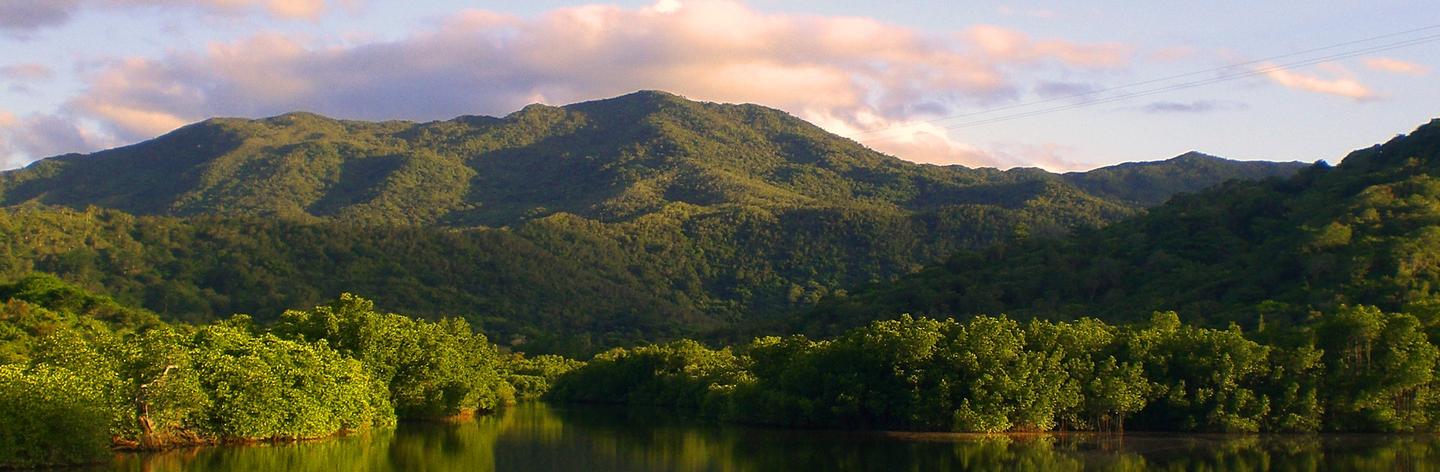
Though Chiapas is one of Mexico's poorest states, there is hope for a more prosperous future made possible by the stewardship and conservation of the forests that define its landscape.
The government is serious about taking the long view; Chiapas is the first state in Mexico with a comprehensive environmental education plan. And, as a region that is particularly vulnerable to the negative effects of a warming climate, it is also leading the way in addressing climate change.
"It was very important to have a common interest in tackling climate change," says Alejandro Callejas, undersecretary to the environment for Chiapas, of the state's collaboration with Conservation International — a relationship that allowed the government to lean on CI's expertise at working effectively with stakeholders from the local community to the world stage.
That common interest served as the foundation of several successful collaborations, including the creation and implementation of the Climate Change Action Program for the State of Chiapas, which highlights forest conservation as a key to the state's resilience to climate change.
Protecting the forests of Chiapas also will play a key role in securing its economic future as well, thanks to its participation in Schwarzenegger's Governors' Climate and Forests Task Force. The mission of the task force is to organize its 15 members into a market that adopts what are called "carbon compliance regimes" — models where polluters reduce their emissions as much as possible and then pay to offset the rest. One way they can do this is to buy carbon offsets that support conserving or planting forests in places like Chiapas. What the smokestack adds to the air, the tree takes away.
Climate Action Hero
Arnold Schwarzenegger, former governor of California, is certainly no stranger to the spotlight. But if there is one role he has played that deserves wider attention, it is that of climate action hero.
Read more
Taking office at a time of environmental and economic uncertainty, Schwarzenegger brought the fight against climate change to the state house, ultimately making it the signature issue of his administration. With the passage California's Assembly Bill 32, the Global Warming Solutions Act, he charted a course for the state to reduce its greenhouse gas emissions to 1990 levels by the year 2020.
The historic bill was drawn up with both economy and environment in mind; by focusing on the reduction of emissions and air pollution through improvements in energy efficiency, it aims to position California as a leader in the development of green, clean-energy jobs. For a state with a GDP of $1.89 trillion — ranking it as the world's eighth-largest economy, just behind Italy and ahead of both Brazil and Spain — it's a bold, forward-looking move.
So, too, was the signing of California's Memorandum of Understanding with the states of Chiapas, Mexico and Acre, Brazil, which effectively created the world's first market for carbon offsets to be orchestrated by and between provincial governments — setting a powerful precedent for other nations and states at a time when actions, not words, are imperative if we are to turn the tide on climate change.