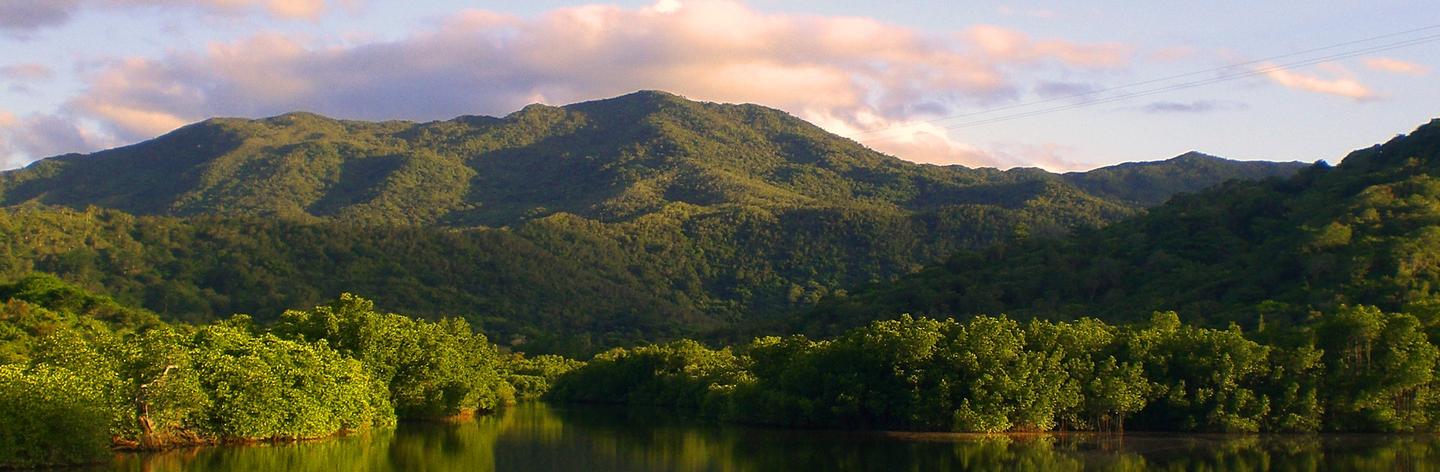
Papua New Guinea Expedition

© CI/photo by Stephen Richards
About the Expedition - Muller Range

What

A rapid assessment survey of one of the three highest priorities for study in Papua New Guinea. The Muller Range had been recognized as a High Biodiversity Priority area by the Papua New Guinea Conservation Needs Assessment and was included in a World Heritage nomination.  The rugged topography and difficulty of accessing the sparsely populated interior of the Muller Range have made documentation of the area difficult.


When

September 2009


Who

The RAP team consisted of both PNG and international scientists with expertise in plants, invertebrates (ants, katydids, odonates, spiders), mammals, birds, reptiles and amphibians. Meet the team >>


Where

A site on the southern edge of the Muller Range in central-western Papua New Guinea. The scientists spent a week at each of three camps at 500, 1,600 and 2,875 meters altitude.

  1. 500 m. Camp 1 was on a low ridge in lowland rainforest at the base of the Muller Range. Surprisingly, the vegetation here contained some floristic elements more typical of montane forests elsewhere in New Guinea, presumably reflecting the incredibly wet environment at this site. Camp 1 also had the highest overall biological diversity found at the three sites and many new species of ants, katydids, odonates (dragonflies and damselflies) and spiders were documented.

  2. 1,600 m. Camp 2 was wet, steep, and located in montane Nothofagus forest where the shrubs, trees, and even the ground were covered with dripping moss. The abundance and diversity of invertebrates was lower here than in the lowland forest, and permanent water was scarce so that odonates were absent altogether. However a number of new and interesting species of katydids, ants and spiders were found, along with several new frog species and many new plants. Camp 2 also had a high abundance of small mammals, many possums, and signs of longbeaked echidnas and tree kangaroos. These larger animals have been hunted to rarity or extinction in many areas of New Guinea, and our sightings of tree kangaroos and numerous possums and cuscus indicate that hunting pressure is low and fauna populations in the remote interior of the Muller Range are still healthy.

  3. 2,875 m. Camp 3 was located in an unusual mosaic of sub-alpine fernland and extremely dense and mossy upper-montane forest. Many orchids and rhododendrons were present and, although animal diversity was low, many species found by the RAP team were of great interest biogeographically including new species of frogs, katydids, stick insects and possibly ants.


Why

The Muller Range is an unexplored, biologically unknown region of Papua New Guinea that straddles Southern Highlands and Western Provinces and represents a major gap in our knowledge of PNG's biological diversity.

The objectives of the RAP survey were to:

  • Collect biodiversity data for the area to aid local and regional conservation, management, and corridor planning,
  • Contribute to a greater understanding of the fauna and flora in the Muller Range.

Results

Incredibly, the RAP team discovered over 120 species new to science including 9 new plants, two of which have already been described by the team's senior botanist Wayne Takeuchi. Other highlights included 22 new vertebrates (frogs and mammals) and over 100 new insects (damselflies, ants, and orthopterans including katydids and stick insects) and spiders.   See the species found >>

The team also observed many Birds of Paradise, and a number of bird species with plumage patterns distinctly different from populations elsewhere in New Guinea, suggesting that the Muller Range is a biogeographically significant area. The results of this expedition are being made available to the National and Provincial Governments in the hope that our remarkable biological discoveries will add impetus to the declaration of the Muller Range Karsts as a World Heritage Area.

  1. Plants: Approximately 700 species documented, including nine species new to science. Also several extremely significant distributional records of poorly known genera and species, thus providing valuable data on distribution and conservation status. Many taxa photographed for the first time.

  2. Spiders: About 90 species of spiders were caught belonging to about 19 families, including 'true spiders' (Araneomorphae), and mygalomorphs (Mygalomorphae). It is likely, given prior knowledge of PNG spiders, especially in the Muller Range area, that over 50 percent of the spider species are new to science. Particularly significant discoveries include the first subsocial species of the genus Anelosimus from New Guinea and an entirely new genus of theridiid spider.

  3. Ants: over 200 species of ants recorded from the lowland site, which is very high diversity, of which a high number- 29-are new species for science. Fewer species at higher elevations but several additional new species documented. Three species at Camp 3 (2875 m) represents the highest recorded elevation for ants in New Guinea.

  4. Katydids and other orthoptera: approximately 150 species of which as many as 30ew to science. Diversity at 500 m camp exceptionally high, may have exceeded 300 species with further sampling effort.

  5. Dragonflies and damselflies: 44 species, of which at least 6 are new species for science. An extremely significant discovery was that larvae of the damselfly genus Papuagrion are semi-terrestrial and live in Pandanus leaves above the forest floor. This is a lifestyle never reported for dragonflies or damselflies anywhere in the world before. A number of significant distributional records were also made, and the high diversity of odonata at Camp 1 (40 species) indicates the importance of freshwater conservation in these habitats.

  6. Herpetofauna (frogs and reptiles): More than 60 species documented, including 20 frogs new to science. Also extremely valuable data on distributions and habitat requirements of poorly-known frog species.

  7. Birds: Approximately 130 species documented, including at least 12 species of Birds of Paradise. Several birds with unusual plumage or appearance require taxonomic investigation.

  8. Mammals: 23 species of mammals, including likely 2 new species (a bat and a possum). Also sightings of Doria's Tree Kangaroo, many possums, and numerous signs of Long-beaked Echidnas (Zaglossus) indicating healthy populations of large mammals survive in this area.

donate now
Tell a friend
Features & Media